
Self-Guided Tour
Celebrate Native Heritage at Mia
This self-guided tour invites you to discover the diverse artistic traditions, histories, and contemporary perspectives of Indigenous cultures and communities. From Ojibwe painting and Michif beadwork to sculpture, jewelry, and works addressing Native experiences and identity, each stop offers an opportunity to connect with art through observation, curiosity, and reflection.
Allan Houser, Young Woman, 1992 (Lobby, First Floor)
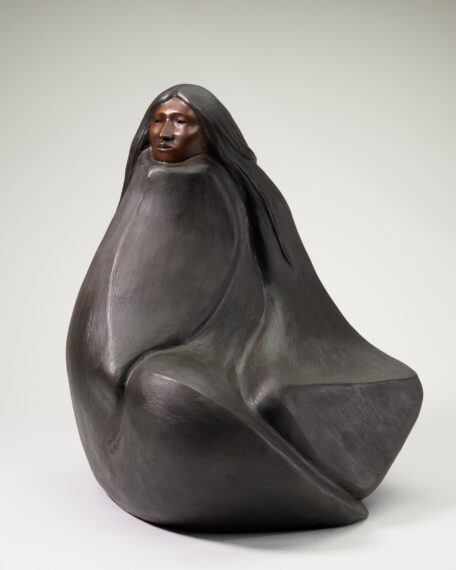
Observe the figure’s face, hair, and wrapped blanket. What do these choices suggest about her inner world? How does the artist convey both modesty and strength in her pose?
This bronze sculpture by legendary Chiricahua Apache artist Allan Houser depicts a cross-legged woman shrouded in a blanket, with only her smooth face and long hair exposed, suggesting mystery and modesty. Houser drew inspiration from both his Indigenous community and modernist masters like Henry Moore and Constantin Brancusi. Native women were a central subject of his work, rendered with fluidity, tenderness, strength, and beauty. Born in 1914, Houser was the first Chiricahua Apache born out of captivity following his tribe’s release as prisoners of war.
Keri Ataumbi, metalsmith; Jamie Okuma, beadworker, Pocahontas jewelry set, 2014 (Gallery 259)
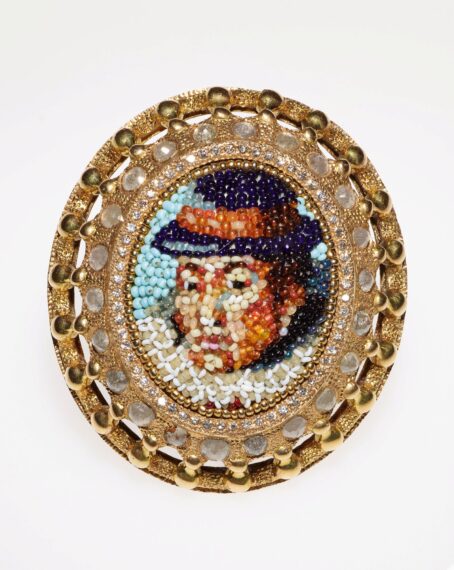
Study the combination of portraiture, beadwork, precious metals, and stones. How do these different materials work together to shape your understanding of Pocahontas as a historical and cultural figure?
Keri Ataumbi and Jamie Okuma worked together to bring fellow Native American woman Pocahontas to life in a jewelry set that references both modern design and traditional Native beadwork. Drawing inspiration from engravings made by Simon van de Passe in 1616 and Thomas Sully’s classic 1852 portrait of Pocohantas, Okuma created portraits on buckskin that were then adorned by Ataumbi using precious metals and stones.
Jim Denomie, Standing Rock 2016, 2018 (Gallery 280)
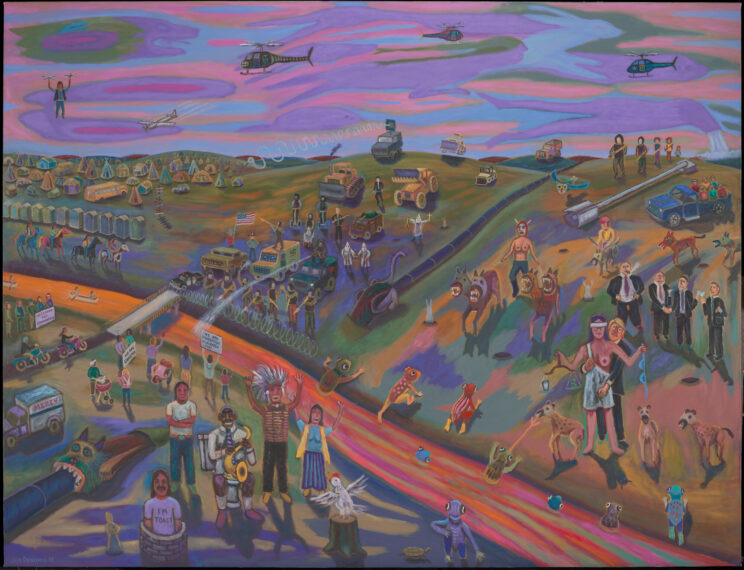
Before reading the label, look closely at the different scenes. What emotions or tensions do you notice? How does Denomie use exaggeration, contrast, or humor to communicate his response to the events?
Standing Rock 2016 comes from a series of works responding to the Dakota Access Pipeline protests at the Standing Rock Reservation, and captures the anxiety, volatility, and absurdity of the American zeitgeist before the Covid-19 pandemic. Composed of small vignettes, the painting is less a historical document than a raw, cumulative response to what transpired at Standing Rock. Denomie pulls no punches. At the center, Water Protectors hold signs as law enforcement confronts them. Two officers share a high-five, creating a stark contrast that lays the conflict bare.
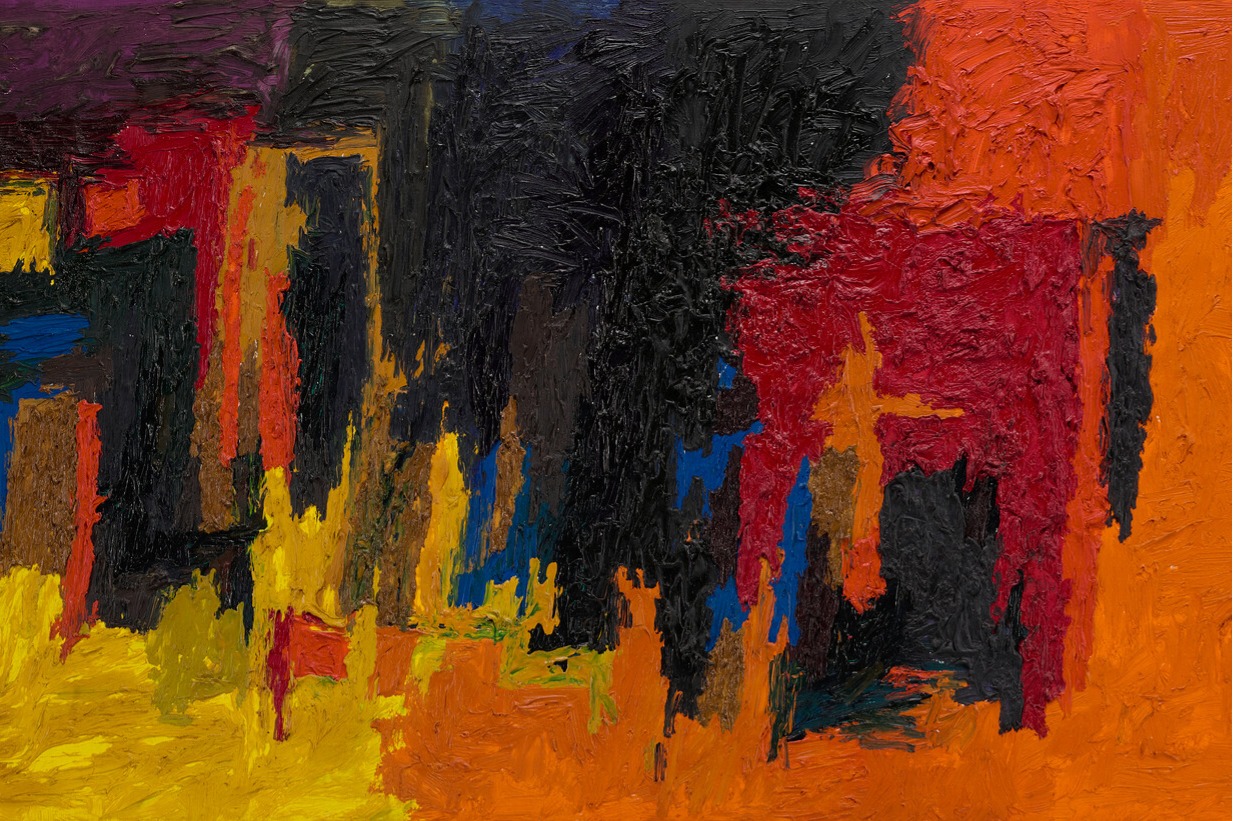
George Morrison, Untitled, 1960 (Gallery 303)
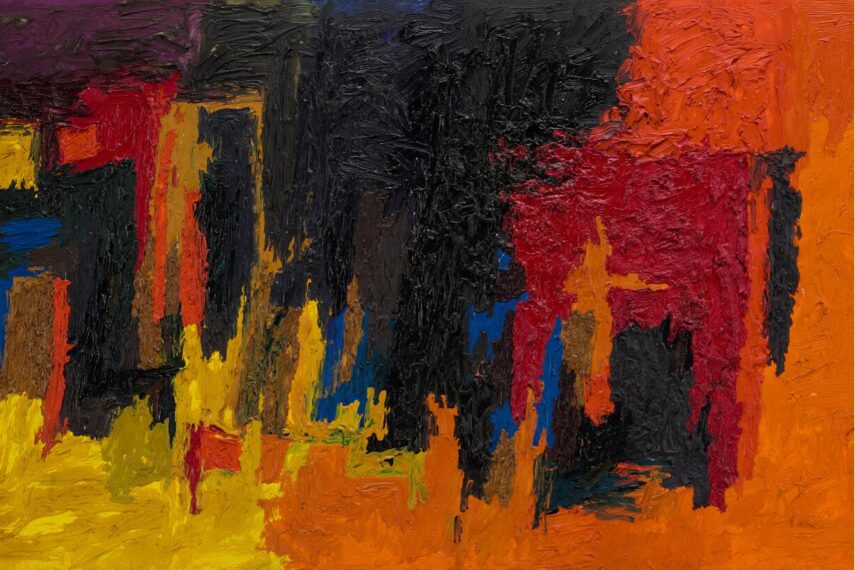
Look closely at the thickly layered paint and textured surface. What feelings or ideas do the colors and textures suggest?
In 1960, George Morrison was at the forefront of Abstract Expressionism, experimenting with materials and subject matter like other artists of the New York School. As a Native American in the most avant-garde art scene of the time, Morrison didn’t limit himself to others’ expectations of what Native art should encompass. In paintings like this one, Morrison experimented with thickly applied paint to create raised, even sculptural, surfaces—which was possible due to the introduction of quick-drying acrylic paints in the 1960s.
Kali Spitzer, Erena Arapere and Daughter Parekohatu Arapere, 2018 (Gallery 365)
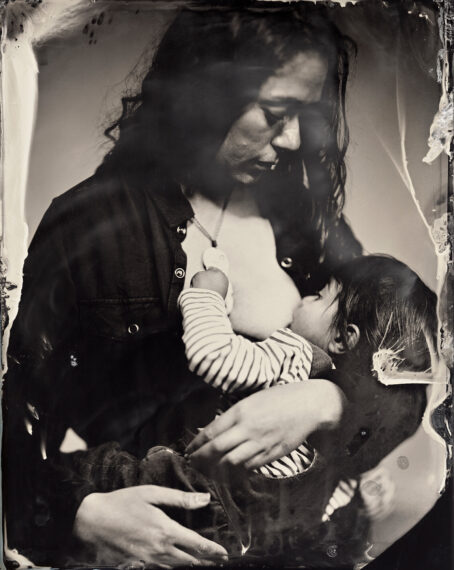
Notice the expressions of the subjects and the intimate framing of this tintype portrait. How does the artist’s use of scale and light create a sense of safety and vulnerability? What does this convey about resilience and deep human connection?
Kali Spitzer’s artistic practice is a reclamation and reappropriation of tintype photography, centering the narratives of marginalized people. Spitzer says: “I think that Indigenous women, trans, and nonbinary people, as well as people of color, the Black and brown and queer community, that we are often not seen or heard. … By making beautiful, intense, loving images that are so large … I’m hoping to make a deep, human connection.”
Truman Lowe, Waterfall, 1993 (Gallery 369)
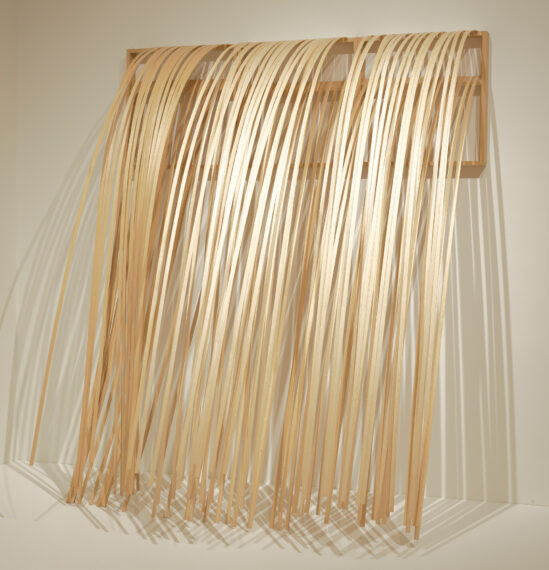
Look closely at how the organic wood strands flow from a fixed point to represent moving water. How does artist’s use of natural materials from his homeland shape your feeling of tranquility? What does it suggest about our connection to the land?
In Waterfall, supple strands of ash pour down from a fixed frame, creating a sense of movement and tranquility. Growing up along the banks of the Black River in Wisconsin, in a Ho-Chunk family of basket makers, Truman Lowe was immersed in a Woodlands community living in relation to the land. Throughout his career, Lowe would gather ash saplings and willow reeds from his homeland to create calm, contemplative sculptures about water—the elemental source of all life and, for Lowe, an endless stream of metaphor and creativity.
Will Wilson, Auto Immune Response No. 5, 2005 (Gallery 375)
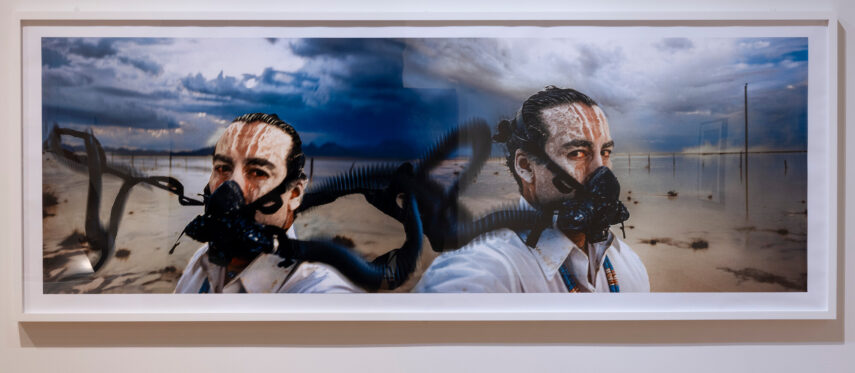
Focus on the gas masks, bloodshot eyes, and the postapocalyptic landscape. How does Wilson’s blend of ancient Navajo mythology and modern environmental crisis shape your understanding of the relationship between the human body and the land?
Auto Immune Response No. 5 references the harmful effects of uranium mining on Diné homelands between 1944 and 1986. Artist Will Wilson placed himself in the photo, twice, evoking the Hero Twins who appear in the Navajo creation myth known as Diné Bahane’. Here, “autoimmune” suggests that harmful human interference in the environment is equally harmful to the human body.
Wendy Red Star, Their Land, 2022 (Gallery 375)
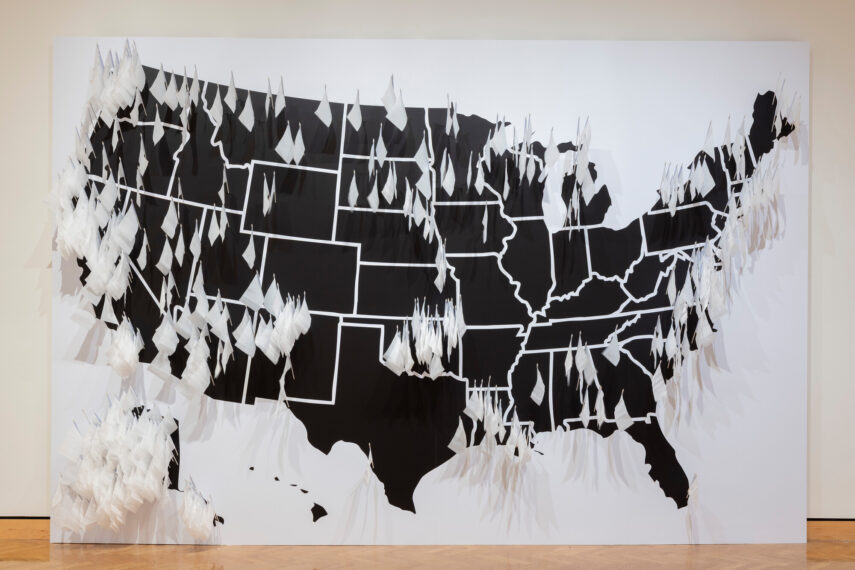
Observe the map and its many names and boundaries. What does the work highlight that you might not notice on a typical map of the United States?
Wendy Red Star investigates how Indigenous people and cultures are erased from the historical record and overlooked in the present. In visual retort, Their Land makes their homelands abundantly visible on a map of the United States. Based on 2022 data from the U.S. Bureau of Indian Affairs, the work is a snapshot of federally and state-recognized tribes from that year. Their Land prompts conversations about the acknowledged presence or absence of Native American and Indigenous groups throughout the United States, the histories of their locations, and our assumptions surrounding these themes.