
The Object Podcast Self-Guided Tour
See the artworks discussed on Mia’s award-winning podcast, The Object. Listen as you go or at your leisure, wherever you get your podcasts.
View the Art
Joshua Johnson, Portrait of Richard John Cock, c. 1817 (Gallery 304)
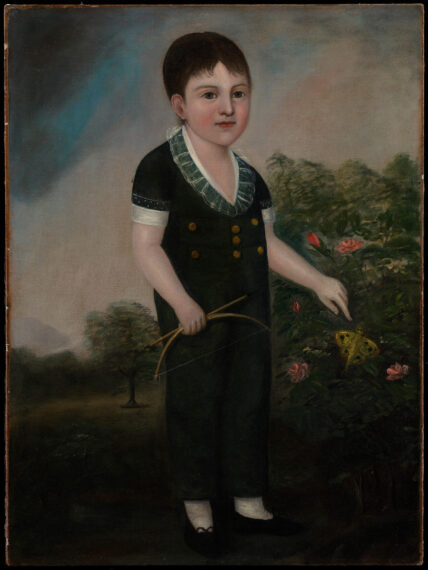
Season 4: The Possibly True Story of America’s First Black Artist
In 1798, a portrait artist named Joshua Johnson advertises himself as a “self-taught genius.” A few decades later, he is all but forgotten. It’s a mystery only now coming to light: the unlikely story of the man sometimes called America’s first Black professional artist.
Blanche Hoschedé-Monet, Landscape, Snow Effect, 1888 (Gallery 355)
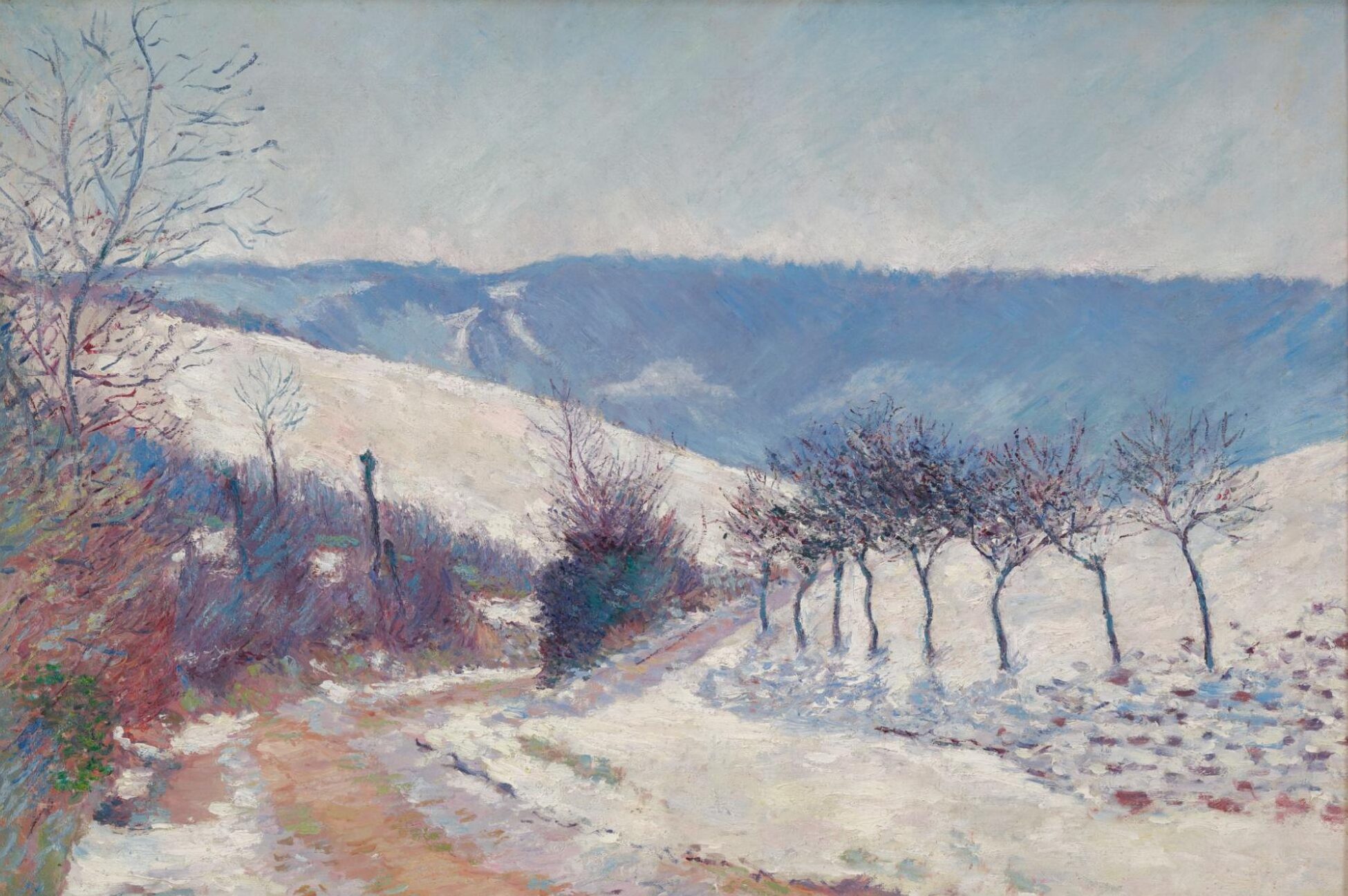
Claude Monet, by the 1900s, is the most famous artist in the world, a singular genius (if not exactly genial). But there is another Monet: Blanche Hoschedé-Monet. The only artist Claude Monet takes under his wing—and almost completely forgotten, until now.
Santiago Rusiñol, Landscape, Snow Effect, c. 1892–94 (Gallery 355)
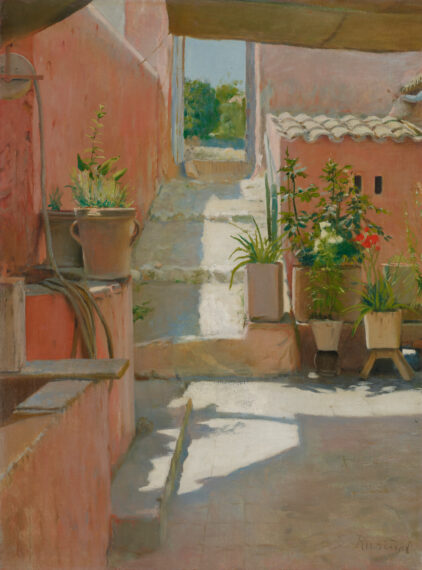
Santiago Rusiñol is a newly married heir to a Barcelona textile fortune when he decides to become an artist in Paris instead, inventing a new vocabulary for modern art. But when he comes across an idyllic seaside village back in Spain, his quest becomes a question: What are we really running from?
Elisabeth Louise Vigée-Le Brun, Portrait of Countess Maria Theresia Bucquoi, née Parr, 1793 (Gallery 306)
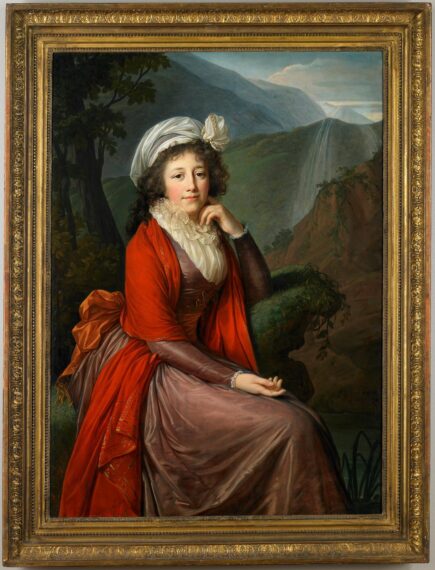
Season 6: The Woman Who Won Paris
The daughter of a struggling artist, Elizabeth Vigee Le Brun wins the hearts of the French aristocracy with her sensitive portraits. But it’s their heads she should be worried about, and when the Revolution hits she has to make a difficult choice to save her own.
Rembrandt Harmenszoon van Rijn, Lucretia, 1666 (Gallery 311)
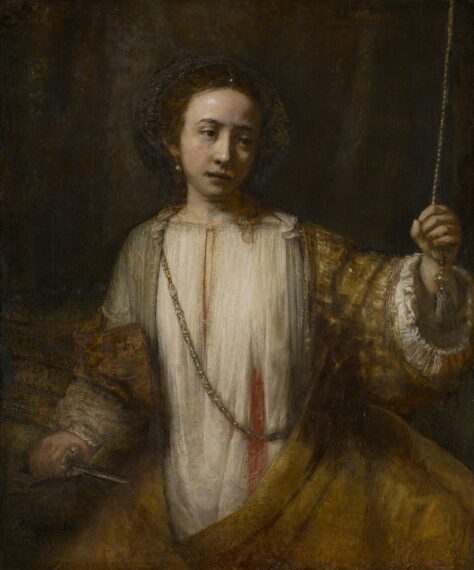
Season 1: The Case of the Missing Rembrandt
In 1666, Rembrandt painted a masterpiece that disappeared almost as soon as he finished it. Where it went, and what it meant to its various owners, is as fascinating as the question it begs: How can people be so tender and also so cruel?
Georgia O’Keeffe, Black Place I, 1945 (Gallery 301)

Season 4: The O’Keeffe We Never Knew
In the 1970s, Georgia O’Keeffe is supposedly the hermit savant of the New Mexico badlands. But when curators, journalists, and even the FBI come calling, it seems the head ghost of Ghost Ranch is the host with the most—and hardly ever alone.
Grant Wood, The Birthplace of Herbert Hoover, 1931 (Gallery 303)
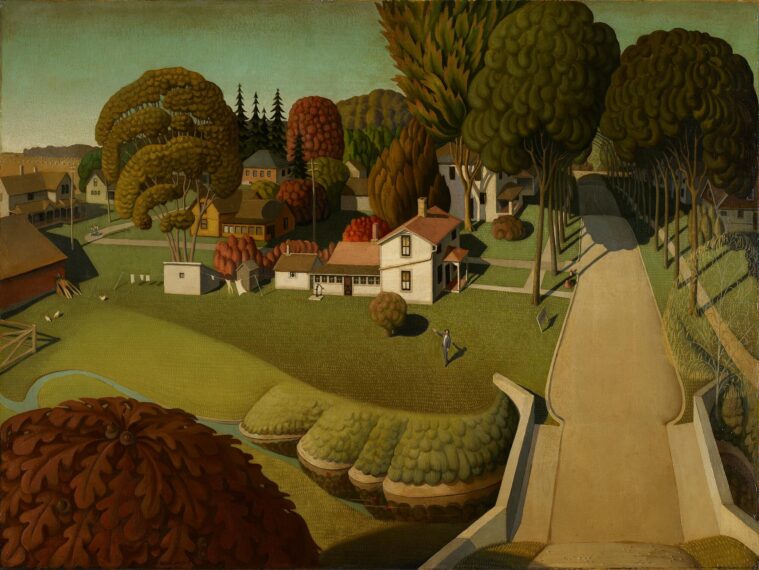
Season 6: The Wonderful Wizard of Iowa
In the 1930s, Grant Wood is famous as the artist behind American Gothic—an artwork so celebrated and curious it’s called the “modern Mona Lisa.” But as times change, Wood finds himself fighting for his livelihood, protecting a secret he’s hid almost everywhere but in his art.
Unknown artist, Nautilus shell cup, c. 1660–80 (Gallery 310)

Season 2: Monsters and Marvels, Part I: The Magic Shell
From narwhals to nautilus shells, dragon eggs to mermaid hands, the obsession with oddities in the Age of Discovery may seem, well, odd. But did the study of outliers, in the early version of museums, help make us the rational creatures we are today?
Unknown artist, Two-piece cutlery set, late 1500s (Gallery 354)
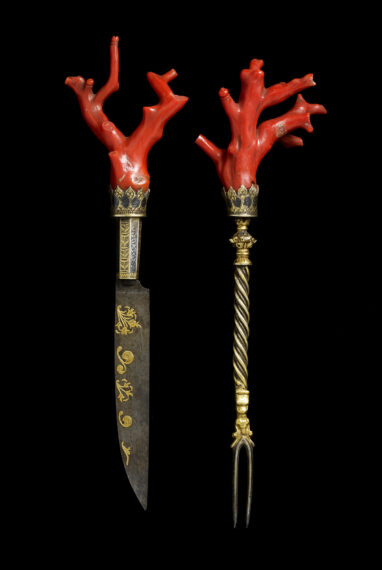
Season 1: How to Stop an Assassin
Long ago, when everyone but your dog was a potential assassin, you needed to protect yourself by any means necessary. Starting with poison-proof silverware. A surprising story of art, myth, and the dangerous world that was.
Charles Caryl Coleman, The Bronze Horses of San Marco, 1876 (Gallery 357)

Season 3: The Stolen Horses of Venice
In the early 1800s, the four famous bronze horses of Venice are restored to their place atop Saint Mark’s Basilica. But when an American painter arrives, his celebrated painting of the horses exposes clues to their real origins.
Sir Alfred Gilbert, Kiss of Victory, 1878–81 (Gallery 310)
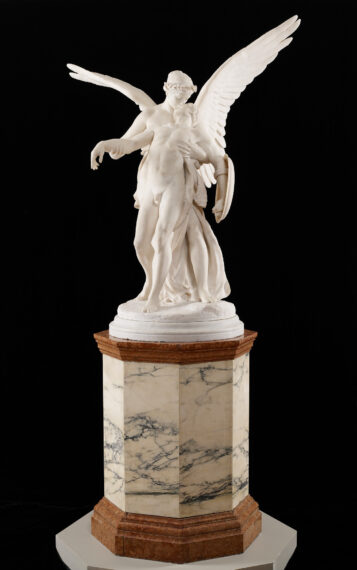
Season 4: How to Live Forever (or Die Trying)
No one lives forever. But that hasn’t stopped people from trying. And for a long time, the noble way to avoid getting old and dying was to avoid getting old at all: the Greek notion of the “glorious death” that confers immortality in battle. It’s an idea that resurfaces throughout history—until it meets its match in a war of many deaths and little glory.
Raffaelo Monti, Veiled Lady, c. 1860 (Gallery 357)
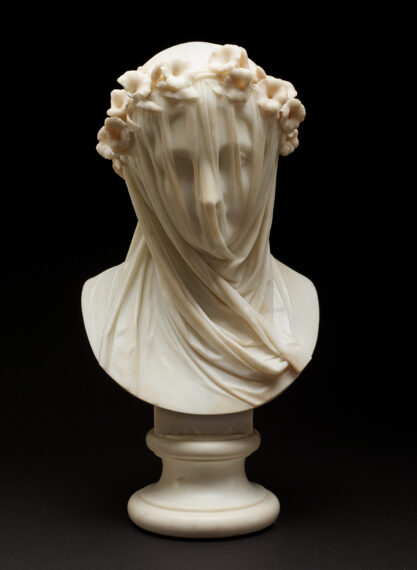
Season 3: The Secrets of the Veiled Lady
They are illusions, no more real than someone being sawed in half onstage. Yet the veiled ladies that Raffaello Monti sculpts in the 1800s are very real to him. Poignant symbols of an identity he’s forced to conceal, even as they make him famous. A story of pride and prejudice and dreams just out of reach.
Charles Edward Perugini, I know a maiden fair to see, take care, 1868 (Gallery 357)
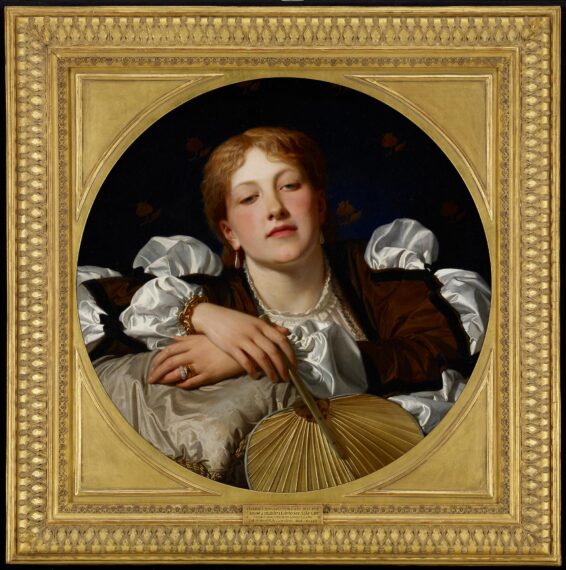
Season 5: Finding Fanny: The Model Who Disappeared
She was instantly recognizable, her long copper hair filling painting after painting, even if few people knew her name: Fanny Cornforth, muse and mistress to the most influential artists of her time. Then she lost the one thing she could count on for sure: herself.
Leonora Carrington, Dear Diary–Never Since We Left Prague, 1955 (Gallery 376)

Season 4: Escape Velocity: The Woman Who Left the World
Leonora Carrington has never felt at home in her wealthy, conservative family. But when she meets the Surrealists in the 1930s, and runs from everything she knows, it will take everything she has to become the artist and writer she wants to be. Most importantly: Her singular imagination, which reveals the world as both more magical and more haunted than most of us care to admit.
Hans Ledwinka; Manufacturer: Ringhoffer-Tatra-Werke AG, Tatra T87 four-door sedan, 1948 (designed 1936; Gallery 379)
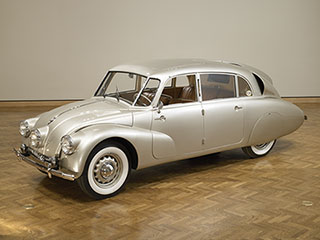
Season 1: The Car That Killed Nazis
When World War II began, nothing seemed capable of slowing the Nazis. Except a very fast, very unusual Czech automobile called the Tatra. A poignant story of poetic justice, grace in wartime, and the utopian future that wasn’t.
China, Dragon head Huang plaque, 2nd–3rd century (Gallery 215)
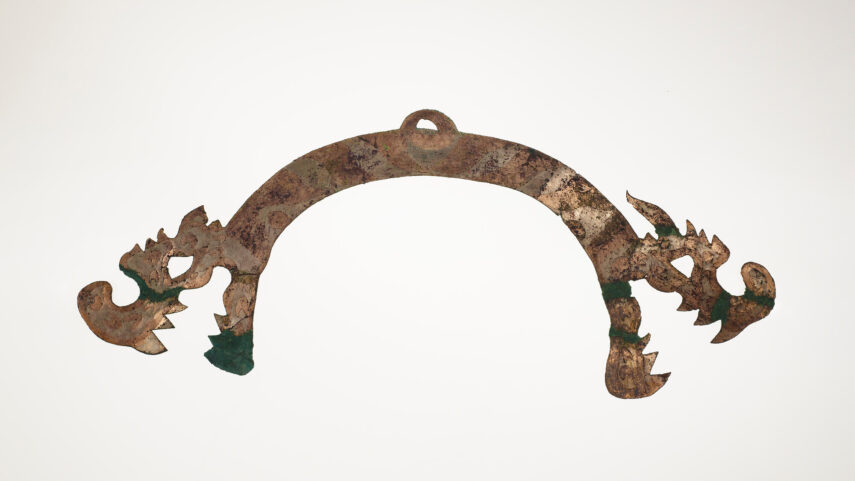
Season 6: The Dragons Next Door
People have always imagined dragons among them. But they have always imagined them very differently: helping or hurting, making rain or breathing fire. The difference, of course, is us. A brief, beastly history of the creature we can’t live with—or without.
Unknown artist, Jade Mountain, 1790 (Gallery 210)
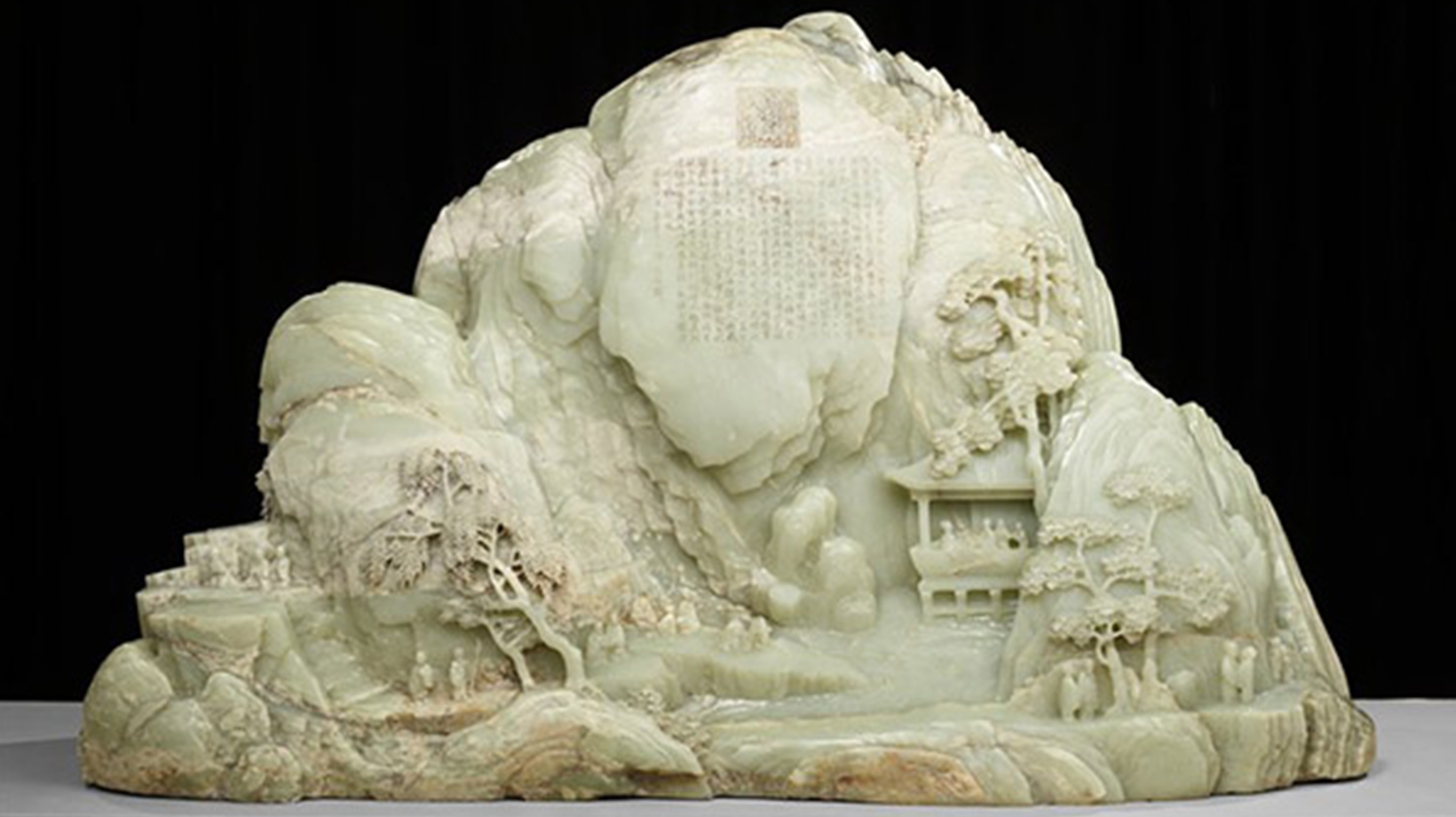
Season 4: The Mountain That Came to Dinner
It’s one of the largest jade sculptures in the world, a 640-pound mountain commissioned by the Chinese emperor. But in 1901, in the aftermath of the Boxer Rebellion, it ends up leaving China with an American diplomat—only to resurface on the dinner table of a lumber baron. It’s a story of power and scandal, a story as old as stone: Can anyone be king of the hill for long?
Unknown artist, Shiva Nataraja (Lord of the Dance), c. 1100 (Gallery 211)

In the 1920s, the sculptural image of Shiva Nataraja—the Hindu god Shiva as the cosmic dancer, ensuring the cycle of life—suddenly becomes a museum must-have. As India strives for independence, the image comes to symbolize something of the nascent nation itself.
Unknown artist, Striding figure, 300–30 BCE (Gallery 250)
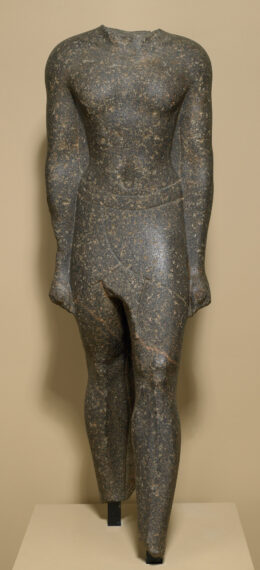
Season 5: The Department of Missing Limbs
It’s a story as old as life itself: Things fall apart. But what really happened to all those ancient statues missing arms, legs, heads, and other appendages? And have they shaped a perception of the past as more remote, mysterious, and, well, broken than it really was?