
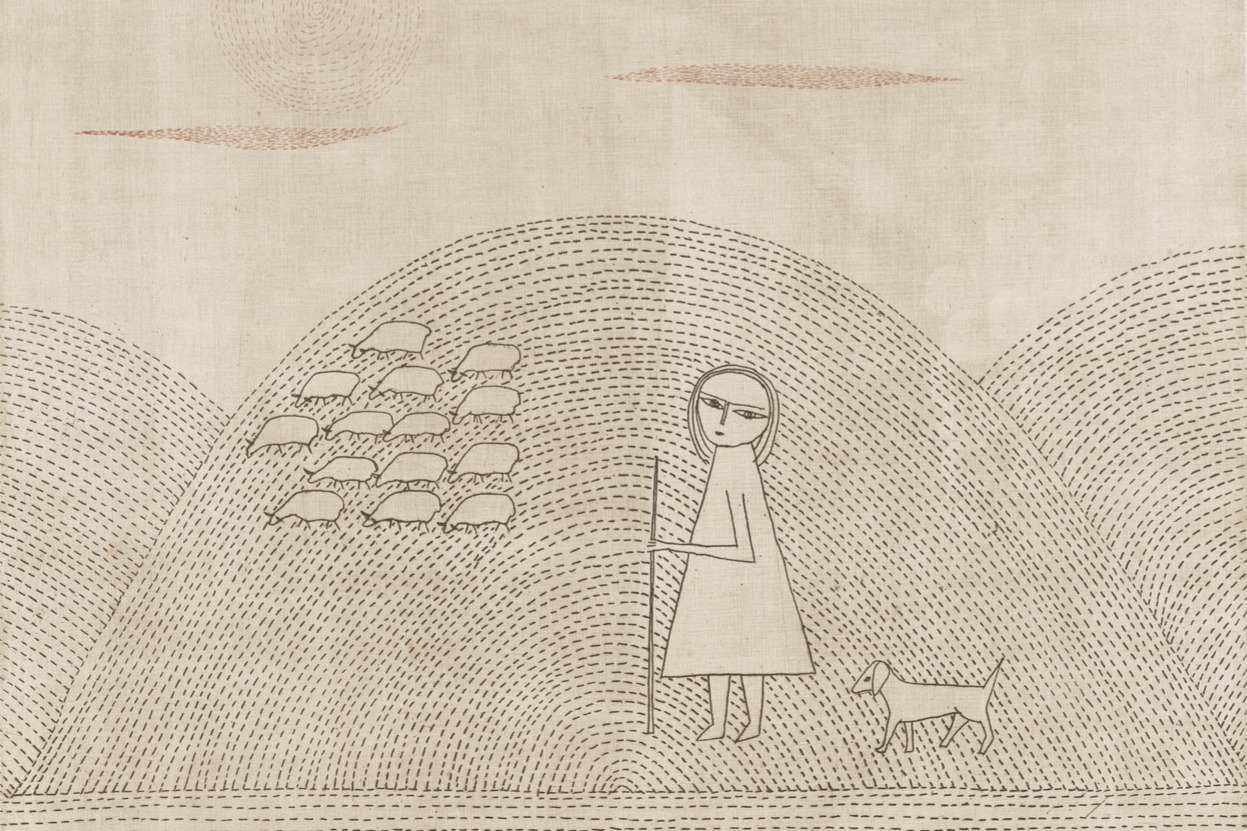
Meruhen: Japanese Prints of Fairy Tales
May 9, 2026 - March 7, 2027
Mary Griggs Burke Gallery of Japanese Art (226, 227)
Free
Meruhen, the Japanese word for fairy tales, originated from the German word Märchen, coined in the 15th century. The word meruhen first appeared in the early 20th century among Japanese writers interested in European romanticism and children’s literature. It soon became mainstream, and fairy tales, not only of German origin, remain popular today.
Several print artists like Kawano Kaoru (1916–1965) and Minami Keiko (1911–2004) presented fairy tale settings in their work, depicting young girls in innocent, dream-like scenarios, interacting with birds or other animals. This exhibition showcases their work along with prints by Kanamori Yoshio (1922–2016), Hori Hikaru (1952–2019), and Suzuki Atsuko (born 1968).
Minami Keiko, Japanese, 1911–2004. La petite bergère (young shepherdess), 1957. Etching with aquatint; ink and color on paper. Gift of Sue Y.S. Kimm and Seymour Grufferman. 2019.78.460