
New Artworks at Mia
Growing the Collection
Each year Mia acquires new artworks for its collection as a way to deepen our understanding of the grand, evolving story of world art. In the museum’s early years, the imperative was to collect widely—to fill the galleries with beautiful objects, the more the better. The goal? To rival European institutions and instill civic pride.
Now, 110 years on, we have a world-class collection, and our accessioning is selective and strategic. Mia focuses on fewer, more significant works that can complement existing strengths in the collection and fill historical gaps.
“Our collection is mature, and there’s not an urgency to collect everything we can,” says Matthew Welch, Mia’s Senior Deputy Director. “Now it’s the case of finding that special, rare object; to acquire fewer but better, more noteworthy works; and to value depth over breadth.”
In addition to the “fewer but better” rule, Mia’s collecting goals in FY25 included diversifying the collection, further developing our collection of Latin American art, adding judiciously to our already exceptional Asian collection, and expanding our European paintings beyond France. Here are a few of the highlights from FY25.
Ferdinand Georg Waldmüller
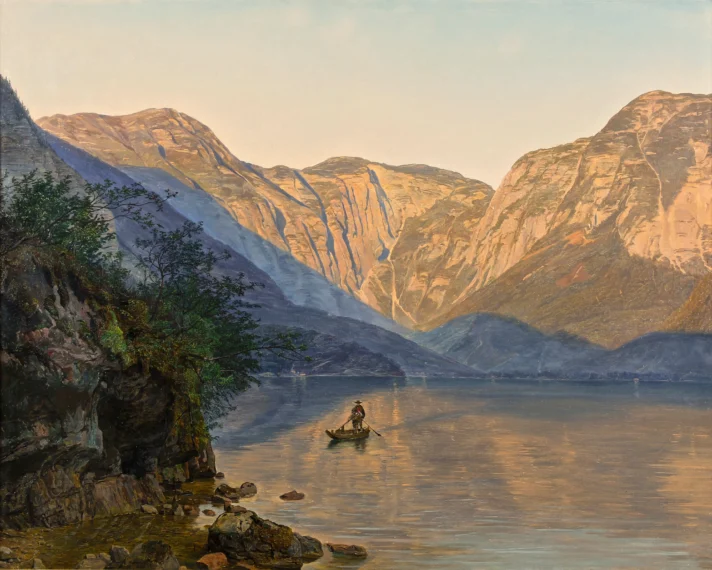
Ferdinand Georg Waldmüller, Mountains over Lake Hallstatt, 1840. The Ethel Morrison Van Derlip Fund and the Driscoll Art Accessions Endowment Fund, 2024.76.1
Mountains over Lake Hallstatt is Mia’s first Austrian 19th-century painting, first Austrian landscape painting, and first work by the Austrian academic painter Ferdinand Georg Waldmüller, who dedicated his art to the close study and accurate rendering of nature.
Outside Austria, his paintings are rare, particularly in the United States. The acquisition helps broaden Mia’s strong holdings of European 19th- and 20th-century painting beyond French and German art, letting us tell a more interesting and complete history of 19th-century European art overall.
Workshop of Paul Preuning
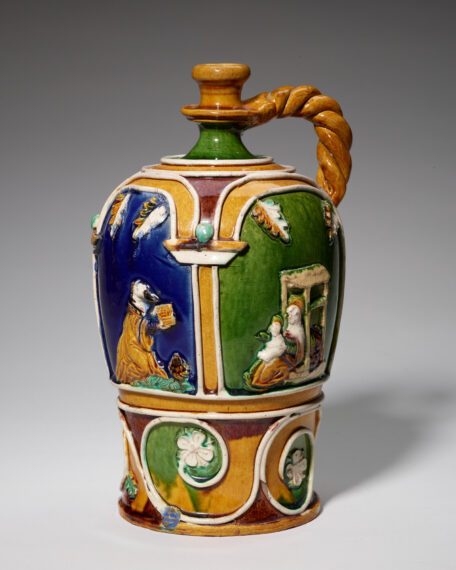
Workshop of Paul Preuning, Jug (Plutzer) with the Adoration of the Magi, c. 1545–55. The John and Ruth Huss Fund for Decorative Arts, 2024.76.2
Paul Preuning’s work has been sought after since museum decorative arts collections were first established in the 19th century: the British Museum acquired a jug in 1855, the Victoria and Albert Museum in 1855 and 1866. During World War II, several examples were seized by the Nazis, restituted after the war, and now appear in major collections such as the Rijksmuseum and Metropolitan Museum of Art.
In fact, nearly all the world’s major collections have a Pruening, and now Mia does too. It’s a significant addition to our collection of Renaissance ceramics, which until now has been relatively modest for a museum of Mia’s size and history.
Blanche Hoschedé-Monet
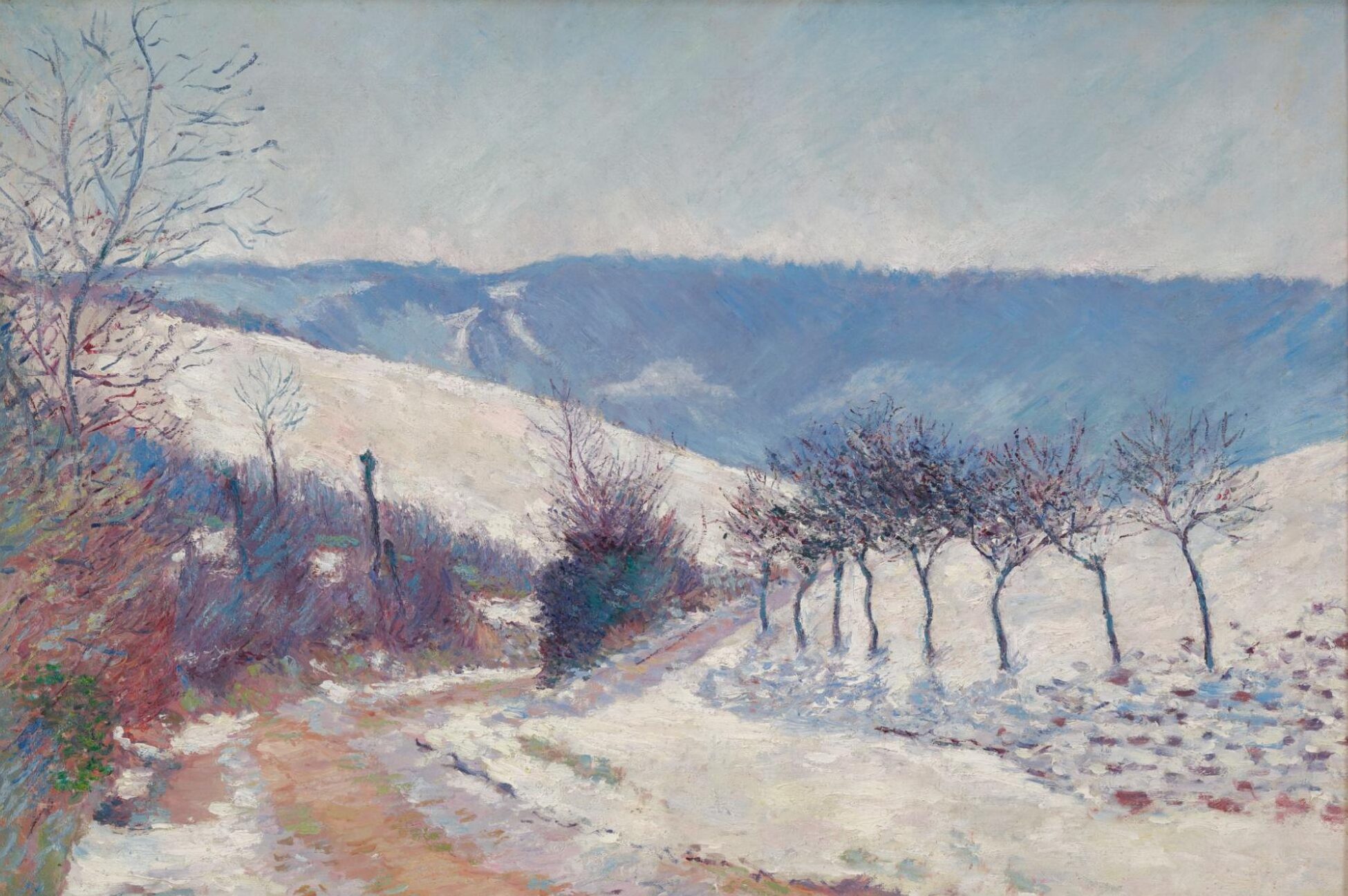
Blanche Hoschedé-Monet, French, 1865–1947. Snow Country Road, Le Val near Giverny, 1888. Oil on canvas. Gifts of funds from Mary Reyelts, Mary O. Olson, Anne Pantelich and Doug Hepper, Terry and Sheldon Fleck, Martha Head, Elizabeth Short and R. Kirkland Cozine, Ellen Archibald, Elizabeth and Michael Gorman, and an anonymous donor, 2025.37
María Berrío
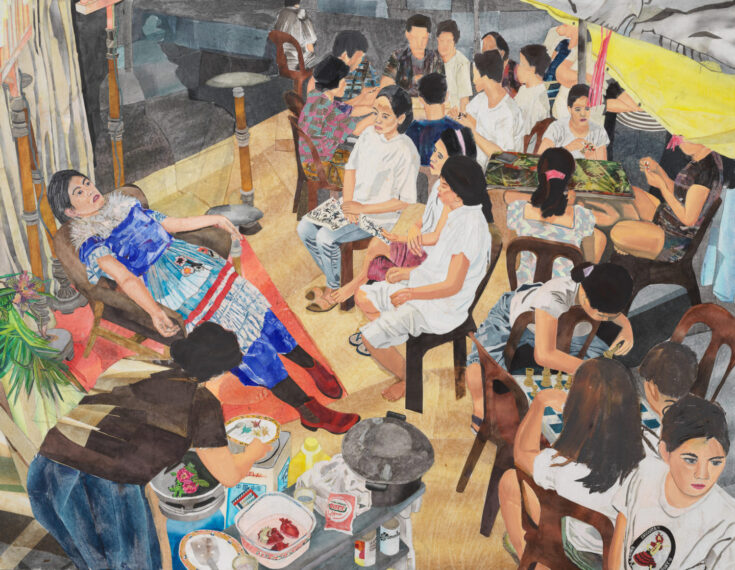
María Berrío, El Dorado, 2024. Gift of funds from Anastasios Economou, 2025.20
El Dorado, Mia’s first work by Colombian María Berrío, joins our growing roster of works by Latin American artists. Berrío’s works have been collected by major institutions, including the Metropolitan Museum of Art, the Dallas Museum of Art, the Hirshhorn Museum and Sculpture Garden, the Philadelphia Museum of Art, and the Whitney Museum of American Art.
This large-scale collage is part of a series that delves into the importance of rituals and how they have been emptied of meaning over time.
Wifredo Lam
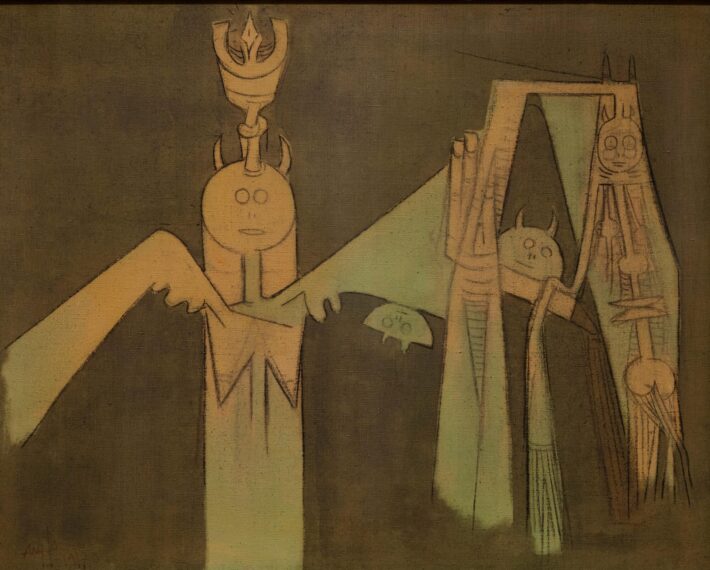
Wifredo Lam, I Am the Light (Yo soy la luz), 1970. The John R. Van Derlip Fund, 2024.62
Wifredo Lam is a major figure in the field of Latin American art and beyond. This is his first work to enter Mia’s collection.
I Am the Light is a painting that allows the museum to address the history of modern art in a more comprehensive way, sparking conversations about cultural exchanges and how European artistic traditions are transformed by the social realities of Latin American countries.
Chinese Ritual Wine Vessel
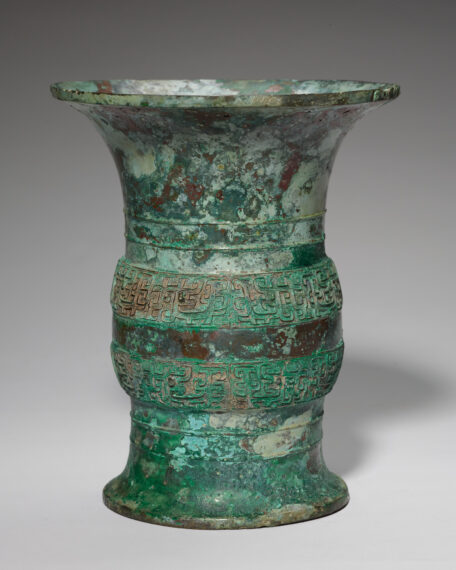
China, ritual wine vessel (zun), early Western Zhou dynasty (c. 1046-977 BCE). Bronze. Gift of funds from Laurie Jue Ying and David Y. Ying in honor of Dr. Liu Yang and in tribute to Alfred F. Pillsbury. 2024.68
Carrie Mae Weems
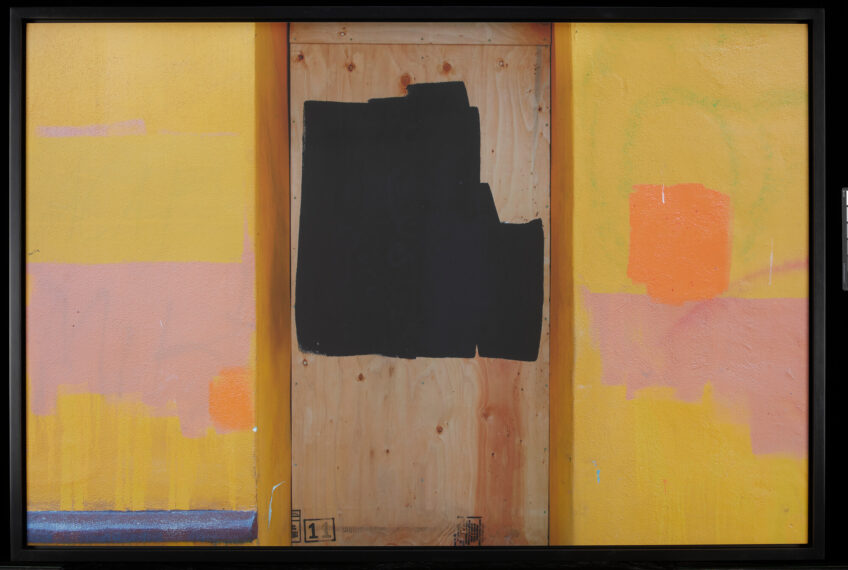
Carrie Mae Weems, Painting the Town #4 (Painting the Town series), 2021 (printed 2024). The Milton K. and Margie M. Woodhouse Endowment for Art Acquisition and the Marguerite S. McNally Endowment for Art Acquisition, 2025.43
What at first glance appears to be a vibrantly hued composition of painted rectangles is, in fact, a photograph of a boarded-up storefront—knotty plywood, effaced graffiti, and all. Mia has two other works by Carrie Mae Weems in the collection.
This one joins important works by Lorraine O’Grady, Adrian Piper, Zanele Muholi, Catherine Opie, and Mickalene Thomas, all recently acquired, enabling the museum to tell a richer, more diverse story of photography in the late 20th and early 21st centuries.
Algernon Cecil Newton
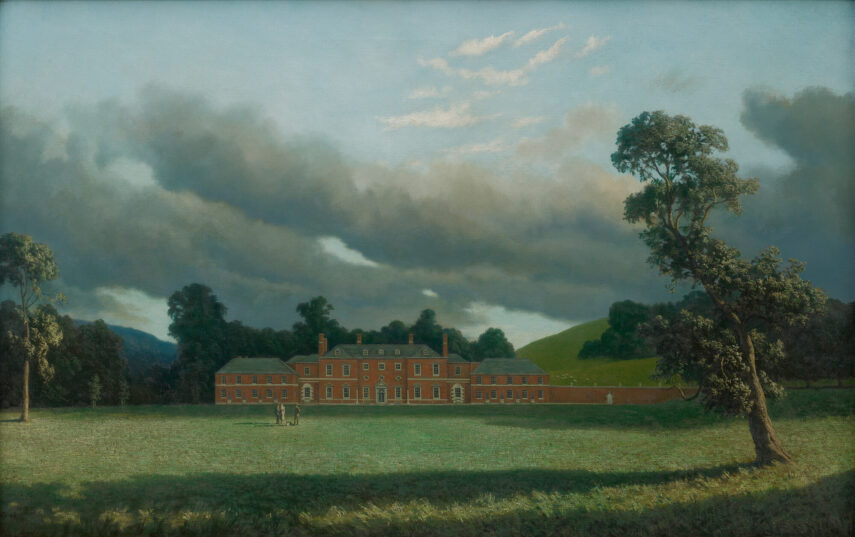
Algernon Cecil Newton, British, 1880–1968. A View of Godmersham Park on a Cloudy Day, 1942. Oil on canvas. The Ethel Morrison Van Derlip Trust Fund. 2025.10
Gego
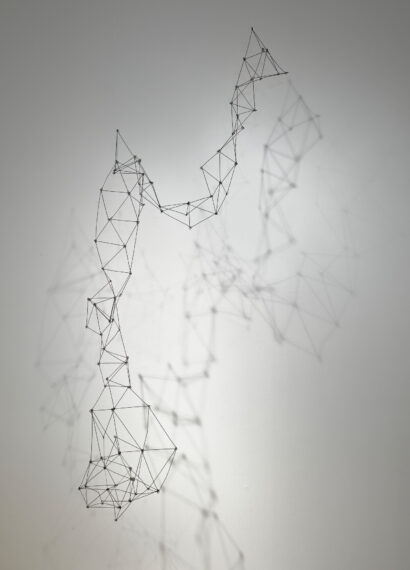
Gego, Reticular Column (Columna reticularea),1969. The John R. Van Derlip Fund, 2024.61
With this sculpture, Mia now owns works by the three most influential figures of kinetic art (Gego, Carlos Cruz-Diez, and Jesús Rafael Soto), who brought international recognition to Venezuela from the late 1950s onward. It’s the first by Gego in Mia’s collection.
The sculpture exemplifies her use of modular structures, and how their repetition and layering evoke a sense of infinite growth and immersion. This acquisition helps the museum tell the extraordinary story of postwar abstraction in Latin America.
Japanese Tea Bowl

Japan, clog-shaped tea bowl with wisteria motif, Edo period, early 17th century. The Mary Griggs Burke Endowment Fund, 2025.45
This deformed tea bowl dates from a short-lived period when practitioners of ceremonial tea gatherings vied with each other to push novelty to the limit. It corresponds to what contemporaries described as the “warped” aesthetic of Furuta Oribe (1544–1615), a distinguished tea master and samurai who played a pivotal role in the evolution of tea culture.
Mia has very few Oribe ceramics from this period. This one was included in the exhibition “Turning Point: Oribe and the Arts of Sixteenth-Century Japan” that was shown at the Metropolitan Museum of Art, New York, in 2003–4, and was arguably one of the best works in that exhibition.
Louis Welden Hawkins
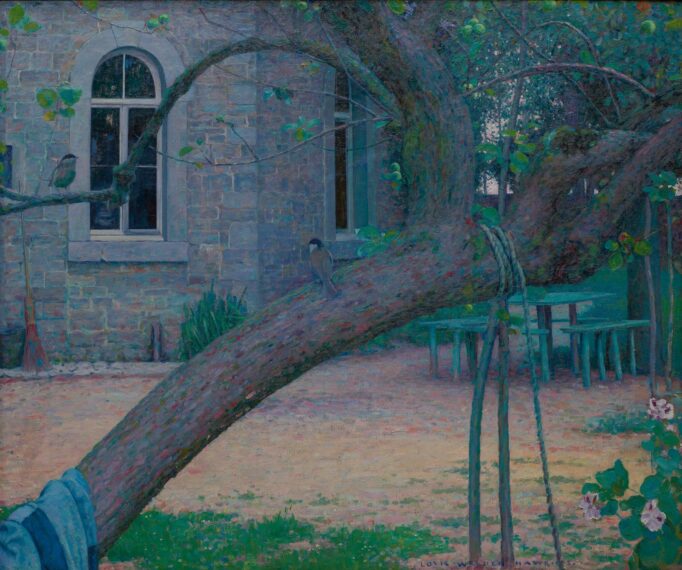
Louis Welden Hawkins, French (born Germany), 1849–1910. Its home (Sa demeure), c. 1899. Oil on canvas. Gift of funds from Brad Radichel in honor of Gabriel and Yvonne Weisberg. 2025.38
Takeuchi Ryūa
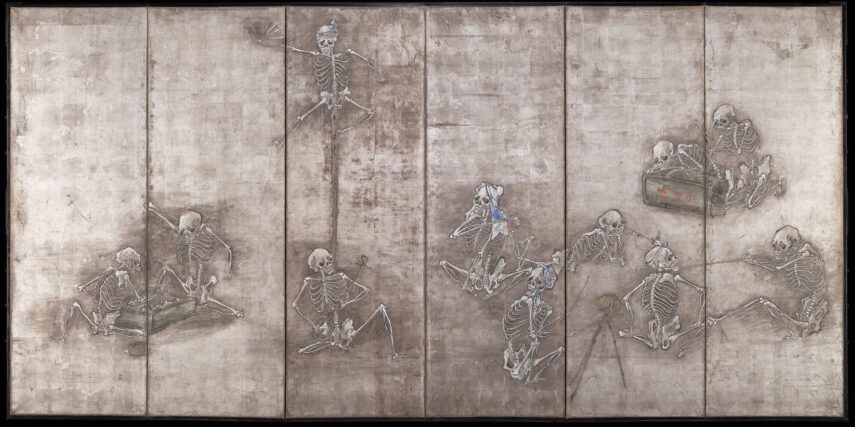
Takeuchi Ryūa (Kokunimasa), Skeletons at Play, c. 1900–1920. The Mary Griggs Burke Endowment Fund, 2024.66.1
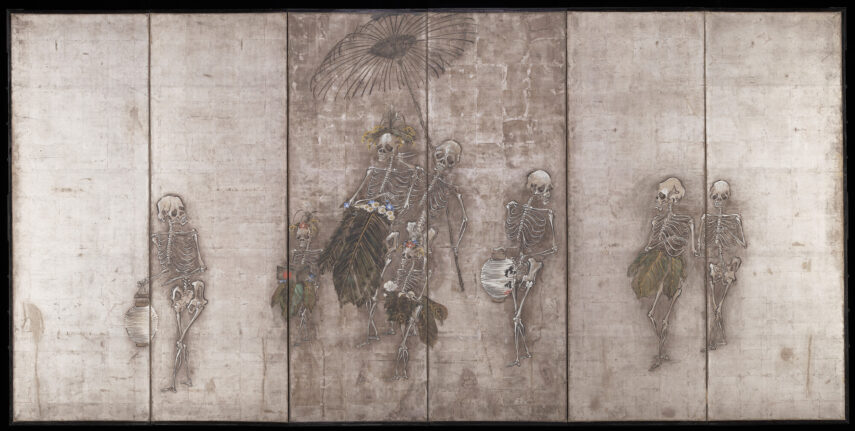
Takeuchi Ryūa (Kokunimasa), Skeletons as a Courtesan Procession, c. 1900–1920. The Mary Griggs Burke Endowment Fund, 2024.66.2
Many museum collections around the world, including Mia’s, own prints by Takeuchi Ryūa, but his paintings are far rarer. This pair of six-panel folding screens is Ryūa’s largest and most important of his known paintings, and some would say his masterpiece. They greatly enhance Mia’s developing collection of early 20th-century Japanese paintings.
Executed on silver leafed paper to emphasize the underworld nature of the subject matter, the right screen depicts skeletons as a courtesan procession and the left skeletons at play.
Jesús Rafael Soto
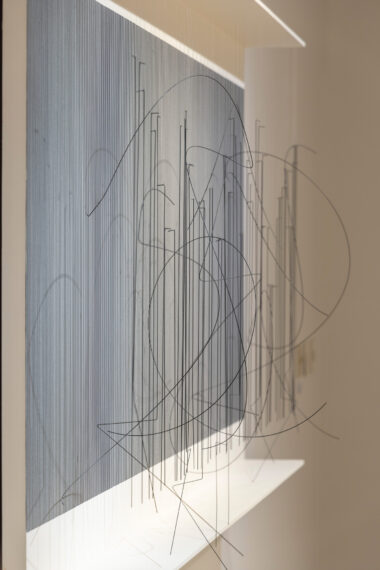
Jesús Rafael Soto, Venezuelan, 1923–2005. Écriture Fine, 1979. Paint on wood, metal, nylon. The Putnam Dana McMillan Fund and the John R. Van Derlip Fund, 2025.42
Santiago Rusiñol
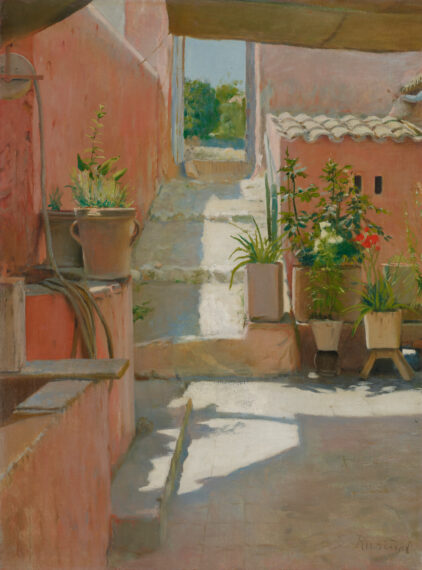
Santiago Rusiñol, Spanish, 1861–1931. Patio in Sitges, c. 1892–94. Oil on canvas. The Putnam Dana McMillan Fund. 2024.45
This painting enriches Mia’s already wide-ranging collection of 19th-century European art, which includes artists from France, England, Germany, the Netherlands, Sweden, Norway, and Finland. But our examples from Italy and Spain have been more limited.
Patio in Sitges complements recent landmark acquisitions of large-scale works by Joaquin Sorolla and Ramôn Tusquets y Maignon, and adds variety to the scale and subjects of Mia’s modern Spanish paintings.
John Singer Sargent
Georg Pencz, German, active c. 1500–1550. The Temptation of Christ, From the Life of Christ, Plate 11, c. 1534–35. Engraving. Gift of Elizabeth, Julie, and Catherine Andrus in memory of John and Marion Andrus. 2015.93.29
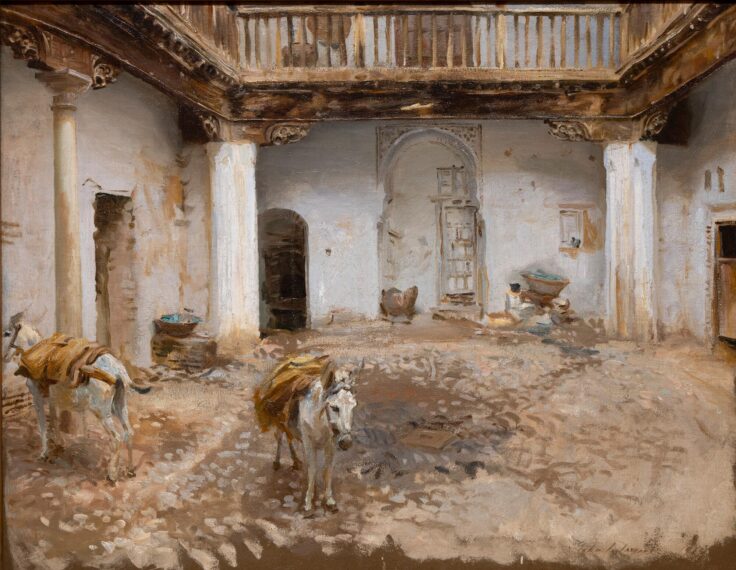
Mia has been fortunate to have a group of five paintings by John Singer Sargent on extended loan from the Myron Kunin Collection since 2014, of which this work is the first to enter the permanent collection as a gift.
These works, along with Luxembourg Gardens at Twilight and The Birthday Party, constitute one of the finest presentations of Sargent’s work among our peer institutions. Courtyard, Casa del Chapiz is a particularly welcome addition, enriching our emerging collection of late 19th-century Spanish painting with one by an American artist traveling to Spain to paint.
JoAnn Verberg
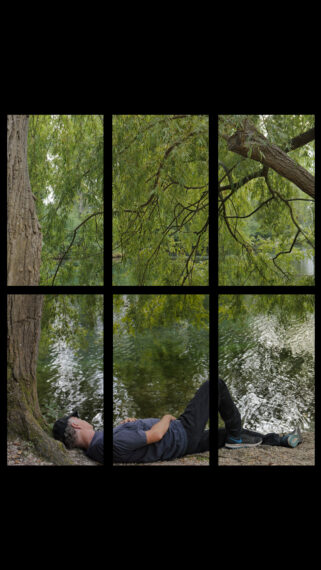
JoAnn Verburg, American, born 1950. The Poet and the Birds, 2016–23. Six video loops displayed on a 50 in. monitor with sound. Gift of funds from David A. Wilson and Michael J. Peterman, and Kate Christianson, and the Michael Bennes Endowment for Art Acquisition. 2025.17
Circle of Manuel de Arellano

Circle of Manuel de Arellano, Virgin of Guadalupe, 1700-50. The William Hood Dunwoody Fund, 2025.39
This life-size Virgin of Guadalupe is the first Latin American religious image from the colonial period to enter the collection. As an important symbol of European colonization (under the pretext of spreading the Catholic faith), it fills a significant gap at Mia. And its large dimensions make it unlike any other depiction of the Guadalupe in any major collection.