
Learning from Looking
Self-Guided Group Activity
Many of these questions are designed to prompt close looking and critical thinking. Read each artwork’s label to find answers to fact-based questions.
Artwork not on view? Don’t worry: There are plenty of others to visit!
Featured Works
Plan on spending time with eight to 10 artworks.
Shiva Nataraja (Lord of the Dance)
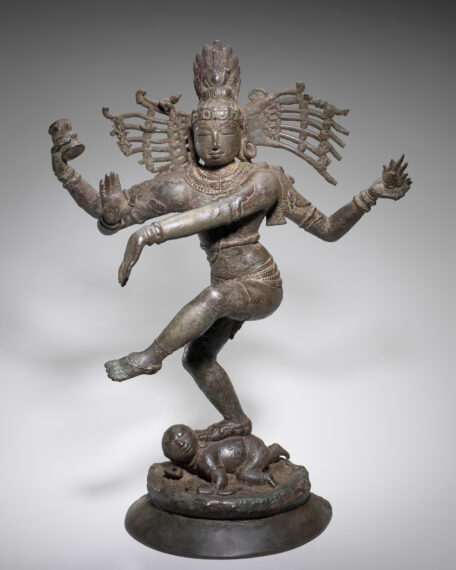
India, Shiva Nataraja (Lord of the Dance). Gallery 211
- What do you see that tells you Shiva is not human?
- What do you see that tells you Shiva has super powers?
- What can you find out about these powers from the label?
Equestrian figure
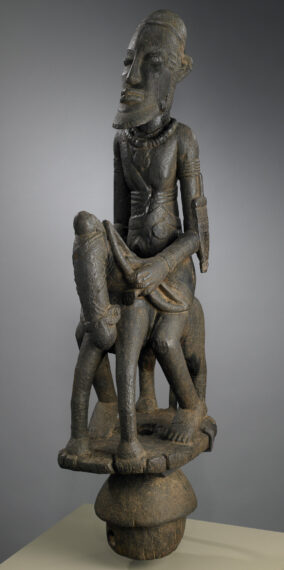
Djenne, Mali, Equestrian figure. Gallery 250
- What about this horse and rider shows they are powerful?
- How do historians know this is authentic?
- What do you suppose the artist needed to think about before beginning to carve this sculpture from a single piece of wood?
Tusk
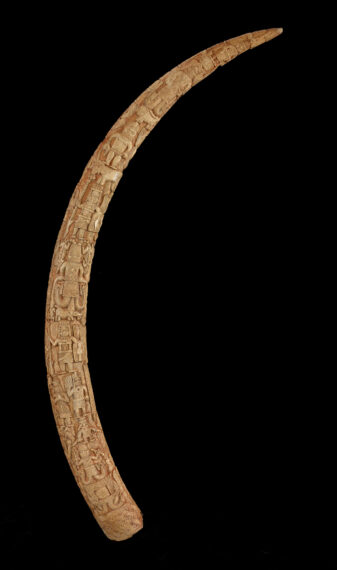
Benin, Nigeria, Tusk. Gallery 250
- Who are the most important people on this carved tusk? How can you tell?
- What kinds of animals do you see?
- What purpose does the tusk serve?
- Find the Portuguese soldier. How did the artist show he was a foreigner?
House Group
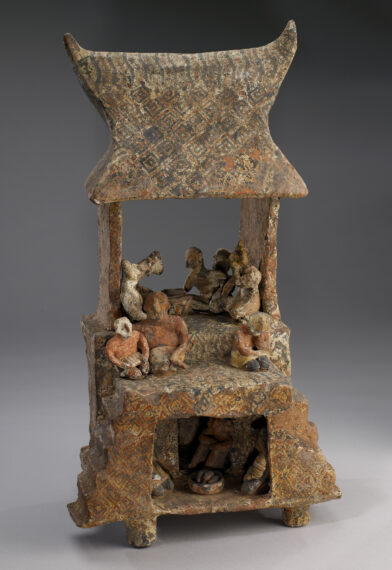
Nayarit, Mexico, House Group. Gallery 250
- Look at this sculpture from all sides. What activities do you see taking place?
- What do you see to support your ideas?
- Based on this sculpture, what do you think the Nayarit people valued most?
- Why do you suppose the artist showed some people on the upper level and others down below?
Jade Mountain Illustrating the Gathering of Scholars at the Lanting Pavillion
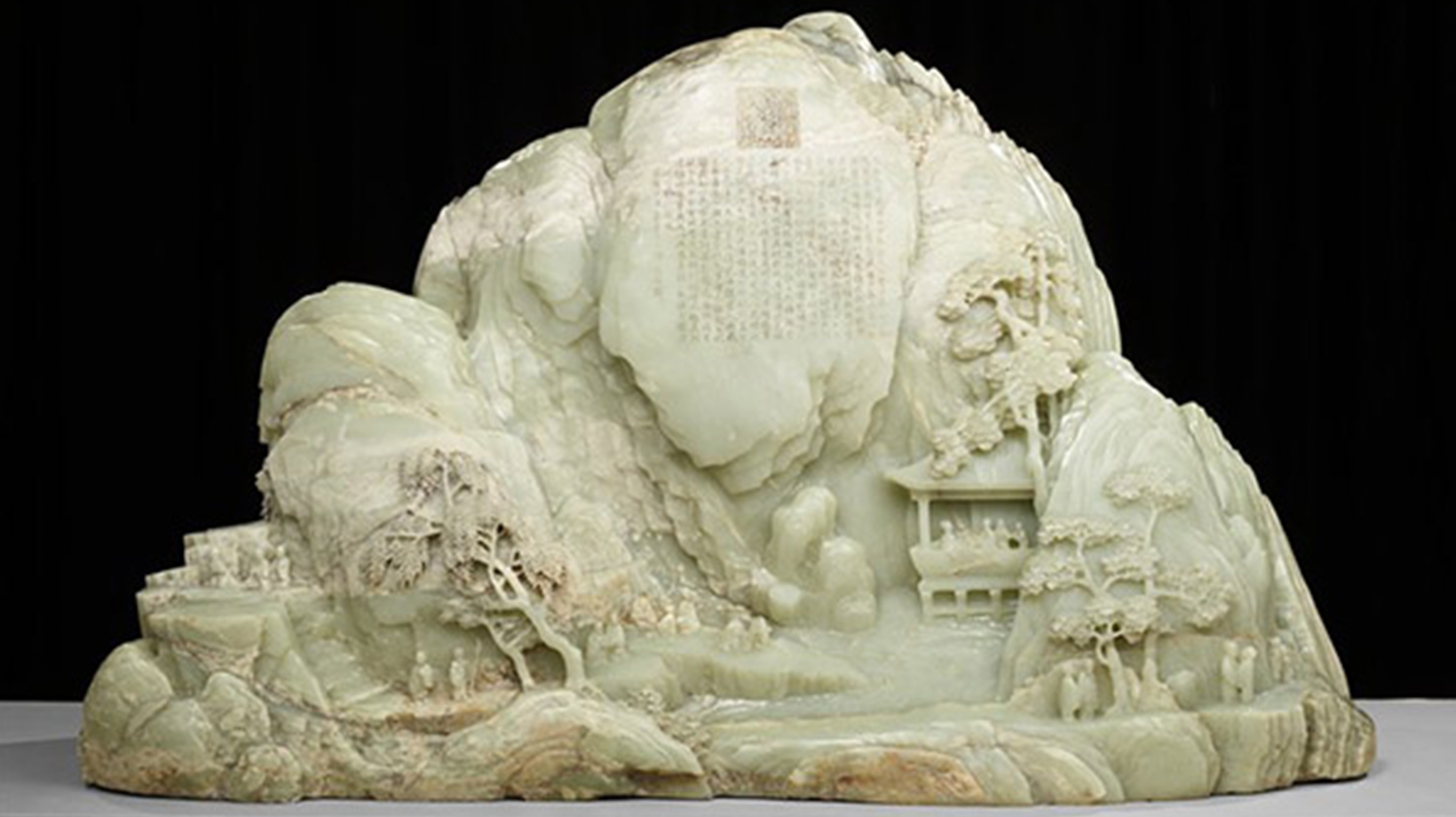
China, Jade Mountain Illustrating the Gathering of Scholars at the Lanting Pavillion. Gallery 210
- Look closely. What details do you notice?
- Take a moment to walk around the sculpture. What else do you see?
- What is the story being told?
- Find two poems cut into the jade.
Writing Box with Wedgwood Antislavery Medallion
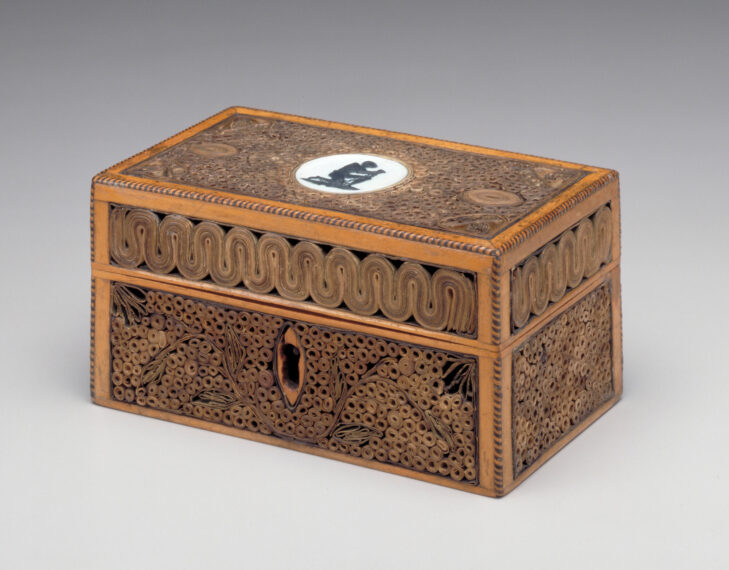
Josiah Wedgwood; designer: Henry Webber; modeler: William Hackwood; Wedgwood, England, 1730–1795, Writing Box with Wedgwood Antislavery Medallion, rolled paper on wood with stoneware (jasper) medallion. Gallery 322
- What do you notice first?
- How does this image communicate a message about ending slavery?
- Look closely at this box made of paper. Take a minute to look for wavy and rolled paper. Can you find the floral designs made by the rolls of paper?
The Coaci Inkstand
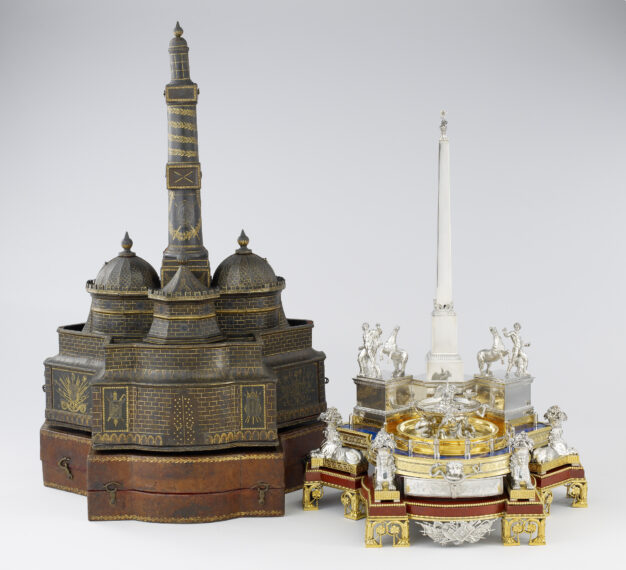
Vincenzo Coaci, The Coaci Inkstand. Gallery 322
- Look closely. Describe what you see.
- What do you think the purpose of this object is?
- What evidence do you have to support your theory?
- What parts do you think are moveable?
Destruction of the Beast and the False Prophet
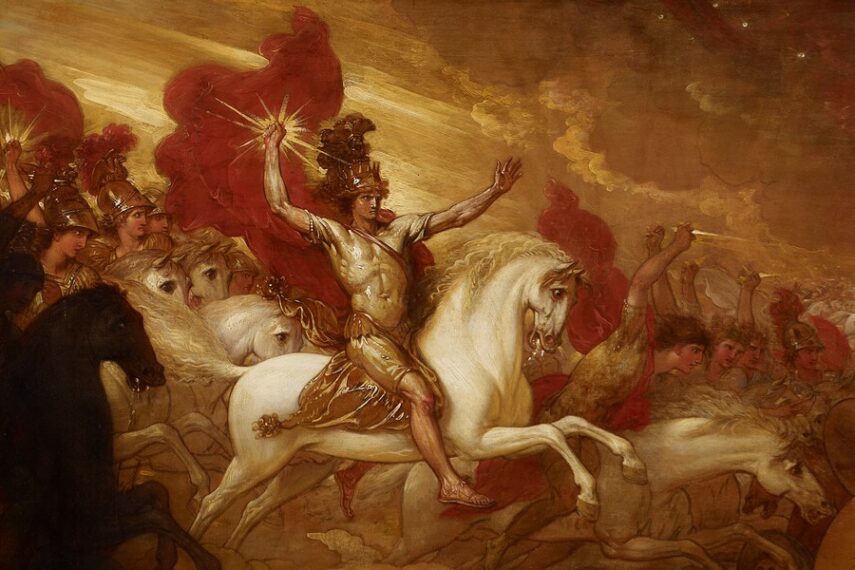
Benjamin West, Destruction of the Beast and the False Prophet (detail). Gallery 322
What is going on in this painting?
What do you see that makes you say that?
What do you wonder about this painting?
Which title do you think best represents this painting: Destruction of the Beast and the False Prophet or The Messiah on a White Horse? Why?
Housetop Variation Quilt

Lola Pettway, Housetop variation quilt
2019.16.16, © Lola Pettway / Artists Rights Society (ARS), New York. Gallery 304
- Look closely at the fabric. What does it remind you of?
- What shapes do you see?
- Why do you think this might be called a housetop quilt?
- Imagine you are floating above your neighborhood. Below you are the streets, apartment buildings, stores, and houses. What colors would you use for your quilt?
- How many squares would you need? What structures would they represent?
The Fugitives
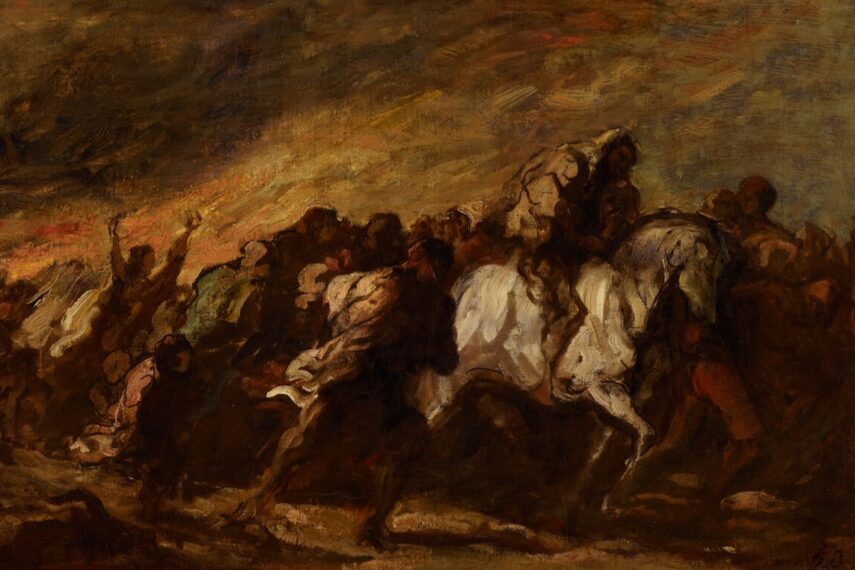
Honoré Daumier, The Fugitives (detail). Gallery 324
- Look closely at the painting.
- Why do you suppose everyone is running?
- Do you think they are running away from something—or toward something?
- What do you see that makes you say that?
- How does the artist show the refugees’ emotions?
The Veiled Lady
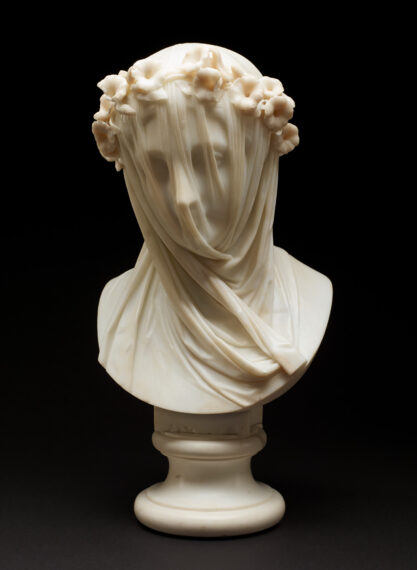
Raffaelo Monti, Veiled Lady. Gallery 357
- At first glance, what does this look like it’s made of?
- What do you see that makes you say that?
- What type of emotion do you think this woman is expressing?
- How would you describe this sculpture to a friend?
The Intrigue

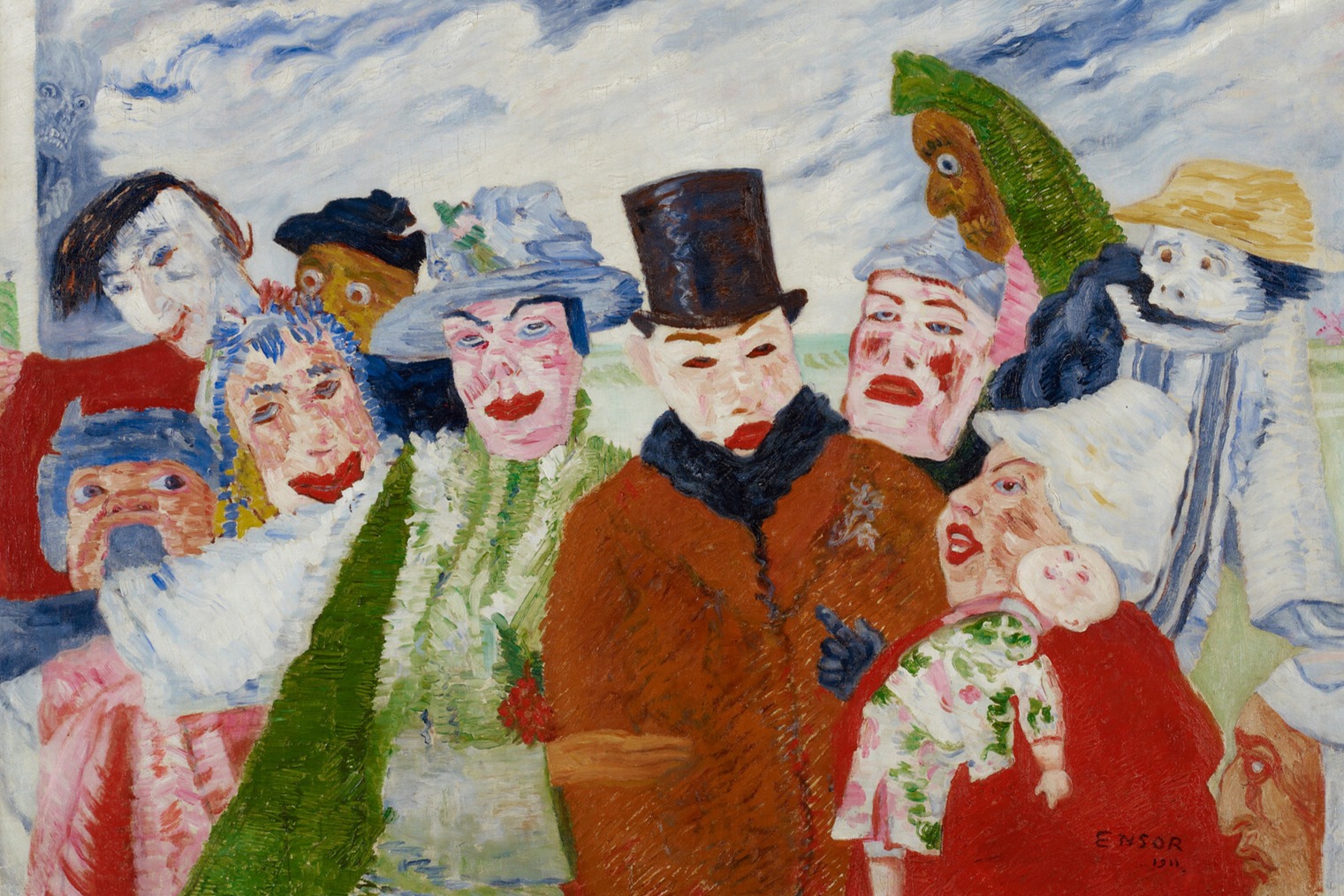
James Ensor, The Intrigue (detail). Gallery 371
- What appears to be going on here?
- What do you see that makes you think that?
- How would you describe the mood of the painting?
- What are some reasons that people wear masks?
- When have you worn a mask?
Through Birds, Through Fire but Not Through Glass
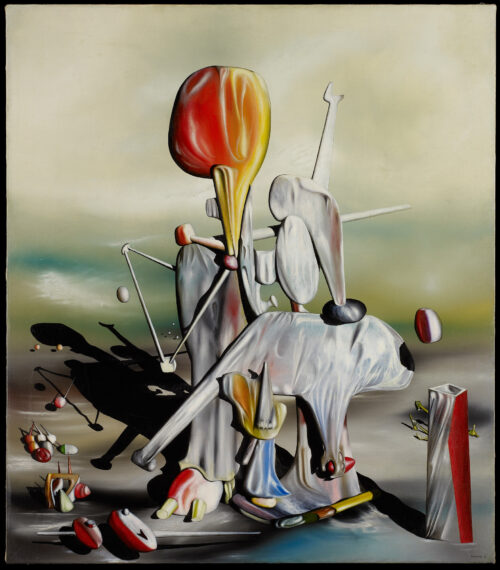
Yves Tanguy, Through Birds, Through Fire but Not Through Glass. Gallery 376
- How does this painting make you feel? Why?
- What are some possible stories you could tell based on this painting?
- Imagine you could enter this painting. What would you do in there?
- What could you hear? Smell?