
Educator Guide: Modern Art and Politics in Germany 1910–1945: Masterworks from the Neue Nationalgalerie, Berlin
Recommended for Learners Ages 11 and Up
This guide is designed to facilitate conversations about “Modern Art and Politics in Germany 1910–1945: Masterworks from the Neue Nationalgalerie, Berlin” at Mia. Use it in your classroom before visiting the museum or in the galleries during a self-guided visit. It highlights selected artworks that illustrate each of the exhibition’s main themes.
The images are accompanied by content about each artwork and discussion prompts that begin with close looking and description, then follow up with more complex questions. The guide also includes spotlights on art in Mia’s collection, activities, a glossary of useful terms, and discussion questions based on reading passages. We recommend that you review the content and plan your lessons, discussions, or tours in alignment with the interests and needs of your students.
Looking to visit the exhibition with your students? Simply request a free guided tour (for groups of 60 or fewer students). You can also register your group of 10 or more students for a self-guided experience using the same form. We look forward to seeing you at
Mia soon.
Introduction
In the first half of the 20th century, Germany experienced the final years of the German Empire, World War I and a subsequent revolution, the liberal Weimar Republic, the rise of National Socialism (Nazism)* under Adolf Hitler, the Holocaust, and World War II. Politics and social change deeply influenced the art of this time. Yet modern art in Germany didn’t simply reflect the changing times. It played an active, influential role in shaping conversations and ideas about those changes.
“Modern Art and Politics in Germany 1910–1945: Masterworks from the Neue Nationalgalerie, Berlin” features more than 70 paintings and sculptures created during these turbulent decades. The Nationalgalerie made history in the 1920s when its director Ludwig Justi founded a so-called Gallery of the Living, one of the first museums of contemporary art in the world. In 1937, more than 500 artworks from this gallery were confiscated as part of the Nazi campaign against art they labeled “degenerate.” Today, the collection of 20th-century art from East and West Germany is housed at the Neue Nationalgalerie, and contemporary art is located in the Hamburger Bahnhof, both in Berlin.
The exhibition traces the visual arts in Germany over four decades. It begins with the rise of Expressionism as a reaction and opposition to the conservative artistic trends during the reign of Kaiser Wilhelm II. The exhibition then explores the Neue Sachlichkeit (New Objectivity) movement, the modern realist style of the 1920s.
And it considers the years between the world wars, when many German artists were influenced by international trends, especially abstraction. Many of the artists who openly critiqued society were silenced under the Nazi dictatorship, from 1933 to 1945. The Nazis insisted that art be consistent with their ideology of racial purity, traditional gender roles, extreme nationalism, and loyalty to Hitler. They classified many works of art as “degenerate,” “Jewish,” or “un-German.” They confiscated artworks from German museums and showcased this art in a “Degenerate Art” exhibition in Munich, Berlin, and other cities, in part to ridicule the artists.
Three artworks in Mia’s “Modern Art and Politics in Germany” exhibition were among those shown in Munich, and many of the artists included here had other works labeled “degenerate.” The exhibition concludes with an exploration of art created in the aftermath of World War II.
*Adolf Hitler’s party adopted the name National Socialist Workers Party as a propaganda tactic to attract left-leaning, working-class voters. It was a calculated, cynical deception—the Nazis were vehemently antisocialist. Mia is using the more widely known and accepted term Nazi Party, and its movement, Nazism, in the context of this exhibition.
Art before the Wars: A Little Background
Even though modern art was on the rise in other parts of Europe during the early 1900s, the German Empire (1871–1918) resisted it. Kaiser Wilhelm II had strict control over what was shown in the Nationalgalerie, and he was openly hostile to modernism. He preferred traditional, academic styles that celebrated Germany history, military heroism, and imperial power. The official art and buildings of the empire often looked to the past, especially medieval and Renaissance art.
In spite of the emperor’s preferences, during this time new artistic ideas were taking hold. Realism (c. 1850–1900) was a style that aimed to show German life as it really was. It developed as a direct reaction to Romanticism (1790s–1850), which emphasized emotion, individualism, and imagination. From the 1880s to the 1920s, German impressionist artists painted images based on their perceptions and experiences of their surroundings. These styles set the stage for the German modern movements such as Expressionism and New Objectivity.
Society was changing, too. Young people formed the Jugendbewegung (youth movement), which partially rejected city life and encouraged people to return to nature. Most important was the growing demand for women’s rights, including the right to vote, which German women finally won in 1918.
In art, this hopeful view of the future led to new ways of painting. German Expressionist artists explored deep ideas about life and human emotion and were less interested in depicting things realistically. They challenged conventions by manipulating shapes, colors, compositions, and points of view to reflect how life was changing, especially in big cities like Berlin and Paris, which were becoming industrial and modern.
Museums and other state institutions, however, were slow to catch up. They didn’t begin to embrace these changes until after World War I, the biggest war the world had seen up to that time. More than 40 countries, including the United States (which entered the war in 1917), were involved, and more than 16 million people died. Many had hoped it would be the “war to end all wars,” but, sadly, it led the world down a path toward World War II, which began in 1939.
Expressionism
Expressionism was a European art movement that began around 1900 as a reaction against realistic art. Instead of depicting the world as it actually appeared, Expressionists wanted to show how the world made them feel. They expressed their emotions and personal experiences with bold lines, bright colors, and dramatic brushstrokes. They avoided detail and often used unexpected forms and perspectives to both convey and elicit emotional reactions.
A key event in Expressionism was the founding of Die Brücke (The Bridge) in Dresden, Germany, in 1905. This group of male artists created powerful images (often of young girls) with intense colors, lines, and shapes. Their radical work was in part influenced by non-European art, like Japanese woodcuts and African and Oceanic sculptures, which they saw in museums and admired as “pure” or “authentic” antidotes to the stiffness of the Western academic tradition.
The Expressionists rarely engaged with the cultural significance of the art they borrowed from (much of it from colonized regions). Instead, they capitalized on the expressive qualities in these unfamiliar, exciting art forms, borrowing freely out of what they considered to be admiration, not exploitation.
Expressionist artists focused on many different subjects. Emil Nolde, for example, created powerful religious paintings using bold colors and expressive figures to show deep emotion.
Another artist, Ernst Ludwig Kirchner, painted busy city scenes, especially of Berlin, showing how fast and chaotic urban life had become in the early 1900s.
Expressionism became a big part of German culture. In 1919, the Kronprinzen-Palais in Berlin was the first major museum in Europe to give this new art its own space, thanks to the support of its director Ludwig Justi.
Everything changed when the Nazis came to power in 1933. Justi, then director of the Nationalgalerie, was removed from his job, and the Nazis labeled Expressionism as “degenerate art” because it didn’t match their ideas of traditional, “pure” German art. Although Expressionism faced harsh criticism and censorship—especially during the Nazi period—it left a lasting impact on the art world and helped shape modern art as we know it today.
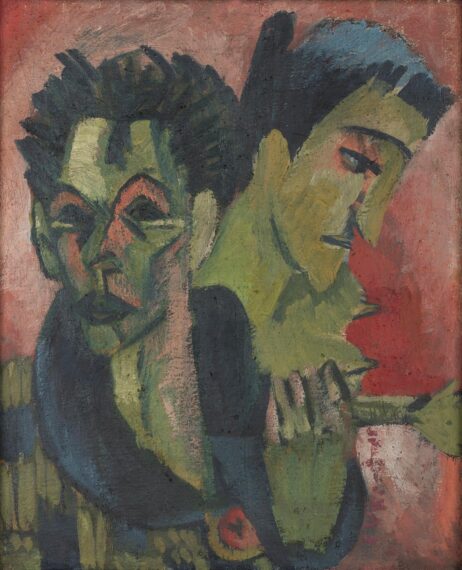
Ernst Ludwig Kirchner’s Self-Portrait with a Girl, painted shortly after the start of World War I, shows the artist on the left with his partner, Erna Schilling (1884–1945). Kirchner portrayed his own face as though carved from wood, rendering his sharply defined features as angular and harsh. Their green skin strongly contrasts with the red-orange background, which might suggest the chaos of the time. Kirchner’s dark, tangled hair and deeply shadowed eyes contribute to the sense of anxiety and distress.
The portrait isn’t just about how the couple looks—it shows how the artist was feeling inside. While Kirchner and Schilling are very close together, almost as though they are part of the same body, their heads turn in different directions, suggesting a disconnect between them.
In 1924, Friedrich Schreiber-Weigand, the director of the Chemnitz Municipal Art Collections, bought this painting for his museum. In 1933, the Nazis removed Schreiber-Weigand from his position, making him one of the first museum directors in Germany to be fired. He was replaced for a year by Wilhelm Rüdiger, who opened an exhibition called “Art That Did Not Come from Our Souls.” That show, which
ran from May to June 1933, mocked and criticized modern art and the former director who collected it. It was an early example of the Nazi campaign against what they called “degenerate art.”
Look and Discuss
What’s going on in this painting? How do the colors influence your interpretation? Which other artistic elements express how the people in the painting feel?
How do you feel when you look at Ernst Ludwig Kirchner’s Self-Portrait with a Girl? It was painted during the early days of World War I and reflects Kirchner’s emotional state. How do you think the war might have impacted how he painted himself and Erna?
Kirchner showed himself and Erna as physically close but emotionally distant. Think of a time when you were near someone but felt disconnected. What do you remember most about that moment? What words would best describe how you felt? Using any medium you choose, how would you represent those feelings in an artwork?
An art museum director who embraced Nazi ideology created an art show of Expressionist works (including this portrait) called “Art That Did Not Come from Our Souls.” What message does this title communicate about the art and artists included in the exhibition?
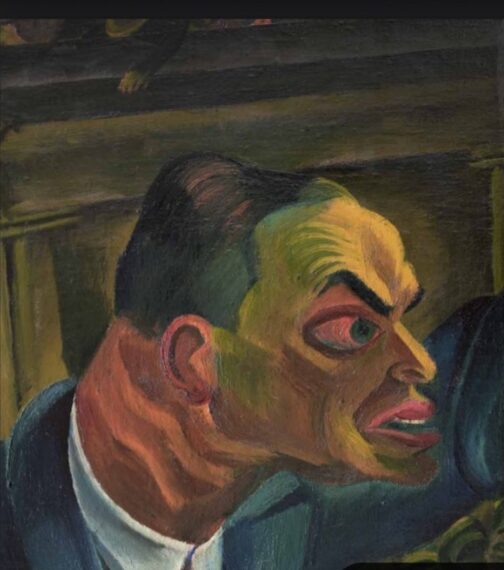
Conrad Felixmüller (German, 1897–1977), The Orator No. 1, Otto Rühle (fragment), 1920, oil on canvas. Gift from the Conrad Felixmüller heirs, 2019, NG 2/19
Conrad Felix Müller, born in Dresden, later began calling himself Felixmüller. In 1918, at the end of World War I, in which he served as a medic, he joined Germany’s Communist Party, dedicated to the idea of workers rising up against the ruling classes. He was also a member of the Dresden Secession Group, an organization of artists breaking away from traditional styles.
The man in the portrait, Otto Rühle (1874–1943), helped start the German Communist Party (KPD) in late 1918. But his extreme radical views led to his expulsion from the party in February 1920. He then joined the Communist Workers’ Party of Germany (KAPD) but was forced to leave that group as well in October 1920.
This portrait is a fragment of a larger work painted by Felixmüller in 1920. The original, large painting depicted Rühle shouting at a crowd of workers, his face full of emotion. Felixmüller captured Rühle’s intensity by juxtaposing deeply contrasting pinks, yellows, and greens in the masklike face, distorting his expression, and exaggerating the thrust of his neck. Felixmüller destroyed most of the dangerously radical painting out of fear of Nazi persecution. He kept only this fragment of Rühle’s expressive head, but he later repainted the entire composition. His re-creation of the painting is on view in the exhibition.
Look and Discuss
Describe this man’s face. What liberties has the artist taken with reality to express how Otto Rühle felt while speaking to a group of workers? What stands out to you about the colors and expression on his face? How do these choices made by the artist affect how you feel about Otto Rühle?
Conrad Felixmüller painted Rühle as a passionate and intense speaker during a time of political upheaval. What do you think the artist wanted viewers to understand or feel about political leaders and radical ideas through this portrait?
The artist was determined to use his art to express his beliefs about the importance of the working class in society. What causes or beliefs do you feel strongly about? How do you stand up for your beliefs?
In spite of his determination to speak up for what he believed in, Felixmüller ended up destroying most of his own painting for fear of being persecuted by the Nazis. What are some things that might prevent you from fully expressing how you feel about topics that are important to you?
Spotlight on Mia: Expressionism
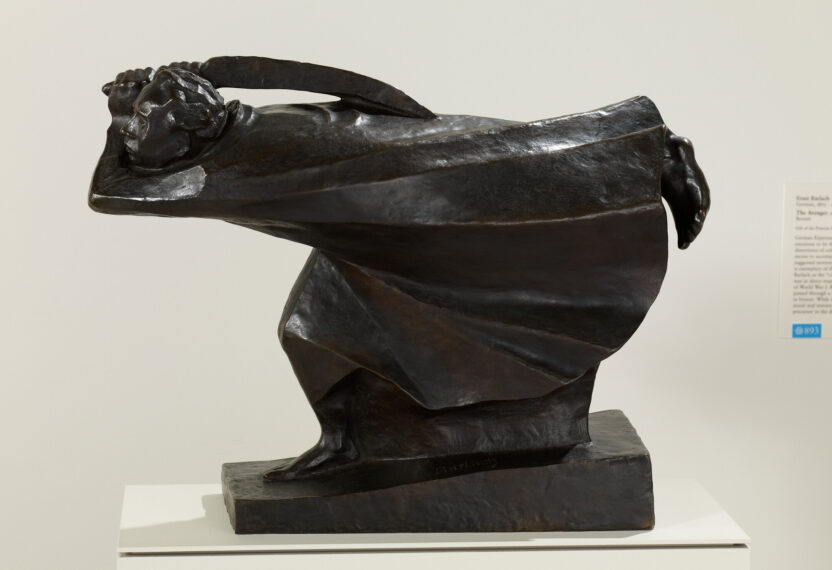
Ernst Barlach (German, 1870–1938), The Avenger, 1914 (cast 1923), bronze. Gift of the P. D. McMillan Land
Company, 58.4
Expressionism took many different forms. Spotlights on two Mia artworks by Ernst Barlach and Wassily Kandinsky show just how diverse the artists, artworks, and motivations were.
The angular form, suggested motion, and passionate gesture of Ernst Barlach’s The Avenger exemplify the main goals of Expressionism.
Modeled before World War I, it conveys the energy of the war in its unrestrained motion, as the avenger lunges forward brandishing a sword. Barlach described it enthusiastically as the “crystallized essence of War.”
Like many Germans, Barlach initially supported World War I because he hoped it would be a catalyst for a better society and future. In 1915, at age 44, he joined the war as an infantry soldier, but a heart condition led to his early discharge. His direct experience of the war transformed him into a committed pacifist, dedicated to creating antiwar sculptures, including The Fighter of the Spirit (1928), which stands at Mia’s entrance.
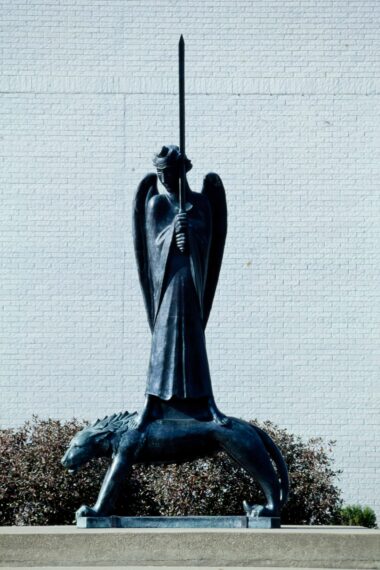
Ernst Barlach (German, 1870–1938), The Fighter of the Spirit, 1928, bronze. The John R. Van Derlip Fund, 59.16a, b
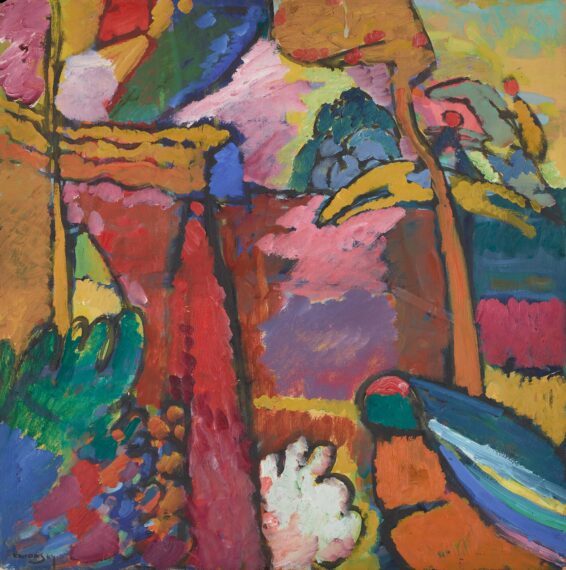
Wassily Kandinsky (Russian, 1866–1944), Study for Improvisation V, 1910, oil on pulp board. Gift of Bruce B. Dayton, 67.34.2
Wassily Kandinsky’s Expressionist abstract landscape Study for Improvisation V references biblical imagery of the Apocalypse, foretelling
Christ’s second coming. Bright colors, fluid forms, and strong brushstrokes energize the painting’s composition. In the foreground, a woman in blue kneels before a tall figure with flowing golden hair—possibly Christ. In the background, two horsemen of the Apocalypse (a recurring theme for Kandinsky) leap over a fence.
Russian-born Kandinsky was a pioneer of abstract art, known not only for introducing nonrepresentational art, but for his theories on art and spirituality.
He cofounded the Blue Rider (Der Blaue Reiter), a German Expressionist art group active in Munich from 1911 to 1914, centered on conveying inner realities through symbolic color and form. Kandinsky believed that art could reveal inner truths.
He described an “improvisation” as a largely unconscious, spontaneous expression of one’s inner, spiritual nature. He lived with synesthesia, which caused him to perceive colors as sounds and led him to create purely nonrepresentational art. He wanted painting, like music, to evoke emotion through colors and forms, functioning as melodies and rhythms on the canvas.
Look and Discuss
What emotions do you feel when you look at each artwork? How do the artists use form, color, or movement to elicit those feelings? Both artists are considered Expressionists. How do their approaches to Expressionism differ?
How does Barlach’s sculpture express the physical and emotional weight of war? In contrast, how does Kandinsky’s painting reflect a more spiritual or symbolic experience?
Kandinsky described his work as an “improvisation” based on spontaneous inner feelings. Do you think Barlach’s The Avenger also reflects inner emotions? Why or why not?
How did these artists’ personal experiences (Barlach’s naïve hope for World War I, Kandinsky’s synesthesia and spirituality) shape their work?
Barlach became a pacifist after experiencing war firsthand. How might The Avenger reflect a critique of war, even though it shows a figure in motion with a sword?
In Kandinsky’s painting, we see figures that might symbolize Christ and the horsemen of the Apocalypse. What might these symbols say about his view of the world in 1910?
Mia Artist Spotlight: Ernst Ludwig Kirchner
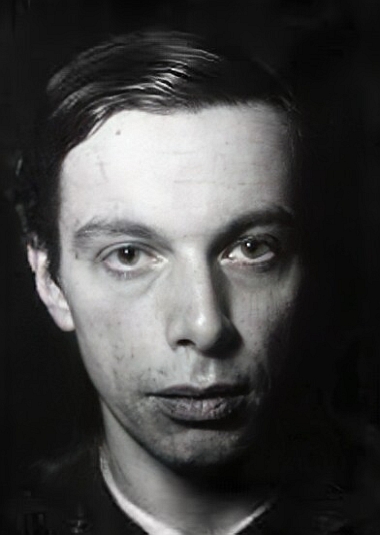
Ernest Ludwig Kirchner (1880–1938) was a founding member of Die Brücke (The Bridge), an influential group of artists formed around 1905, whose establishment marked the beginning of German Expressionism. The group wanted to break away from academic traditions and create art that conveyed raw emotion and spontaneity. Their style was characterized by simplified forms, flattened perspectives, and bold, non-naturalistic colors.
In 1911, Kirchner moved to Berlin. During his time there, his work focused on the modern city and its people, capturing the energy, anxiety, and social tensions of urban life.
When World War I began, Kirchner volunteered for military service. But he was discharged shortly after due to a severe physical and psychological breakdown. He spent time recovering in sanatoriums (clinics) near Davos, Switzerland, where he remained for the rest of his life. In this new environment, his art shifted focus to the rural landscape, mountains, and village life of the region.
With the rise of the Nazi regime, Kirchner’s work came under attack. In 1937, the Nazis labeled his art as “degenerate,” and more than 600 of his works were removed from public collections. The following year, he took his own life.
Read and Discuss
Why do you think Kirchner and the artists of Die Brücke wanted to break away from traditional art styles? What might have been going on in society that inspired that desire?
How did Kirchner’s experiences during World War I and his time in Switzerland influence his subject matter?
Why do you think the Nazi regime labeled Kirchner’s work as “degenerate”? What does this tell you about the relationship between art and political power?
Activity: Seated Girl (Fränzi Fehrmann) by Ernst Ludwig Kirchner in Mia’s Collection
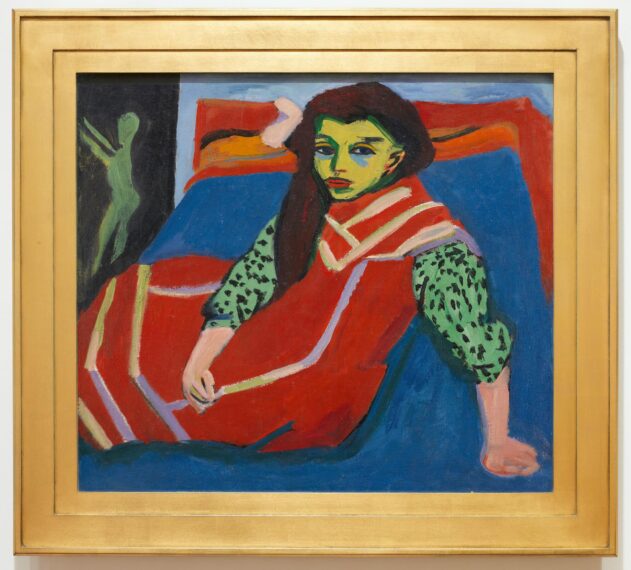
Ernst Ludwig Kirchner (German, 1880–1938), Seated Girl (Fränzi Fehrmann), 1910 (altered 1920), oil on canvas. The John R. Van Derlip Fund, 52.12
In this activity, you’ll explore Kirchner’s painting Seated Girl through careful looking, reading, and writing. You’ll practice thinking like an art critic and a historian by analyzing the painting and learning about the artist’s life and times.
Look and Discuss
Before reading anything about the artist or the painting, spend a few quiet minutes looking at Seated Girl by Ernst Ludwig Kirchner. Write your responses in full sentences. There are no wrong answers—use your eyes and your imagination.
Answer the following questions using only what you see in the painting:
- What’s going on in this picture?
- What do you notice about how the girl is posed?
- How does her posture, facial expression, or placement in the painting affect the mood?
Kirchner was part of the Expressionist movement. What emotions or ideas do you think he’s trying to express in this portrait? How does he use color, line, and shape to do that?
This isn’t a traditional, realistic portrait. Why do you think Kirchner chose to show the girl in this way? What might he be saying about her—or about society at the time?
If the girl in the painting could speak, what do you think she might say? What makes you think that?
Read and Reflect
Now read the label text below and “Mia Artist Spotlight: Ernst Ludwig Kirchner” provided by your teacher. Pay close attention to the following:
- How his life experiences may have influenced his art
- When and where this painting was made
Label Text: In the early decades of 20th-century Germany, a group of avant-garde artists known as Die Brücke (The Bridge, 1905–13) emerged. Hoping their work would serve as a bridge to the art of the future, they developed a radical new style of painting called Expressionism. This composition, with its deliberate brushstrokes and forceful use of outline, articulates both Ernst Ludwig Kirchner’s and Die Brücke’s intent to reveal raw emotion without apologies.
Lina Franziska “Fränzi” Fehrmann (1900–1950), the adolescent model for Seated Girl, met Kirchner in 1910. She and her siblings regularly posed for artists in the Brücke group.
Read, Reflect, and Discuss
How does knowing more about Kirchner’s life and the goals of Die Brücke change or deepen your understanding of Seated Girl?
What specific features in the painting (like brushstrokes, colors, or facial expression) feel emotional or intense? How do these reflect the Expressionist goal of showing “raw emotion without apologies”?
Fränzi Fehrmann, the girl in the painting, was a young model who often posed for artists in the Brücke group. How does knowing this change the way you see the painting? What do you think Kirchner was trying to show about her or about childhood?
Kirchner’s life was shaped by major events like World War I and the rise of the Nazi regime. How might these experiences have affected the way he saw the world—and painted it?
Do you think Kirchner’s work, especially Seated Girl, challenges or supports traditional ideas of beauty, childhood, or identity? Why or why not?
New Objectivity
In 1925, German art historian and critic Gustav Friedrich Hartlaub organized an exhibition that introduced a new artistic style, markedly different from the emotional and dramatic nature of Expressionism. He called this style Neue Sachlichkeit, or New Objectivity. Artists within this movement focused on realistic depictions of life in the Weimar Republic. Rather than using bold
brushstrokes or unexpected colors, they portrayed people, still lifes, and landscapes with clarity, detail, and minimal exaggeration. Their work often reflected the societal shifts occurring in Germany after World War I.
The 1920s were also a time of significant social change, particularly for women. After the war, German women gained the right to vote, and more women began working outside the home. Women from all social classes enjoyed greater personal freedom. Many began going out alone to cafés and nightclubs, and expressed themselves more freely—through fashion, career and education choices, and
relationships. Clothing became a way to challenge traditional gender roles.
Although the New Objectivity style seemed straightforward and realistic, it often carried deeper political or social messages. Many of the artists held left-wing political views and were critical of the rising Nazi Party. While some of their realistic artworks were initially tolerated, the hidden messages and political beliefs behind them often placed the artists at risk.
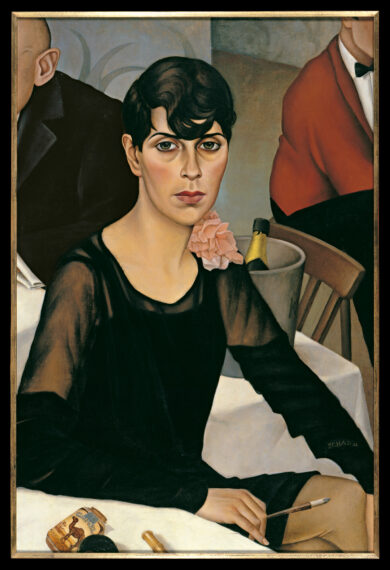
Christian Schad (German, 1894–1982), Sonja, 1928, oil on canvas. Acquired by the Friends of the Nationalgalerie with funds from the Ingeborg and Günter Milich Foundation, FNG 80/97
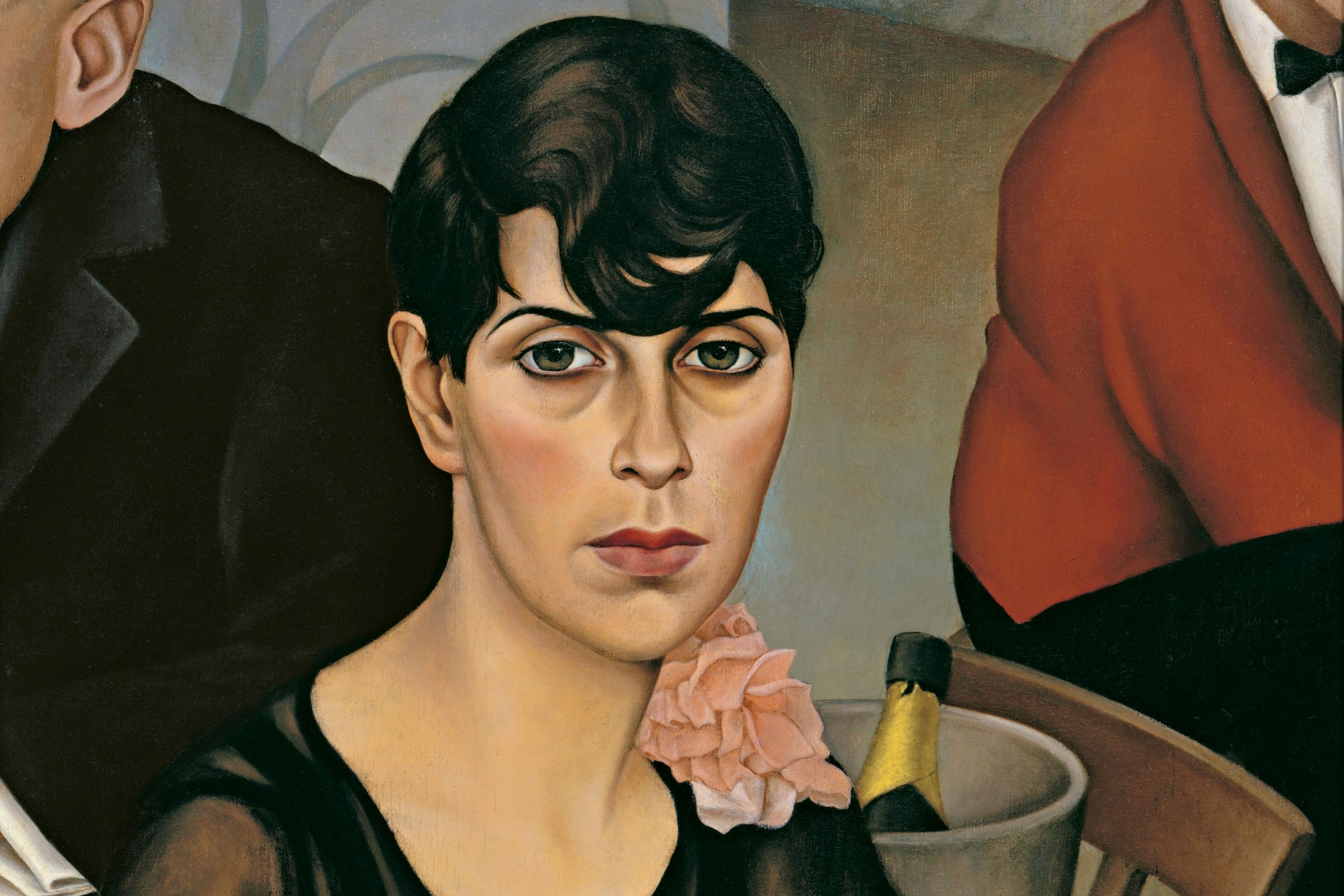
Sonja is one of Christian Schad’s most important works and a quintessential example of Neue Sachlichkeit (New Objectivity)—an art movement known for its realistic, often emotionally detached portrayals of modern life. The painting is also a striking image of the confident, independent woman during the Weimar Republic, Germany’s government between World War I and World War II.
Christian Schad was born in Bavaria, Germany. During World War I, he left the country and lived in Zurich, Switzerland, and later in Italy. In April 1928, he moved into a studio in Berlin, where he painted Sonja, depicting her seated in a Berlin café, one of many gathering places for Berlin’s creative community. In the portrait, she appears cool, distant, and slightly melancholy. Her short,
stylish hair and cigarette holder reflect modernity and self-assurance. On the table are items like a pack of Camel cigarettes, a lipstick, and a powder compact—all symbols of a fashionable and independent woman.
She wears a silk slip beneath a sheer black chiffon dress, reminiscent of Coco Chanel’s iconic “little black dress.” The transparent fabric, the dress riding up over her knee, a silk camellia on her shoulder, and a nearby champagne bottle all contribute to a sense of sensuality. Her serious expression and detached gaze add a layer of emotional complexity.
The woman portrayed was actually named Albertine Gimpel. She lost her job—possibly as a secretary—in 1933 because she was Jewish. In 1936, after moving from Berlin to Munich, she met painter Franz Herda, the son of German émigrés to the United States. Using the protection of his American citizenship, Herda helped shield Gimpel from Nazi persecution. The two married in 1948, later settling in New York before eventually returning to Germany in 1962.
Look and Discuss
Look closely at this painting. What details do you notice? How would you describe this woman’s expression?
This painting reflects the idea of the “modern woman” during the Weimar Republic—stylish, independent, and self-aware. How does artist Christian Schad use both visual style and symbolism to show this version of womanhood? Based on this painting, how do you think the artist felt about the “modern woman”? Why might it be hard to tell how he felt?
Sonja appears confident and composed, yet also distant or emotionally guarded. Think about a time you felt the need to appear strong or put together on the outside while feeling something different inside. How did you make it through that situation? How would you show that experience visually? What details would you include?
If you decided to create a portrait that would live on for a century as an example of a modern person today, what details would you include? Why?
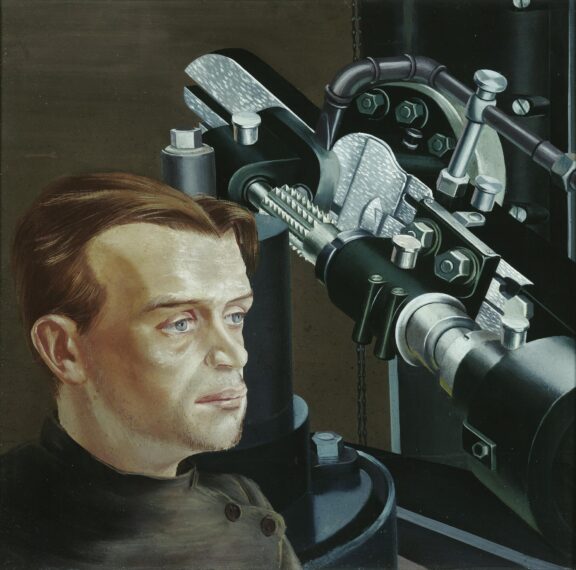
Wilhelm Lachnit (German, 1899–1962), Worker with Machine, 1924–28, oil on wood. Purchased from Max Lachnit, the artist’s brother, Dresden, 1964, A IV 27
Worker with Machine is one of Wilhelm Lachnit’s best-known works. It shows a man named Kurt Frölich, a typesetter for the Communist newspaper in Saxony and a party official. The painting is a kind of “double portrait”: it shows both Frölich and a large, complex machine, a product of the artist’s imagination. Lachnit designed the many parts as symbols of the creative power of workers. The sturdy, shiny machine stands as an equal partner to the human, suggesting a world where people are not disconnected from their labor.
In spite of the optimistic message of this portrait, Kurt Frölich’s story had a tragic ending. He was imprisoned in the Colditz concentration camp in 1933. In 1941, after his release, the Gestapo tortured him to death during an interrogation.
Artist Wilhelm Lachnit’s political beliefs also caused trouble for him when the Nazis came to power. A Communist Party member and a contributor to the Dresden branch of the Association of Revolutionary Visual Artists of Germany, he was arrested but later released after protests from a local artist group called the Dresden Secession.
Look and Discuss
What do you see? What do you notice about how the worker and the machine are shown? How does the artist use shapes, colors, and composition to show a relationship between the two?
This painting suggests that the worker and machine are equal partners, not separate. How have tools or technology become part of your everyday life? How do you use them as part of your creative process? How might our reliance on technology inform how
we interpret this painting today versus viewers 100 years ago?
Mia Artist Spotlight: Albert Birkle
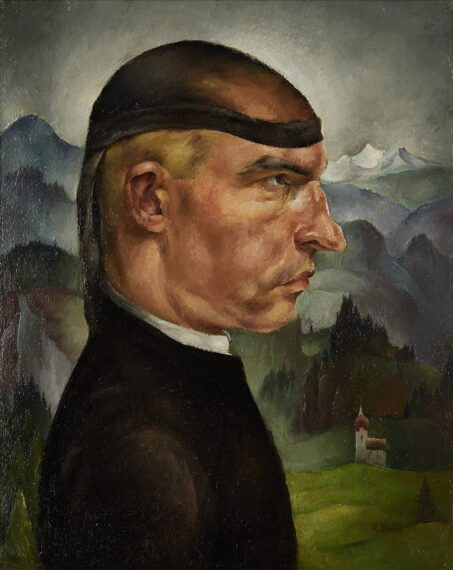
Albert Birkle (German, 1900–1986), Self-Portrait with Hairnet, 1923, oil on cardboard, mounted on cardboard. Leopold Museum, Vienna © Bildrecht, Vienna 2022
Albert Birkle (1900–1986) came from a family of painters. When he was 17 years old, he was forced into service during the final year of World War I. Following the war, he began his artistic journey as an apprentice decorative painter in his father’s firm. He later studied in Berlin, developing a body of work that included both painting and sculpture.
His style reflects elements of Expressionism and New Objectivity, often infused with sharp satirical critiques of the social and political climate of the Weimar Republic. His works frequently portray the struggles of ordinary people, underpinned by a strong psychological depth that defines the mood and tone of his art.
The rise of the Nazi regime had a significant impact on Birkle’s career. In the 1930s, he relocated to Austria, yet in 1936 he represented Germany with several works at the Venice Biennale. Ironically, those same works were removed from an exhibition at the Haus der Deutschen Kunst in Munich the following year. Several of his pieces were later confiscated by the Nazi government and labeled as
“degenerate art.”
A committed pacifist, Birkle joined the Reich Labor Service at the onset of World War II to avoid direct military service. During the war, he worked as a fresco painter for the military and also served as a war correspondent in France.
Following the war, Birkle became an Austrian citizen. In his later work, he revisited themes from the 1920s and 1930s. He died in Salzburg on January 29, 1986.
Read and Discuss
How did Albert Birkle’s art reflect the social and political issues of his time?
Birkle’s artworks were labeled “degenerate” by the Nazi government. What does this tell you about the relationship between art and politics during that time?
How did Birkle respond to the challenges of World War II, and what does this reveal about his personal beliefs?
Activity: The Telegraph Operator by Albert Birkle in Mia’s Collection
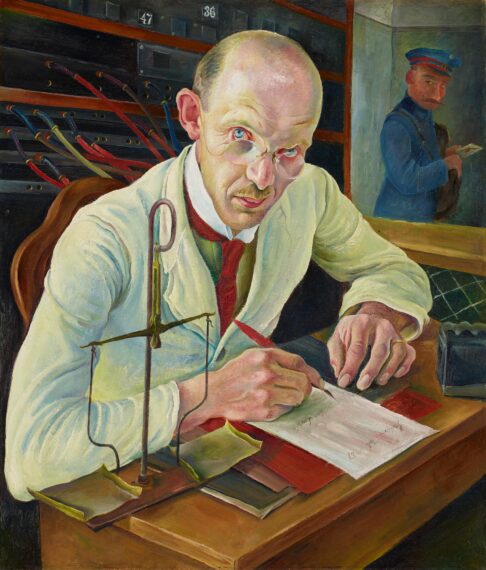
Albert Birkle (German). The Telegraph Operator, 1927, oil on board. Myron Kunin Collection, 2015.55.1
Albert Birkle grew up during World War I and depicted the turbulent years of the Weimar Republic and the rise of the Nazi regime.
In this activity, you’ll explore his painting The Telegraph Operator through careful looking, reading, and writing. You’ll practice thinking like an art critic and a historian by analyzing the painting and learning about the artist’s life and times.
Look and Discuss
Before reading anything about the artist or the painting, spend a few quiet minutes looking at The Telegraph Operator by Albert Birkle. Write your responses in full sentences. There are no wrong answers—use your eyes and your imagination.
Answer the following questions using only what you see in the painting:
What’s going on in this image?
What emotions do you think the subject might be feeling? What visual clues give you that impression?
What questions does this image raise for you?
Why do you think the artist chose to show this person in this way? What message or idea might he be trying to communicate?
Read and Reflect
Now read the label copy below and “Mia Artist Spotlight: Albert Birkle” provided by your teacher. Pay close attention to the following:
- How his life experiences may have influenced his art
- When and where this painting was made
Label text: In 1927, Albert Birkle was visiting the village of Hausen im Tal, near his parents’ homeland in southwestern Germany, when he encountered a certain Herr Häusler in the local post and telephone office. A consummate bureaucrat, Mr. Häusler seems literally plugged into his job. Though his realm may be small, he dominates it and doesn’t take kindly to our interruption of his important duties, something the postman in the next room recognizes with his sidelong glance.
Birkle had his first one-man show in Berlin the same year he painted this portrait. Seeing the ascendance of Nazism, he moved to Salzburg, Austria, in 1932. Nevertheless, he represented Germany at the Venice Biennale as late as 1936. In 1937, his artwork was declared “degenerate,” his works were removed from public collections, and a painting ban was imposed on him.
Read, Reflect, and Discuss
How does this painting reflect the transition from Expressionism to New Objectivity? Identify elements of both styles in this work.
After reading the label, what do you think the artist is trying to convey about Herr Häusler’s personality? Which elements in this painting support your view?
Based on what you know about Birkle’s views and the political climate, why do you think he chose this subject and setting? What could he be saying about communication or surveillance?
Knowing that Birkle’s work was later labeled “degenerate” by the Nazis, what do you think they found threatening or inappropriate about his style or subjects?
International Avant-Gardes
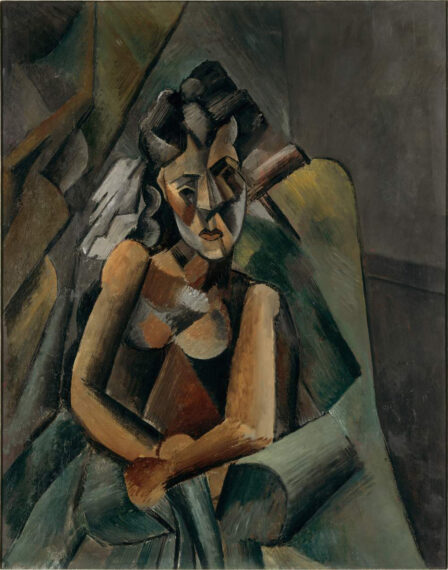
Pablo Picasso (Spanish, 1881–1973), Woman Sitting in an Armchair, 1909, oil on canvas. Purchased from Industriekredit AG, Zurich, 1980, NG 1/80
After World War I, Germany became a center for bold, new ideas in art. Artists from around the world were creating work that broke away from traditional styles, experimenting with abstract forms, new techniques, and unusual subject matter. These works often reflected the realities of everyday life and questioned social norms. Together, this network of radical, innovative artists and movements became known as the “international avant-gardes.”
Much of this artwork was introduced to German audiences through the efforts of art dealers and collectors. Museum professionals and gallery owners played a key role in promoting artists from outside Germany and bringing attention to modern styles. But their support for these new ideas also made them targets of criticism—especially when the art challenged traditional values or political beliefs.
During the rule of Kaiser Wilhelm II, and later under Adolf Hitler’s fascist regime, there was growing tension around what was considered “acceptable” art. Foreign influences and modern styles were increasingly seen as dangerous or “un-German.” Many works were labeled as “degenerate,” and artists, curators, and dealers who supported avantgarde movements often faced public backlash, job loss, or worse.
Even under this pressure, international influences such as Cubism (led by Pablo Picasso) and Surrealism (seen in the work of Giorgio de Chirico) had a lasting impact on German art. These styles helped inspire major German art movements like Expressionism and New Objectivity, which reshaped how artists represented the world around them.
This section will explore how the international avant-gardes influenced art in Germany, and how the people who supported it navigated a time of intense political and cultural change.
Read and Discuss
Why did some people in Germany dislike modern art?
How did museum workers, gallery owners, and art collectors help bring new art styles to the public?
How did movements from other countries, like Cubism and Surrealism, inspire German artists to create their own new styles?
Their Stories: Art Dealers of the International Avant-Garde
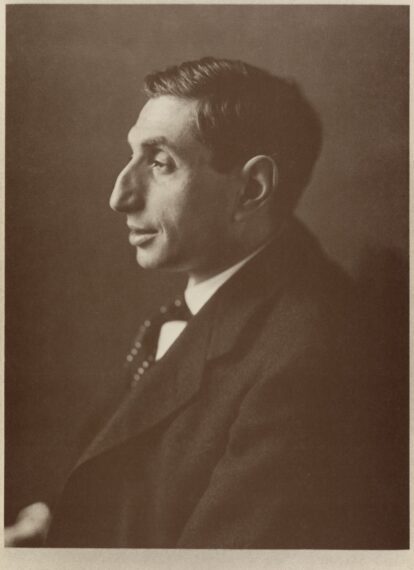
Alfred Flechtheim (1878–1937)
Writer and journalist Alfred Flechtheim changed his career in 1910 to open his own art gallery in Dusseldorf. On his regular trips to Paris, he became aware of the French modernist artists like Picasso, Braque, and Matisse and even befriended several. His galleries would feature the works of many of these artists, while also helping to promote the work of German Expressionist artists in France.
Flechtheim had successes and suffered setbacks. During World War I, he was drafted into military service, closed his gallery, and auctioned off its contents. Several years later, he opened another gallery and had offices in Germany and Austria. In 1929, Germany went through a Great Depression, which severely impacted his business. But it was the rise of the Nazi party, in 1933, that
threaten him both personally and financially because he was Jewish.
That year, the Nazis confiscated Flechtheim’s gallery and private collection. He fled Germany for France and eventually Britain, where he died, virtually penniless, in 1937.
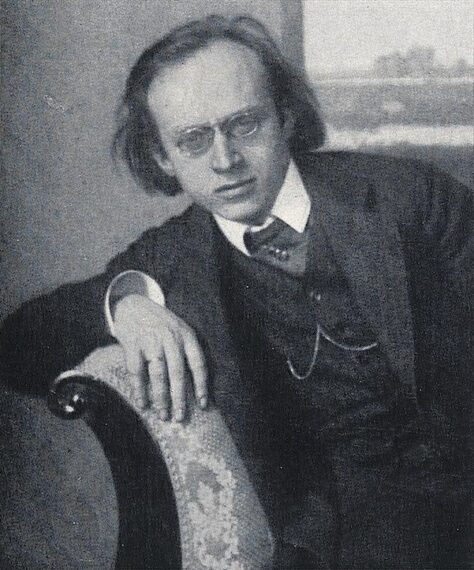
Herwarth Walden (1878–1941)
Herwarth Walden was born Georg Lewin. He was an author and editor, known for his publication Der Sturm (The Storm). This magazine focused on his theories of expressionism in art, music, and literature. Although he was a supporter of the German
Expressionists, Walden was also interested in the work of international artists.
Walden opened a gallery, also called Der Sturm, in 1912, that promoted art innovation from different countries. He was one of the lead organizers of the Erster Deuscher Herbstsalon (First German Autumn Salon) in 1913 that included works from artists of the Blaue Reiter (Blue Rider) group, as well as Futurism from Italy and Orphism in Paris.
He was politically left-wing and pro-Communist, which was a group targeted by the Nazis.
Walden, who was Jewish, emigrated to Russia in 1932 and continued to work as a teacher and publish articles for Der Sturm. But his support for radical, avant-garde movements drew suspicion from Soviet officials; in a tragic reversal, he was arrested and died in prison in 1941.
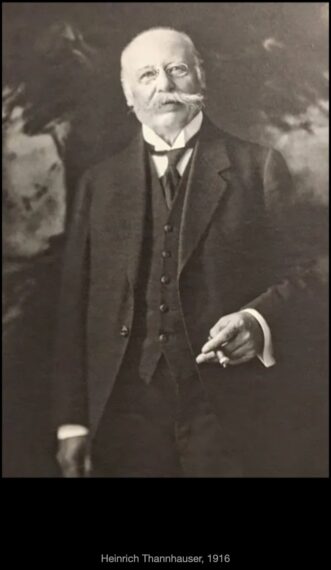
Heinrich Thannhauser (1859–1934)
Heinrich Thannhauser founded a gallery in Munich that hosted a landmark exhibition of more than 90 works by Vincent van Gogh. From 1909, Thannhauser’s Moderne Galerie was at the forefront of culture, showing works by German artists in addition to French Impressionist and Post-Impressionist paintings.
In 1911, he organized, with Wassily Kandinsky and Franz Marc, the first exhibition of the Expressionist group Der Blaue Reiter (The Blue Rider), which—along with the group Die Brücke (The Bridge)—would come to dominate the history of early modern German art. And in 1913, Thannhauser participated in the first major modern exhibition in the United States, the famous “Armory Show.” In the same year, he presented the first comprehensive exhibition outside France of the works of Pablo Picasso.
In 1934, Thannhauser, who was Jewish, left Germany. The Nazi regime targeted his art galleries as “degenerate” and increasingly restricted his ability to operate. He died from a stroke at the Swiss border while attempting to emigrate. His son, Justin, who worked alongside his father, escaped to New York and gave many works of art from his family’s personal collection to the Guggenheim Museum.
Read and Discuss
How did World War I and the economic challenges of the 1920s affect the careers of Alfred Flechtheim, Herwarth Walden, and Heinrich Thannhauser? How did each respond to those difficulties?
In what ways did the rise of the Nazi regime impact each of the three gallery owners personally and professionally? How did their Jewish backgrounds or political beliefs shape their experiences?
All three gallery owners promoted modern and international art, often seen as “degenerate” by the Nazis. How did their efforts to support modern art affect their treatment during the 1930s, and what happened to their galleries as a result?
Activity: Reflection and Response on The Art Dealer Alfred Flechtheim by Otto Dix
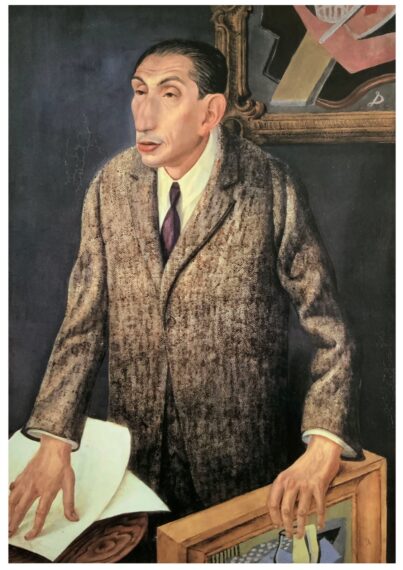
Otto Dix (German, 1891–1969), The Art Dealer Alfred Flectheim, 1926, oil on wood. Acquired by the State of Berlin, 1961, NG 46/61
Otto Dix (1891–1969) was a German painter and printmaker whose career spanned both world wars. At age 23, he served as an artillery gunner in World War I, including during the bloody Battle of the Somme. His traumatic experiences in the war profoundly shaped his later work, particularly in a series of etchings created a decade after the war began, which depicted its horrors in unflinching detail.
In the years following 1923, Dix focused primarily on portraiture, often painting individuals from his social and professional circles, including fellow artists and art dealers. These portraits aimed to tell the story of the sitter, using a stylized and exaggerated aesthetic at a time when photography was beginning to replace traditional portraiture due to its speed, realism, and affordability.
One such portrait features Alfred Flechtheim, a Jewish art dealer who promoted modernist artists from Germany and France. The painting was not commissioned and remained in Dix’s possession. Made in 1926, it’s a complicated tribute from painter to dealer. Flechtheim’s nose and ears appear overscale, and his clawlike hands seem to take possession of a cubist still life and a nude drawing
in the style of Georges Braque and Pablo Picasso.
Three aspects of Dix’s painting—its clichéd Jewish features, demonstration of devotion to French art, and suggestion of greed—are antisemitic stereotypes that the Nazi regime would later use in its attacks on the dealer. As a result, the work was not exhibited in the early years after World War II.
Dix’s work during this period is associated with the New Objectivity (Neue Sachlichkeit) movement, which emerged in the 1920s as a response to Expressionism. This movement emphasized sober, realistic, and often satirical depictions of post–World War I German society, highlighting issues such as political corruption, war trauma, and alienation.
Look and Discuss
What do you notice first about the person in this portrait? What does facial expression, posture, or clothing tell you about who he might be or how the artist wants us to see him?
Look closely at the objects and artwork in the background. What might they say about his profession, interests, or identity? Why do you think the artist included references to Braque and Picasso?
Some features in the portrait are exaggerated and are considered by some people to be an antisemitic caricature. Why do you think the artist chose to do this? How does exaggeration affect how you feel about the person being portrayed?
Modes of Abstraction
Abstraction is one of modern art’s greatest achievements. As artists moved away from realistic representations of the human body, they began to create unique visions of modern life using new, often highly stylized methods. They focused more on the expressive power of lines, shapes, and colors—treating these elements as tools of emotion and meaning in their own right. This new approach
to art became a kind of universal language, reflecting the modern world’s desire for change and progress. Many abstract artists found inspiration in the energy of city life and often made it a central subject of their work.
One of the most important centers for the development of abstraction in Germany was the Bauhaus, a state art school founded in Weimar in 1919 by Walter Gropius. The Bauhaus combined art, architecture, and craft, aiming to rebuild society through creative innovation in the wake of World War I. Instead of copying traditional art styles, students were encouraged to experiment and create based on their own ideas and emotions.
The school attracted many leading modern artists as teachers, including Paul Klee and Wassily Kandinsky, who taught about color theory and abstract form. Oskar Schlemmer explored new ways of representing the human body. Other well-known figures associated with the Bauhaus included Anni and Josef Albers, Marcel Breuer, Lyonel Feininger, Ludwig Mies van der Rohe, László Moholy-Nagy, and Georg Muche.
The Bauhaus lasted only 14 years; it was frequently targeted by political opposition and was shut down multiple times. In 1933, the Nazi government permanently closed the school, condemning its modern ideas and artwork as dangerous. Adolf Hitler dismissed Bauhaus art as meaningless “scribbles” and banned it from museums. In 1937, many Bauhaus works were ridiculed in the infamous
“Degenerate Art” exhibition, and numerous pieces were destroyed—though some were sold abroad.
Despite its closure, the spirit of the Bauhaus lived on. Many of its artists and students fled Germany, spreading Bauhaus ideas around the world—to the United States, Switzerland, Russia, Israel, and beyond—where they continued to influence modern art, architecture, and design for generations to come.
Read and Discuss
What were some key characteristics of abstract art, and how did it differ from traditional art?
Why was the Bauhaus school significant in the development of modern art and design?
How did the political climate in Germany affect the Bauhaus and its artists? What happened to the school and its ideas after it was closed?
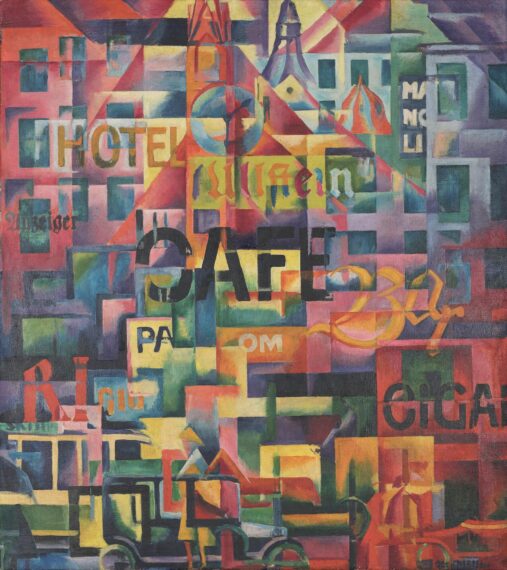
Otto Möller (1883–1964), City, 1921, oil on canvas. Purchased from the artist, 1961, NG 69/61
Artist Otto Möller was a member of the November Group, which advocated for democracy and a more active role for the arts in shaping society. In 1921 he created a bold, colorful painting that captures the vibrant energy of Berlin. The canvas is alive with the
sights and sounds of city life—street signs, traffic, buildings, and flashing ads. The lines, shapes, and colors of City reveal the influence of Robert Delaunay, the French artist known for his colorful, abstract cityscapes.
The painting features a series of rectangular shapes arranged rhythmically, giving the buildings a pulsing, almost 3D effect. Layered over this structure are glowing neon signs advertising a “HOTEL,” “CAFE,” and “BAR,” alongside cigarette ads for the Manoli brand. Möller also referenced contemporary media, including both the liberal Ullstein Publishing House and the conservative daily newspaper Berliner Lokal-Anzeiger. At the center of the composition, he placed his own initials, “OM,” putting himself in the middle of it all.
At street level, the city teems with life—pedestrians, passing cars, a rolling tram, and a cart making its way through the scene. Above, triangular shapes suggest rooftops, while three towers rise in the background. The left tower likely depicts the Matthäuskirche (Matthew Church), near Möller’s home, and the right one may represent the dome of a building at the corner of Albrechtstrasse and
Berlinickestrasse.
Beyond painting, Möller was also a dedicated teacher. Beginning in 1908, he taught art at the Paulsen Realschule in Steglitz, Berlin. In 1920, he became a lecturer at the Central Institute for Teaching and Education, where he worked until 1940, helping to modernize art education in schools.
Look and Discuss
What’s going on in this painting? What do you see that makes you say that? What details do you notice when you spend more time looking at the painting?
Think about how Möller used color, shapes, and text to represent the energy of the city. Which parts of the painting feel most alive to you? Why?
Möller’s painting captures the excitement and chaos of 1920s Berlin. How does this artwork show the modern progress of the city? What seems most exciting? How does it also suggest the overwhelming pace of city life during that time?
How does this painting reflect or differ from your own experience of crowded or busy spaces or events?
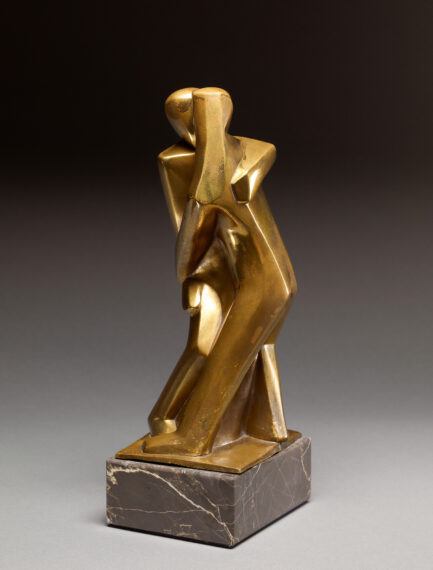
Marg Moll (German, 1884–1977), Dancing Couple, c. 1928, brass. Purchased by Jürgen
Vollmers, 2016, NG 19/16
Margarete Haeffner (later known as Marg Moll) began focusing on sculptures of people in 1906. In her early work from the 1910s, she emphasized detailed features and textured surfaces. By the mid-1920s, however, her style shifted toward simpler shapes, smoother surfaces, and polished metals. Her figures also became less specific and more universal in appearance.
Her sculpture Dancing Couple is part of a series she created after discussing brass-casting techniques with the influential sculptor Constantin Brancusi. In this work, the two dancers are shown as equals, their bodies blending together in a close embrace. Moll gave the sculpture to her dance partner, Ernst Schellner, in Berlin. His family kept it for many years until it was acquired by the Nationalgalerie in 2016.
According to Schellner family tradition, the sculpture depicts a dance from the bohemian district of Rixdorfer in Berlin, well known at the time for its nightclubs. Due to its notorious reputation, Rixdorf was renamed Neukölln in 1912 by city officials seeking to improve its image.
Moll’s work was labeled as “degenerate art” by the Nazis. She survived the war in Berlin, but her home and her collections of art were destroyed by bombs.
Look and Discuss
What’s going on in this abstract sculpture? What do you notice about the way the two dancers are shaped and connected? How does the smooth, polished surface affect the feeling of movement?
Marg Moll moved from detailed, individualized figures to more simplified, universal forms. Why do you think she chose to show the dancers in this abstract way? What message do you think she was trying to express about human connection or emotion?
How do you connect with other people? How might you represent the connections you value most? Would your representation include images, words, or both? Why?
The Nazi regime denounced Marg Moll’s art as “degenerate.” Yet looking at this sculpture today, it barely seems radical at all. Who or what determines what is considered acceptable in contemporary culture? How do social media platforms mediate and influence audience perception and reception?
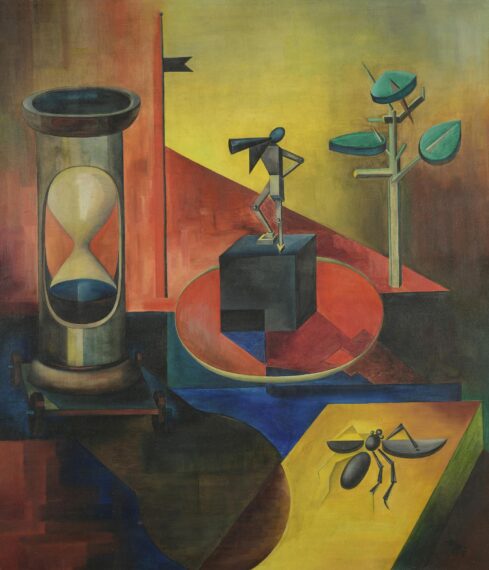
Hannah Höch (German, 1889–1978), The Mosquito Is Dead, 1922, oil on canvas. Acquired by the State of Berlin,
1955, B 68/5
Hannah Höch rose to prominence as part of the Dada movement, which embraced absurdity, chance, chaos, and irrationality to comment on society. She was especially known for her innovative photo-collages. Later in her career, her paintings began to reflect influences from Giorgio de Chirico’s pittura metafisica (metaphysical painting), blending elements of Surrealism with New Objectivity—a style known for its realistic yet emotionally detached imagery.
She painted The Mosquito Is Dead in 1922, during a particularly difficult period in her life. That year, she ended her intense and emotionally draining relationship with fellow Dada artist Raoul Hausmann, whom she had been involved with since 1915. Around the same time, she wrote a poem titled “The Moon Mosquito,” which connects to the themes explored in this painting.
The composition relies on the three primary colors—red, blue, and yellow—and features the three basic shapes: circle, rectangle, and triangle. It also includes representations of three forms of life: plant, animal, and human. Yet none of these is depicted in a naturalistic way. The rubber plant appears mechanical, the mosquito is fragmented and missing legs, and the human figure resembles a small, animated wooden mannequin.
Höch also wove in references to art history. Insects, for example, often appeared in Baroque still-life paintings, and the hourglass—a traditional memento mori (reminder of mortality)—symbolizes the passage of time and the inevitability of death. These symbols may reflect Höch’s emotional state during the end of her relationship with Hausmann, capturing feelings of loss, transition, and personal reckoning.
Look and Discuss
Look closely at this painting. What do you see? What do you notice about the way the plant, mosquito, and human figure are shown? How do their shapes, colors, or positions make you feel?
Hannah Höch was inspired by surrealist painting that combines personal emotion, symbolic images, and dreamlike environments. What is surreal about this painting? How might the hourglass and broken mosquito express feelings about the end of a relationship?
Höch used familiar objects—like plants, insects, and dolls—in unfamiliar or unsettling ways. Think of a time when you looked at something ordinary and suddenly saw it differently because of how you were feeling. How might you represent that experience in an artwork? What images would you show? What colors would you choose to communicate how you felt at that time?
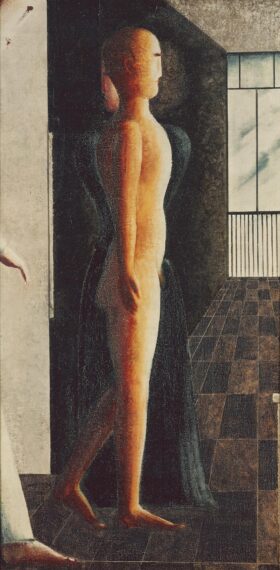
Oskar Schlemmer (German, 1888–1943), Nude, Woman, and Approaching Figure, 1925, oil on canvas. Acquired by the State of Berlin, 1956, B 149
In 1921, after serving in the military, Oskar Schlemmer joined the Bauhaus school in Weimar, where he focused his artistic work on the human figure. This focus would become central to his later contributions to theater and performance, most notably in his famous Triadic Ballet (1922), for which he designed geometric, sculptural costumes and created the mechanically rhythmic choreography.
Schlemmer’s painting Nude, Woman, and Approaching Figure epitomizes his interest in how bodies move and interact. Here, three human figures are at the intersection of two corridors in a modernist building, which acts like a stage. In the center, a nude man stands upright, walking to the right. His body overlaps with a woman in a long black dress, who blends into the dark wall behind her.
To the left, another male figure is entering the scene, but the white wall in front of him partially obscures his arm and leg. Although none of the figures makes eye contact nor physically interacts, their positions and movements are clearly connected, as though choreographed by the painter.
Schlemmer created depth and movement through his arrangement of the figures—some closer, others farther away. Their sizes and poses create a kind of visual rhythm, giving a sense of time passing within the scene. The figures are stylized, with idealized, abstract shapes that lack personal detail. Schlemmer’s representation of the human figure reflected his interest in universal ideals, not individual personalities.
Schlemmer was an important teacher at the Bauhaus from 1920 to 1929, before moving on to teach at the academy in Breslau. He also taught briefly in Berlin but was later dismissed by the Nazi regime. In his final years, Schlemmer withdrew from public life and passed away in 1943.
Look and Discuss
What’s going on in this painting? What do you notice about how the three figures are positioned? How does their placement impact the way you feel when looking at the scene?
A century has passed since Oskar Schlemmer painted this image. Does it feel modern to you today? Why or why not?
Schlemmer was interested in the relationship between the human body and space, and he even compared visual rhythm to choreography or dance. How does this painting reflect that idea, even though the figures aren’t touching or interacting directly?
Schlemmer focused on the human body in a stylized, abstract way, aiming to show something universal rather than personal. Have you ever felt that you had to blend in or fit a certain ideal? How might that relate to what you see in this painting?
Spotlight on Mia: Modes of Abstraction
Mia’s collection features work by many of the international artists who inspired German artists between the wars. These works illustrate just how wide-ranging abstraction was.
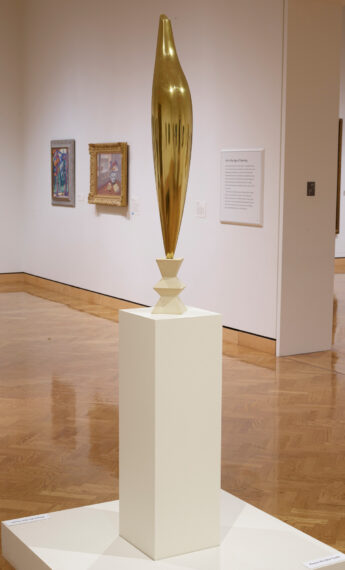
Constantin Brancusi (Romanian, 1876–1957), Golden Bird, 1919, bronze. The John R. Van Derlip Fund, 55.39, © Artists Rights Society (ARS), New York / ADAGP, Paris
Constantin Brancusi began creating abstract sculptures around the same time his contemporary, Wassily Kandinsky, was exploring abstraction in painting. Brancusi chose a different path to abstraction—he radically simplified natural forms but never completely removed them from his sculptures.
Brancusi’s Golden Bird is part of his series of 28 marble and bronze sculptures exploring the theme of birds and flight, created between 1910 and the early 1950s. The inspiration for these works came from a Romanian folktale about a magical golden bird called the Maiastra. In Golden Bird, the shiny, polished bronze surface echoes the bird’s brilliant plumage, while the sculpture’s upward-reaching form suggests an open-throated song or the motion of ascending flight.
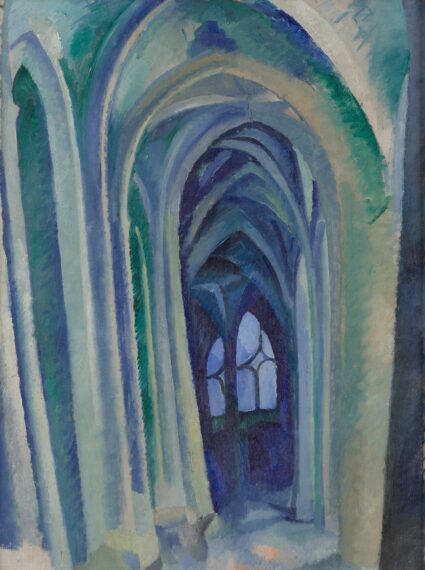
Robert Delaunay (French, 1885–1941), Saint-Séverin No. 2 (recto); Study for “The City,” with the Eiffel Tower (verso), 1909, oil on canvas. The William Hood Dunwoody Fund, 47.7
This painting is the second in a series of seven by Robert Delaunay, each depicting the 15th-century ambulatory of a Gothic church near his studio in Paris. The columns shift dramatically—bending, bowing, expanding, or even dissolving. Delaunay’s distinctive use of colors to define form sets his approach apart from the Cubists.
In 1911, Wassily Kandinsky invited Delaunay to exhibit in the first Blue Rider (Blaue Reiter) show in Munich, held from December 1910 to January 1912 at the Moderne Galerie Thannhauser. Delaunay sent five works, including Saint-Séverin No. 1, which helped establish his reputation in Germany. By 1916, German critics even referred to him as “the first known Expressionist.”
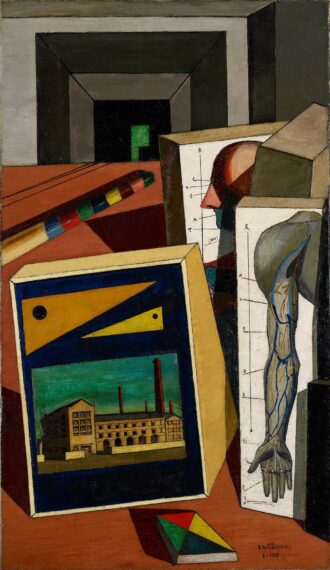
Giorgio de Chirico (Italian, 1888–1978), The Scholar’s Playthings, 1917, oil on canvas. Gift of Mr. and Mrs. Samuel H. Maslon, 72.75. © Artists Rights Society (ARS), New York / SIAE, Rome
Giorgio de Chirico was a cofounder of the Metaphysical school of painting (Pittura Metafisica) in Italy, which had a major influence on the rise of Surrealism in the early 1920s. His art is known for its dreamlike quality, with empty cityscapes, jagged architecture, and everyday objects placed in unusual, unsettling ways. He often distorted size and perspective to create a sense of mystery and tension.
This painting was made while de Chirico was serving in the Italian army during World War I, at the height of his Metaphysical period. On the left, there’s a view of a factory in Ferrara, where he was stationed. The painting includes drawing tools and anatomical charts, symbolizing an artist’s training. The charts might also reflect de Chirico’s own health struggles, adding a personal meaning to the work.
Activity: Compare and Contrast
Based on passages about the abstract artists in Mia’s collection, compare and contrast the artworks with each other and with artworks in the exhibition.
How did each artist approach abstraction differently? Consider how Kandinsky, Brancusi, and Delaunay simplified or obscured natural forms. What role does color play in conveying meaning or emotion in these artworks?
How did each of these artists define or challenge what “modern art” could be?
How might viewers at the time have reacted to these works? What do you think was controversial, shocking, or thrilling?
Compare and contrast Delaunay’s and Möller’s paintings. What role did place and setting play in the creation of these works?
Compare and contrast Höch’s, De Chirico’s, and Schlemmer’s treatment of the human body. What does each suggest to you about the artist’s message?
Compare and contrast Moll’s and Brancusi’s sculptures. Moll was inspired by Brancusi’s art. What influence do you see when you compare them?
Mia Artist Spotlight: Lyonel Feininger
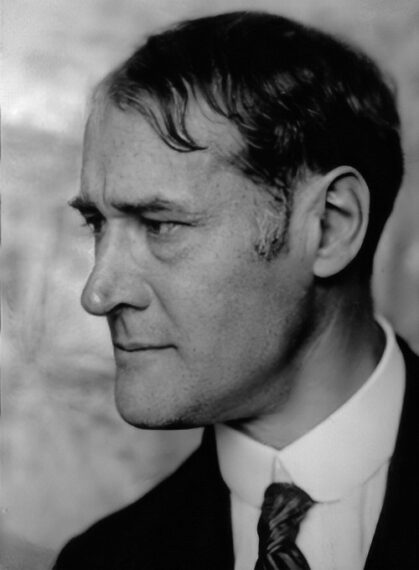
Lyonel Feininger (1871–1956)
Lyonel Feininger (1871–1956) was born in New York City to German parents, both of whom were musicians. At the age of 16, he moved to Germany to study violin in Hamburg. But his passion gradually shifted from music to the visual arts. In 1888, he began formal art studies in Berlin.
In 1892, Feininger spent a year in Paris, where he apprenticed with a sculptor before returning to Germany the following year. He initially worked as a cartoonist and illustrator for magazines and books, but by 1907 his focus had turned to painting. Influenced by both French and German abstract artists, his style began to reflect elements of Fauvism and Cubism—marked by fragmented forms and bold, expressive color. Feininger also found inspiration in music, listening to Bach when he was unable to paint or while painting. He appreciated, he said, “the architectonic side of Bach, whereby a germinal idea is developed into a huge polyphonic form.”
Feininger’s use of geometric shapes and minimal ornamentation became hallmarks of his work, aligning him closely with the principles of the Bauhaus movement. In 1917, he held his first solo exhibition at the influential Der Sturm Gallery, owned by Herwarth Walden. Two years later, he was appointed head of the printmaking workshop at Walter Gropius’s Bauhaus school.
With the rise of the Nazi regime, Feininger’s abstract style, like that of many Bauhaus artists, was condemned. In 1936, after being labeled a “degenerate” artist by the government, he left Germany—his home for five decades—and returned to the United States.
Read and Discuss
How did Lyonel Feininger’s artistic style reflect the influence of movements like Fauvism, Cubism, and the Bauhaus?
Why did the Nazi regime label Feininger’s work as “degenerate,” and what impact did this have on his life?
Feininger worked as both an illustrator and a painter. How might his experience as an illustrator have influenced his later paintings?
Activity: Grosse-Kromsdorf I by Lyonel Feininger in Mia’s Collection
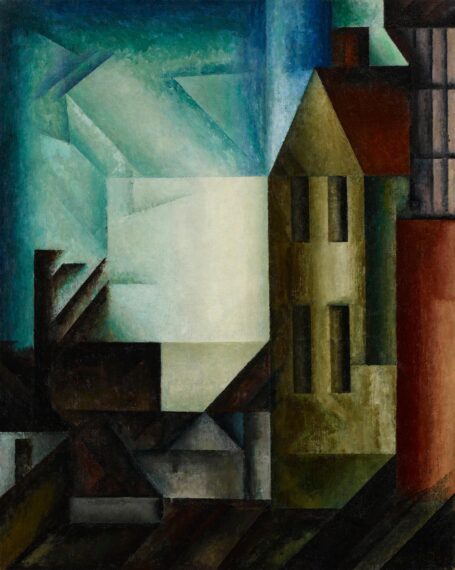
Lyonel Feininger, Gross-Kromsdorf I, 1915, oil on canvas. Bequest of Putnam Dana McMillan, 61.36.4
What do you see in this image? Lyonel Feininger was a German American painter who spent five decades in Germany, where he witnessed the reign of Kaiser Wilhelm II and the rise of the Nazi regime.
In this activity, you’ll explore Feininger’s painting Grosse-Kromsdorf I through careful looking, reading, and writing. You’ll practice thinking like an art critic and a historian by analyzing the painting and learning about the artist’s life and times.
Look and Discuss
Before reading anything about the artist or the painting, spend a few quiet minutes looking at Grosse-Kromsdorf I. Write your responses in full sentences. There are no wrong answers—use your eyes and your imagination.
Answer the following questions using only what you see in the painting:
- How do you feel when you look at this image? Why?
- What questions does this image raise for you?
- Why do you think the artist chose to show the subject in this way?
- What message or idea might he be trying to communicate?
Read and Reflect
Now read the label copy below and “Mia Artist Spotlight: Lyonel Feininger” provided by your teacher. Pay close attention to the following:
- How his life experiences may have influenced his art
- When and where this painting was made
Label text: Born in New York City, Lyonel Feininger lived in Germany, his parent’s homeland, for most of his life. After a brief stay in Paris in 1911, Feininger embraced Cubism, declaring, “What one sees must be transformed in the mind and crystallized.” But he preferred to call his style “prism-ism,” saying it was based on the principle of monumentality. While living in Weimar in 1913, Feininger began exploring such nearby villages as Grosse-Kromsdorf, the subject of this painting. Attracted to the town’s medieval architecture, he spent hours studying its churches and other structures to find the secret of their forms.
Read, Reflect, and Discuss
How do Feininger’s life experiences—such as his move from music to art and his time in Paris—seem to influence the mood or style of Grosse-Kromsdorf I?
Feininger described his style as “prism-ism,” based on the idea of monumentality. How do you see that idea reflected in the way he paints the buildings or landscape in Grosse-Kromsdorf I?
Why do you think Feininger was so drawn to medieval architecture, like the buildings in Grosse-Kromsdorf? What might this interest tell us about his values as an artist or as a person?
After learning about movements like Cubism, Fauvism, and Bauhaus, which artistic choices in this painting, if any, do you think show the influence of those styles? Give one or two examples based on what you see.
Activity: Music and Art Making: Creating a Soundtrack to Mia’s Collection
Many German abstract artists found inspiration in music and literature. For example, Hannah Höch wrote poetry in addition to making visual art. Others, like Wassily Kandinsky and Lyonel Feininger, often used music as a source of creative energy for their paintings.
In this activity, you’ll do the following:
1. Choose a work of art (1900–1945) by a German artist from Mia’s permanent collection. You can browse the collection on our website (consider searching German Expressionism, Bauhaus, or New Objectivity).
2. Select a song or longer musical composition that you feel matches the mood, tone, or emotion of the artwork.
3. Reflect on and answer the following questions:
- Which artwork did you choose, and why?
- What piece of music did you pair it with?
- How does the music enhance or reflect the feeling of the artwork?
- What connections do you see between the visual and musical elements?
This activity encourages you to explore the deep relationship between sound and image—just as many German artists did in their creative processes.
Politics and War
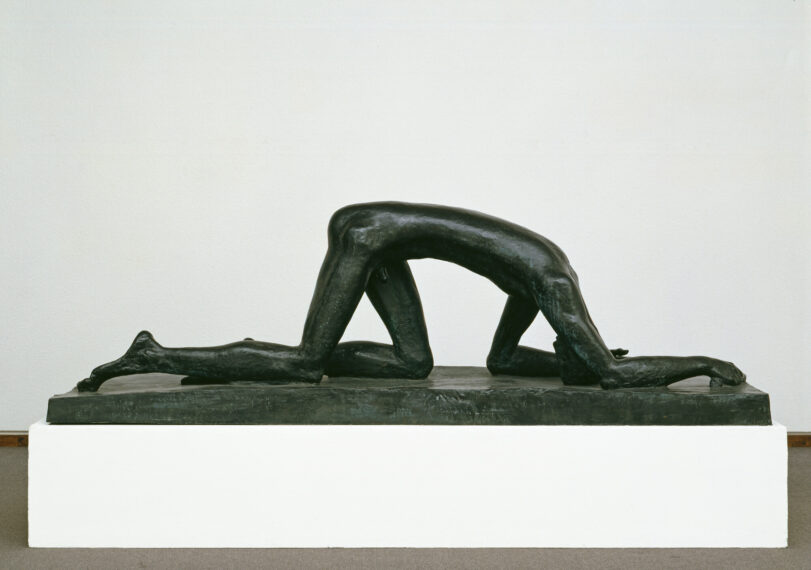
Wilhelm Lehmbruck (German, 1881–1919), Fallen Man, 1915–16 (cast by 1972), bronze. Purchased from the artist’s son, Guido Lehmbruck, Leinfelden-Oberaichen, 1979, NG 5/79
Art is never created in a vacuum. It is shaped by the artists who make it, the art movements that precede and exist alongside it, and the political, social, and cultural forces of its time. Personal experience—especially in times of conflict—also plays a powerful role. In Germany during World War I and World War II, artists responded directly to the upheaval around them. The trauma of war,
the instability of the Weimar Republic, the rise of fascism, and the censorship and persecution of artists under the Nazi regime all left deep marks on the art of the period. These works reflect not only what was happening in the world but also how artists processed and responded to those events (or not) through their creative choices.
Wilhelm Lehmbruck, the son of a miner, grew up in a working-class environment in Meiderich, now part of Duisburg, Germany. He studied art in Düsseldorf and became a sculptor. In 1910, seeking to escape the traditional style of sculpture taught in Germany, Lehmbruck and his wife and children moved to Paris. There, he connected with leading modern artists in the experimental art scene of the Montparnasse neighborhood. But when World War I began in 1914, he was forced to leave France and return to Germany.
Lehmbruck’s monumental sculpture Fallen Man, created in 1915–16, depicts an elongated, thin person on its knees and elbows, with its head hanging down. Over time, due to its lack of detail and specific narrative, the work came to be recognized as a quiet but powerful message for peace.
Lehmbruck had originally intended the sculpture to be a heroic monument to military valor and titled it Dying Warrior, completing it before beginning his service as a medic in a military hospital in early 1916. Now one of the most famous sculptures of the period, it is universally interpreted as a memorial against war and a meditation on death as part of a broader cycle of destruction and resurrection.
Later in 1916, deeply affected by his firsthand experience of the war, Lehmbruck moved to neutral Switzerland to wait out the conflict and continue creating art. In 1919, he returned to Germany after being elected to the Prussian Academy of Arts in Berlin. Just a few months later, in March, he took his own life.
Years after his death, in 1937, the Nazi government removed many of Lehmbruck’s works from German museums, labeling them “degenerate art.” Fallen Man would go on to become one of the most iconic sculptures associated with World War I.
Look and Discuss
Take a close look at the sculpture. How would you describe the figure? What emotions or ideas do you think Lehmbruck was trying to express through the posture and body language of the figure? How does the lack of facial detail or a clear story affect how you respond to the sculpture?
Lehmbruck created this sculpture before he served as a hospital medic during the war. How might his feelings about World War I (prior to serving in the war) have influenced the creation of Fallen Man? Do you think his working-class childhood also might have influenced this artwork? What do you see that makes you say that?
Why do you think he might have changed the name from Dying Warrior to Fallen Man? What do you consider the main differences between these titles? Why might some people interpret the work as a statement on the collapse of society? Why might people have later seen the sculpture as a symbol of peace?
What experiences have you had that caused you to reflect on conflict, loss, or resilience? How might you connect Fallen Man to that experience? Do you think art like this can help people process or understand difficult events today? Why or why not?
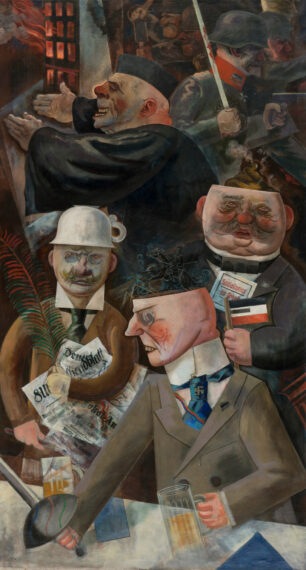
George Grosz, Pillars of Society, 1926. © Neue Nationalgalerie, Stiftung Preußischer Kulturbesitz, Berlin / Photo: Kai Anette Becker
George Grosz was born in Berlin and briefly served in World War I. His experiences during the war, along with witnessing the political upheaval in Germany, turned him into a fierce social critic. In 1918 he joined the Communist Party. Throughout the 1920s, Grosz created powerful paintings and prints that mocked the military, the church, and the wealthy political elite of the Weimar Republic. His
bold, politically charged, and often provocative caricatures made him a target for the Nazis. Opposed to their ideology and fearful of their rise to power, Grosz left Germany and emigrated to the United States in 1933, just before the Nazis took control.
One of his most famous works is Pillars of Society, a painting whose title comes from Henrik Ibsen’s 1877 play of the same name. In it, Grosz satirized the so-called pillars of German society—such as the press, politicians, the church, and the military—by exaggerating their flaws and exposing their immorality. The figures are grotesque and packed with symbolism. For instance, the man at the front, likely a judge, has no ears, drinks beer, and wears political badges. The figure holding newspapers, representing the press, resembles Alfred Hugenberg, a powerful media mogul. Though he holds a palm branch—a traditional symbol of peace—it’s stained with blood. On his head sits a chamber pot, worn like a hat, while a nearby politician’s brain literally steams with excrement, symbolizing political
corruption. Another figure, a military chaplain with a red nose and toothy grin, preaches peace while concealing the violence carried out by the army and far-right paramilitary groups.
Grosz saw his brutally honest work as a form of modern history painting. In Pillars of Society, he used realism, dark humor, and symbolism to critique the failures of German leadership during the Weimar Republic. Some of the imagery and characters in this painting were drawn from an earlier 1921 work titled We Come to Pray before God the Just!, which appeared in his portfolio The Face
of the Ruling Class. Grosz originally intended Pillars of Society to be part of a triptych, but the other panels were never completed. Nevertheless, the painting stands on its own as a powerful indictment of hypocrisy, corruption, and the abuse of power in 1920s Germany.
Look and Discuss
What’s going on in this painting? What do you see that makes you say that? What details stand out to you the most? How does the painting make you feel? Why? What questions do you have about the painting?
Why do you suppose George Grosz called this painting Pillars of Society? How does he use exaggeration or symbolism to communicate his message? How do the figures in the painting reflect Grosz’s views of the Weimar Republic and German society in the 1920s? Why do you think Grosz’s work made him a target for the Nazis?
What art, music, or media has resonated with your beliefs about society and politics? Has any art, music, or media made you think differently about society, politics, or leadership? How?
Where do you see satire in visual media today? Do you think satire in art is still effective? Why or why not?
Art and Politics before and after World War I
During World War I, Germany was ruled by Kaiser Wilhelm II, a staunch nationalist who believed in the absolute authority of the monarchy. His leadership emphasized militarism, including an aggressive expansion of Germany’s navy and territorial ambitions. The kaiser also held strong opinions about art, favoring classical and Renaissance styles as the ideal. He disapproved of modern movements such as French Impressionism and social realism, viewing them as inferior or inappropriate.
After the war, Germany transitioned to a more democratic form of government under the Weimar Republic (1919–33). However, the new republic faced numerous challenges, including the economic devastation of the Great Depression, the 1931 banking crisis, widespread political instability fueled by antidemocratic factions, and the harsh terms of the Treaty of Versailles.
Despite these difficulties, the Weimar period was also marked by a flourishing of artistic innovation, with various movements emerging in response to both modern life and the trauma of war.
Read and Discuss
How did political leaders like Kaiser Wilhelm II influence what kinds of art were supported or rejected in Germany before and during World War I?
Why do you think so many new art movements emerged during the Weimar Republic, even though the country was facing major economic and political problems?
In what ways can art be used to resist or respond to political and social conflict?
Mia Artist Spotlight: World War I through the Art of Otto Dix and Käthe Kollwitz
The impact of World War I on Germany can be seen in many artists’ works during and after the war. Two of these artists are Otto Dix and Käthe Kollwitz.
Otto Dix (1891–1969) was a painter and printmaker who served as an artillery gunner in the German military in World War I and fought in the bloody Battle of the Somme. During the span of his career, he created works that not only expressed his experiences during the war but also created portraits of artists, art-world figures, and friends that were both realistic and also exaggerated in their depictions. Ten years after World War I began, Otto Dix created a series of prints that depicted the horrors of war. This series is called Der Krieg (War).

Otto Dix (German, 1891–1969); Storm Troopers Advance under a Gas Attack, plate 12 from Der Krieg (War), 1924, etching, aquatint, drypoint. Publisher: Karl Nierendorf. The John R. Van Derlip Fund and Gift of funds from Alfred and Ingrid Lenz Harrison and the Regis Foundation, 2005.16.1.12
Käthe Kollwitz (1867–1945) was a printmaker and sculptor whose work spanning the beginning of World War I to the end of World War II echoed the impacts of war on the German people, particularly women and children. Kollwitz herself lost her younger son, Peter, in World War I. Afterward, she created a woodcut print series called War (1922–23).
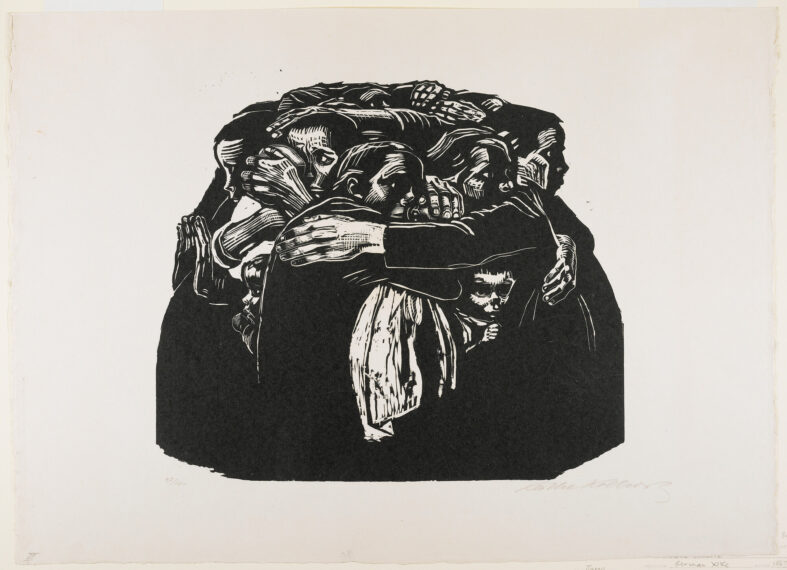
Käthe Kollwitz (German, 1867–1945), The Mothers, 1921–22 (published 1923), woodcut on Japan paper. The Print and Drawing Seminar Fund, P.71.145
In the print The Mothers, mothers cling together in fear. Throughout her career, Kollwitz’s work focused on social and political issues of her time—from the ban on abortion to poverty and hunger to war.
Read and Discuss
How did Otto Dix and Käthe Kollwitz use their art to show the impact of World War I on Germans?
In what ways did personal experiences—like Dix fighting in the war and Kollwitz losing her son—shape their artwork?
Why do you think some artists chose to show the emotional or painful toll of war instead of the events or battles?
Activity: A Closer Look at Käthe Kollwitz in Mia’s Collection
Käthe Kollwitz was known for her powerful prints, drawings, and sculptures that focused on themes like war, grief, poverty, and the struggles of ordinary people. Her work was deeply personal—especially after she lost her son Peter in World War I and her grandson in World War II.
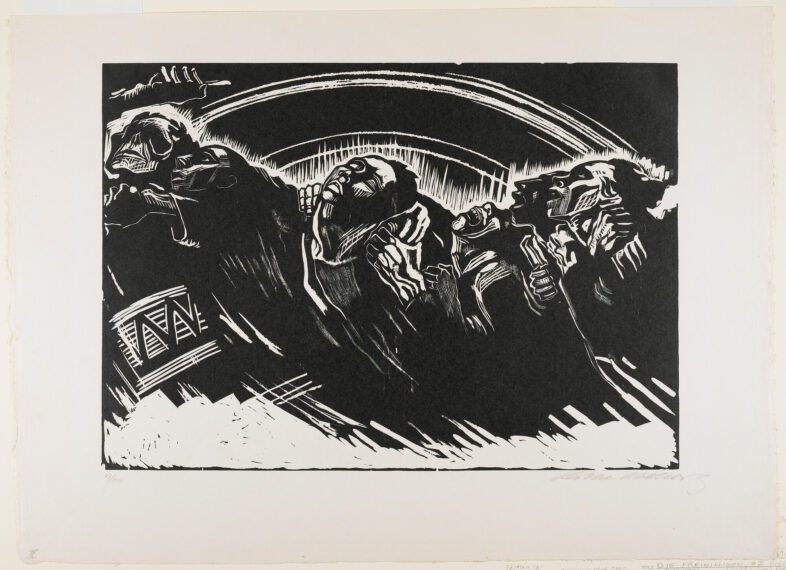
Käthe Kollwitz (German, 1867–1945), The Volunteers, 1921–22 (published 1923), woodcut on Japan paper. The Print and Drawing Seminar Fund, P.71.141
In this activity, you’ll explore Kollwitz’s woodblock print The Volunteers, part of her War series, created in response to World War I.
Spend a few minutes looking at The Volunteers. Don’t read anything about it yet—just observe.
Look and Discuss
What do you notice first in this image?
What emotions do you see or feel in the people?
What might be happening in this scene?
What visual elements (line, texture, contrast) stand out to you?
How does this image make you feel? Why do you think it has that effect?
What title would you give this image if you didn’t know what it was called?
Read and Reflect
Now read the label copy below and background on Käthe Kollwitz provided by your teacher. Pay close attention to the following:
Label text: In this image a group of young boys have volunteered to fight for the cause and are being swept away by the figure of Death beating his ominous drum. Kollwitz’s two sons, Hans and Peter, both volunteered for the army in 1914. Hans survived his duty but 18-year-old Peter was killed in action shortly after he enlisted. Kollwitz was deeply affected by her son’s death, and her pain was revisited when her grandson was fatally wounded in World War II. She felt strongly that too many Germans had sacrificed their lives for the
Fatherland and was outspoken in her belief that the young should not be killed for any cause.
Read, Reflect, and Discuss
Now that you know what the print is about, what details seem more meaningful to you?
What is the role of Death in this image? How is he shown, and why might Kollwitz have chosen to show him this way?
How does Kollwitz challenge the idea that going to war is heroic or glorious?
Why do you think Kollwitz used woodblock printmaking for this series instead of painting or drawing?
Respond in Writing
Write a thoughtful response (1–2 paragraphs) addressing the following questions:
- In what ways does The Volunteers communicate a personal or political message?
- What emotions does the piece evoke in you as a viewer?
- What can we learn from Kollwitz’s work about the cost of war, both personally and societally?
Rudolf Belling and Max Schmeling
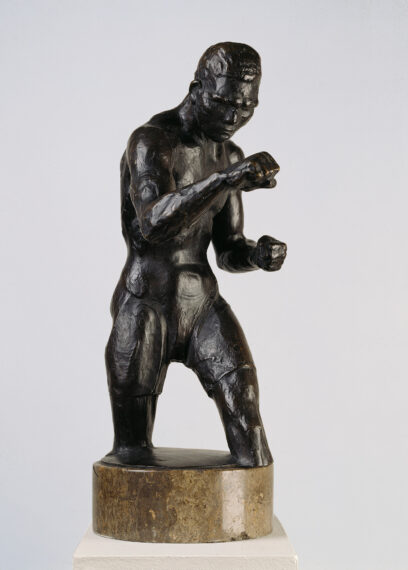
Rudolf Belling (German, 1886-1972), Max Schmeling, 1929, bronze. Purchased from the artist, 1936, B I 592
Rudolf Belling (1886–1972) was a sculptor and a sports enthusiast. He was a fan of boxing and boxers, including the famous Max Schmeling, later heavyweight champion of the world. Schmeling posed for Belling in 1929—and Belling made a sketch of his head. Because of Schmeling’s busy schedule, the artist used a hired model to complete the sculpture. The sculpture’s lack of detail creates the impression of a sketch, rather than a finished work.
The sculpture by Belling was included in the “Great German Art Exhibition” in Munich, while another of his works was on display in the same city as an example of what the Nazis considered “degenerate” art. To resolve this contradiction, the government removed the work of art from the “Entartete Kunst” (Degenerate Art) exhibition. Belling’s other artworks were targeted by the Nazis and were removed from museums in Berlin and Essen. Due to the growing tension in Germany, Belling emigrated to Turkey in 1937.
Max Schmeling (1905–2005) was a famous German boxer who became the European light heavyweight champion in 1927. His success made him a celebrity in Berlin, where he spent time with artists and writers. He believed, like artist George Grosz, that boxing and art both required strategy and careful observation.
After the Nazi Party took power, Schmeling received special treatment due to his fame and even met Hitler. Despite this, he neither supported the Nazis nor joined the party. In fact, he secretly hid two Jewish boys during the anti-Jewish riots of Kristallnacht in 1938 and helped them escape, risking his own safety.
Schmeling is also known for his two fights with Black American boxer Joe Louis. He won the first in 1936 but lost the second in 1938, a major propaganda blow for the Nazis, who had lauded Schmeling as proof of German—and therefore Aryan—superiority. During World War II, he was drafted into the German army and served as a paratrooper. After the war, he was exonerated by the Allies and later became a successful businessman with Coca-Cola in Germany.
Max Schmeling in March 1930
Read and Discuss
Why do you think Rudolf Belling chose to sculpt Max Schmeling, a boxer, instead of another type of person?
Belling was not able to finish all of his sketches of Schmeling and had to use a different model for the final sculpture. How might that have affected the final artwork?
The sculpture of Schmeling was included in a major Nazi art exhibition, but other works by Belling were labeled as “degenerate.” What does this say about how art was judged at the time?
Schmeling appears to have been conflicted about how he should respond to the Nazi regime and its policies. Although forced to remain silent, he risked his life by sheltering two Jewish boys. While it is impossible to know how we would have behaved in similar circumstances, think about a time in your own life when you had to stay quiet or passive because speaking up could have led to serious
consequences. What happened, and how did it make you feel?
Art and Politics of World War II
The years between World War I and World War II (1918–39) were a time of profound political and cultural upheaval in Germany. After the collapse of the German Empire in 1918, the newly formed Weimar Republic attempted to establish a democratic government. The republic, however, was deeply unpopular with many segments of the population. Nationalist, militarist, and antisemitic groups saw democracy as weak, and they fueled widespread dissatisfaction by promoting a mythologized vision of a revived and powerful German Reich, or empire.
During this volatile period, politics and culture were deeply intertwined. Competing ideologies sought to shape the nation’s identity—not only through laws and policies, but also through the arts. Many artists used their work to critique war, question authority, or expose social injustices. At the same time, others aligned with emerging right-wing ideologies that glorified strength, masculinity,
and a heroic national past.
By 1932, the Nazi Party had become the largest political party in Germany, and in January 1933, Adolf Hitler was appointed chancellor. Within months, his government had dismantled the democratic framework of the Weimar Republic and established a totalitarian dictatorship through laws like the Enabling Act of 1933, which gave Hitler the power to rule without parliamentary consent.
As Hitler expanded Germany’s borders in the late 1930s—first by annexing Austria in 1938, and then by occupying the Sudetenland region in Czechoslovakia—artists who challenged Nazi ideology were increasingly labeled as enemies of the state. If their art were labeled “degenerate,” they could lose their careers and teaching positions. Antiwar art was denounced as “painted military
sabotage,” and many artists faced censorship, persecution, or exile.
In September 1939, World War II began with Germany’s invasion of Poland. For German artists who remained in Germany or German-occupied countries during World War II, there were those who continued to create modern works of art in secret, despite knowing the threat that it posed. Their works commented on the war and loss of life in battle, but also on the persecution and murder of the Jews in Nazi Germany.
Read and Discuss
According to the reading, why were some artworks labeled as “painted military sabotage”? What kinds of messages or themes in these works might have led to this accusation?
How did the political changes in Germany—from the Weimar Republic to Nazi dictatorship—impact what kinds of art could be made or shown publicly? What risks did artists face if they challenged Nazi ideology?
The reading mentions that some artists continued to create modern or anti-Nazi art in secret during World War II. What does this suggest about the role of art during times of war and oppression? Why might these artists have felt it was important to keep making art, even in secret?
World War II through the Art of Max Beckmann
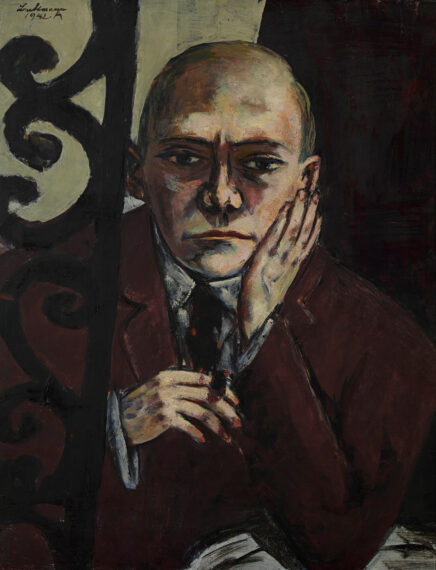
Max Beckmann (German, 1884–1950), Self-Portrait at a Bar, 1942, oil on canvas. EL2026.2.66. © Neue Nationalgalerie, Stiftung Preußischer Kulturbesitz, Berlin
Max Beckmann (1884–1950) was born in Leipzig, Germany. He trained as an artist, and during a trip to France in 1903 he began keeping a journal—a habit he maintained for the rest of his life. At the start of World War I, Beckmann volunteered for service in the German Army Medical Corps but was discharged a year later due to health issues.
In the 1920s, Beckmann taught art in Frankfurt while exhibiting his work in both Germany and the United States. But his career was abruptly disrupted in 1933 when the Nazis came to power. He lost his teaching position and moved to Berlin.
Beckmann’s artistic style, known as Neue Sachlichkeit (New Objectivity), was among the many modern movements targeted by the Nazi regime. In 1937, the Nazis confiscated more than 500 of his works from German museums. That same year, his art was featured in the infamous “Degenerate Art” exhibition, which sought to publicly mock and condemn modernist styles. The day after the exhibition opened, Beckmann fled Germany for Amsterdam.
While in Amsterdam, Beckmann sought a visa to emigrate to the United States, but his requests were repeatedly denied. When Nazi forces invaded the Netherlands in 1940, he became trapped and remained in Amsterdam for the duration of the war. To prevent the Gestapo (Nazi secret police) from using his writings against him, he burned the journals he had kept from 1925 to May 1940. Despite the risks, he continued to document his life and observations in new diaries throughout the German occupation.
Life in wartime Amsterdam was harsh. German soldiers were a constant presence. Raids and deportations were frequent. Curfews and food rationing became the norm. Severe gasoline shortages halted traffic, and by the end of the war, even bicycles were confiscated.
Beckmann’s Self-Portrait at a Bar, begun in December 1942, reflects his psychological state after two years under Nazi occupation. In his diary, he noted that English planes and “death [rage] outside.” Earlier that summer, he had recorded the deportation of Amsterdam’s Jewish population. The portrait captures the tension, fear, and isolation Beckmann experienced during this dark chapter of history and his life.
Read and Discuss
Why did Max Beckmann’s life and career change so dramatically after the Nazis came to power in Germany?
What challenges did Beckmann face while living in Nazi-occupied Amsterdam, and how might these experiences have influenced his self-portrait?
Why do you think Beckmann continued to keep a diary during the war, even after burning his earlier journals? What does that tell you about him as a person and an artist?
Activity: A Closer Look at Max Beckmann in Mia’s Collection
In this activity, you’ll explore Max Beckmann’s painting Blind Man’s Buff through careful looking, reading, and writing. You’ll practice thinking like an art critic and a historian by analyzing the painting and learning about the artist’s life and times.
Look and Discuss
Before reading anything about the artist or the painting, spend a few quiet minutes looking at Blind Man’s Buff by Max Beckmann. Write your responses in full sentences. There are no wrong answers—use your eyes and your imagination.
Answer the following questions using only what you see in the painting:
- What’s going on in this picture?
- What emotions or feelings do you think the painting expresses?
- What stands out to you about the people, objects, or colors in the scene?
- Does anything seem symbolic, confusing, or exaggerated? What do you think it might mean?
Read and Reflect
Now read the label text below and background on Max Beckmann provided by your teacher. Pay close attention to the following:
- What happened to Beckmann during World War II
- How his life experiences may have influenced his art
- When and where this painting was made
Label text: Blind Man’s Buff is the most important of the five triptychs created by Max Beckmann while he was exiled in Holland between 1937 and 1947—an exile necessitated by the Nazis’ inclusion of 10 of his works in their exhibition of “degenerate” art in 1937. Like much of his art, Blind Man’s Buff is allusive and symbolic, inviting explication but resisting explicit interpretation. Yet, the artist’s use of the three-paneled format that was traditional to medieval and Renaissance altarpieces evokes religious associations. Beckmann also drew upon classical sources, calling the figures at center the gods and the animal-headed man the minotaur. Throughout the triptych, figures engage in sensual pleasures in a place where time, represented by a clock without XII or I, has no beginning or end. In sharp contrast on each wing are the blindfolded man and kneeling woman who, like prayerful donors in a Renaissance altarpiece, turn their backs to the confusion behind them.
Read, Reflect, and Discuss
Now that you know more about the artist and history, revisit the painting and answer the following questions. Use evidence from the painting and the reading to support your ideas.
How might Beckmann’s personal experiences during World War II be reflected in this painting?
What do you think the “blind man” symbolizes?
How does the painting’s date (1945) change the way you understand it?
What emotions or messages might Beckmann be trying to communicate?
Activity: Letter to the Artist: What Would You Say to Max Beckmann?
You’ve just learned about the life of Max Beckmann—an artist who lived through the rise of the Nazi regime, was labeled a “degenerate” by his own government, lost his job, fled Germany, and spent years trapped in Nazi-occupied Amsterdam during World War II.
Despite all this, he never stopped creating art.
Now, imagine you could write him a letter. What would you want to say to him about his life, his choices, and his strength as an artist?
Your task: write a letter to Max Beckmann in which you respond to his personal story. Share what stood out to you, what questions you have, and what you admire or wonder about after learning what he lived through.
Reflections: Before and After
Between 1910 and 1945, artists in Germany experienced a wide range of challenges and changes, especially during the Nazi era. Some artists adapted by altering their style, ideals, or even aspects of their identity in response to the shifting political climate. Others chose to continue their work in secret, resisting the pressure to conform.
After the war, it became clear just how much modern art had been erased by the Nazi regime. The Nationalgalerie’s collection of classical modern art was almost entirely lost due to the Nazis’ “degenerate art” campaign. Some works that survived had been relocated shortly before the war’s end—either hidden in other parts of museum buildings or moved to remote locations such as
mines outside Berlin.
It wasn’t until after the war that many of these artworks were recovered, although they were returned to a Germany now divided into East and West. Only after reunification could the modern art collection be seen in its full context. Even then, gaps remained—silent testaments to the destruction caused by the Nazi regime. The surviving works, along with the memory of those that were lost, continue to tell the story of this turbulent era in history.
Read and Discuss
Why do you think some artists chose to change their style or hide their work during World War II? What risks might they have faced?
How did the Nazi regime’s “degenerate art” campaign impact Germany’s art history, and why do you think they targeted modern art?
What can missing or destroyed artworks tell us about history, even if we can no longer see them? Why is it important to remember what was lost?
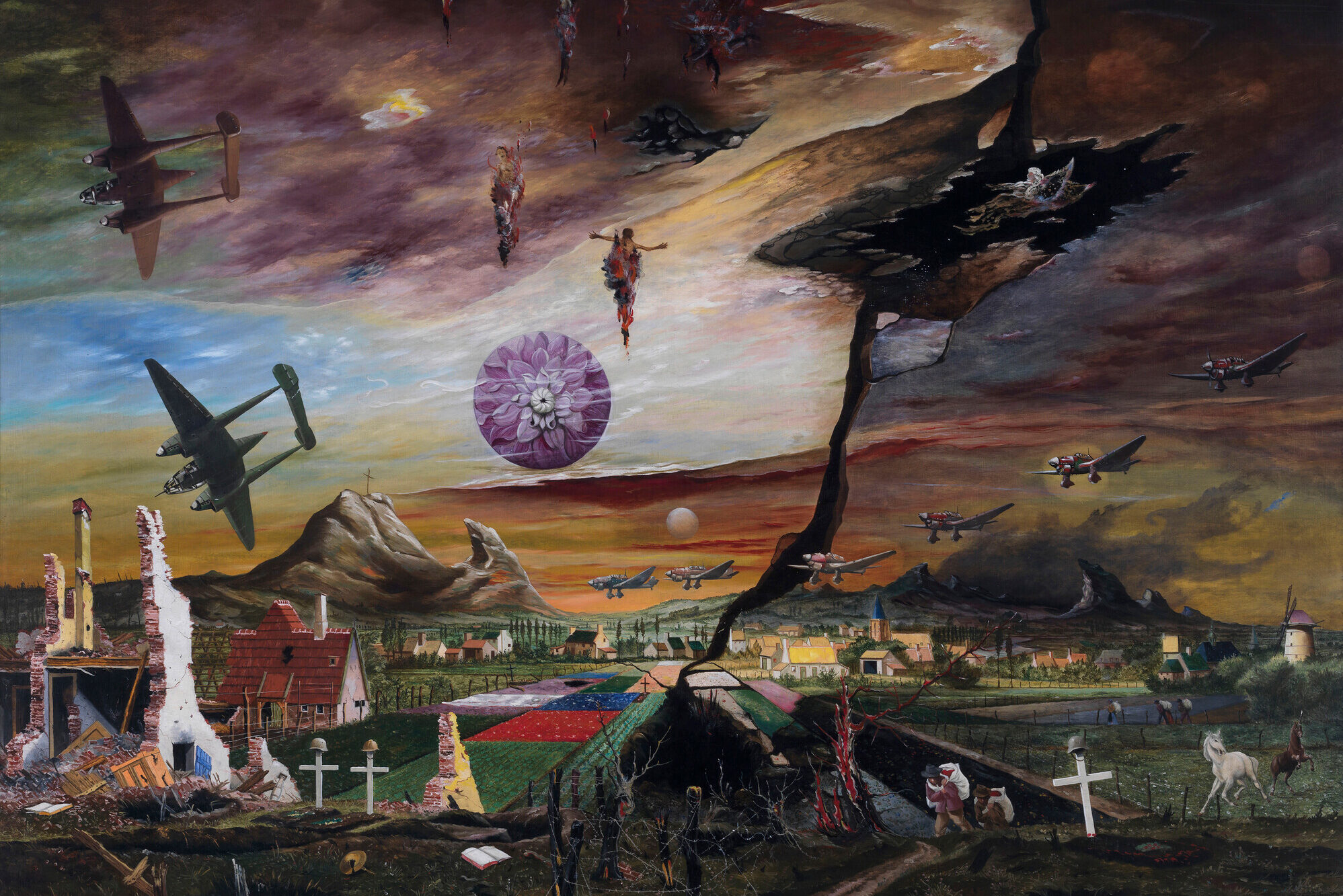
Franz Radziwill (German, 1895–1983), Flanders (Where to in This World?), 1940–50, oil on canvas on plywood. Acquired with the support of the Association of Friends of the Nationalgalerie, the
Federal Republic of Germany, and the Cultural Foundation of the States, 2012, NG 11/12
To cope with constant political changes, many artists—including Franz Radziwill—had to adjust their artistic styles, change their public beliefs, or even rewrite parts of their personal histories. In the early 1930s, Radziwill was part of a left-wing artist group called the November Group and painted in the realistic style known as New Objectivity. Later, he attempted to adapt his work to align with the artistic ideals approved by the Nazi regime.
In 1940, during World War II, Radziwill served as a war correspondent in the German army during the invasion of Belgium. Shortly afterward, he began the first version of a painting titled Flanders (Where to in This World?). The original version depicted the quiet, flat landscape of Belgium under attack by German planes. It included graves marked with crosses and soldiers’ helmets, a destroyed building, and people and animals fleeing the chaos.
After the war, sometime before 1950, Radziwill significantly altered the painting. He added German bombers on the right and what appear to be American planes on the left. The most dramatic addition was a large crack running through both the sky and the ground. He also included falling figures that appear to be on fire, a pale sun, and a decorative purple flower hovering above the horizon line that feels strangely out of place. These changes transformed the painting from a realistic war scene into a surreal and enigmatic vision filled with symbolic elements.
Although Radziwill joined the Nazi Party in 1933 and led local propaganda efforts in 1935, his work was later included in the Nazis’ “Degenerate Art” exhibition in 1937, which aimed to discredit modernist artists. In 1939, the German air force in Munich purchased some of his paintings, but by 1941, Nazi officials had removed his work from an exhibition in Oldenburg. Radziwill grew increasingly disillusioned with the regime and eventually opposed it. After the war, during the denazification process in 1949, he was officially cleared and classified as “exonerated.”
Look and Discuss
What’s going on in this picture? What do you see that makes you say that? How does the crack running through the painting affect your interpretation of the scene?
What about this painting is more surreal or dreamlike than real? What feelings or mood does this painting evoke? How does Radziwill achieve that mood visually?
This is an altered version of Radziwill’s original painting. What might he have been trying to communicate by changing the painting after the war to make it more ambiguous and symbolic? Why do you think he might have added the floating flower, falling people in flames, fighters from two different sides of the war, and the huge crack down the middle?
Have you ever felt pressure to change your beliefs or actions to fit in or be accepted? What did you do? How did you feel about your decision? How do you decide when it’s OK to adapt to a situation and when it’s important to stay true to your values?
What are some modern examples (in art, music, sports, or social media) of people who changed their message or style because of political or social pressure?
Mia Artist Spotlight: Reflections on Art and Politics through the Art of George Grosz
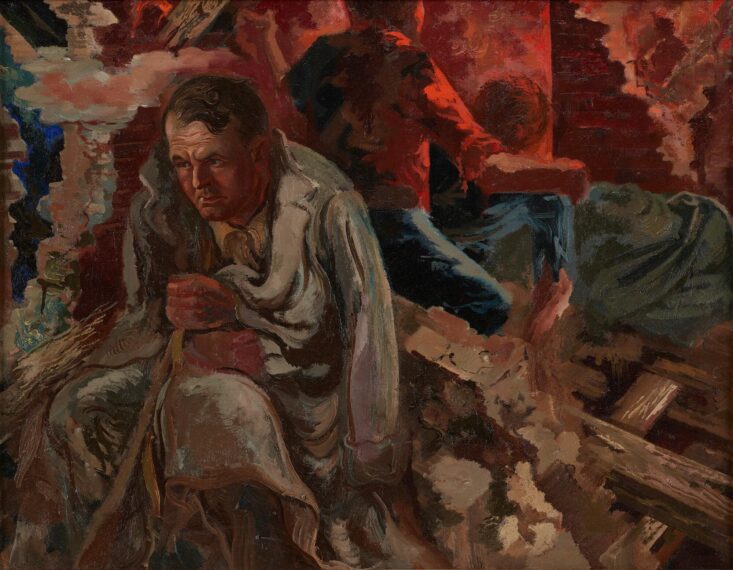
George Grosz (German, 1893–1959), Remembering, 1937, oil on canvas. The John R. Van Derlip Fund, 2017.107
George Grosz (1893–1959) was a prominent member of the New Objectivity art movement. During the Weimar Republic, his artwork served as a sharp critique of the political and social climate of the time. As the Nazi regime rose to power, Grosz emigrated to the United States to escape fascist persecution.
In 1935, he returned briefly to Germany, just before the outbreak of World War II. During this visit, he witnessed firsthand the brutal oppression of the Nazi regime—a haunting experience that deeply affected him. Upon returning to the United States, he created a painting titled Remembering. In this work, Grosz presented a self-portrait: He crouches shivering amid the ruins of a devastated building, while ghostly visions from his premonitions loom behind him.
Years later, Grosz reflected on the emotional drive behind these images:
I could not explain exactly what was really troubling me. But after I had returned to the States, my paintings became prophetic. I was compelled by an inner warning to paint destruction and ruins; some of my paintings I called “Apocalyptic Landscapes,” though that was quite some time before the real thing took place.
Read and Discuss
Why do you think George Grosz felt the need to create art that showed destruction and ruins, even before World War II began? Does this say anything about the role of artists in society?
In the painting Remembering, Grosz painted himself surrounded by devastation and haunted by visions. How do you think art can help people express difficult experiences or emotions?
After visiting Nazi Germany in 1935, Grosz said his paintings became “prophetic.” What do you think he meant by that, and can you think of other examples in which art or media seemed to predict future events?
Useful Terms
Abstract Art
Abstract art is nonrepresentational. Rather than depicting real people, places, or objects, it uses shapes, colors, lines, and textures to create a composition that can express feelings or ideas.
Avant-Garde Art
French for “advanced guard.” It refers to artists and artworks that break from precedent and embrace new or experimental approaches.
Classical Modernism
Classical modernism refers to the main movements in Western modern art from about the late 19th century to the mid-20th century. It generally includes Impressionism, Post-Impressionism, Fauvism, Cubism, Expressionism, Futurism, and early abstraction, all of which broke with academic traditions of conventional storytelling or naturalistic representation.
Communism
A political and economic theory based on the ideas of Karl Marx. It supports a classless society where everyone shares property, and people work and are paid based on their abilities and needs.
Cubism
An early 20th-century art movement developed mainly by Pablo Picasso and Georges Braque. They, and artists influenced by them, reimagined how objects could be depicted in two dimensions. Instead of presenting a single, fixed viewpoint, Cubism shows forms broken into facets and viewed from multiple angles at once.
Dadaism
An avant-garde movement that emerged during World War I, beginning in Zurich about 1916 and spreading to cities like Berlin, Paris, and New York. Dadaism (or Dada) rejected the logic, values, and aesthetic standards that many artists felt had helped lead to the war. Instead, it embraced absurdity and irrationality. Dadaists often worked in photomontage, collage, and performance to create artworks that commented on contemporary political events.
Degenerate Art
A term used by the Nazi dictatorship in Germany, “degenerate art” referred to works that were considered incompatible with the governing party’s ideology. This category included works that were avant-garde or created by Jewish, foreign, or communist artists.
The first “Degenerate Art” exhibition took place in Dresden in 1933. During the Nazi regime, thousands of artworks were confiscated, sold, or burned for being labeled “degenerate.”
Der Sturm (The Storm)
Established in Berlin by German artist and author Herwarth Walden (1878–1941), Der Sturm was a magazine and gallery that introduced and promoted avantgarde modernist art. Der Sturm featured artworks created by members of the Blue Rider (Blaue Reiter) and Die Brücke (The Bridge) artist groups.
Expressionism
A European art movement that first emerged around 1900 as a movement against naturalism, Expressionism reflected a new emphasis on the importance of the individual. Art was not to come from external impressions but from the artist’s inner experience.
This experience could be expressed through the use of strong outlines, bright colors, and broad brushstrokes, by the renunciation of detail, and by the choice of unusual perspectives. There were multiple German Expressionist groups including Der Blaue Reiter (The Blue Rider), Die Brücke (The Bridge), and Neue Künstlervereinigung München (New Artists’ Association Munich).
Fascism
A far-right, authoritarian political system in which a dictator has total control, and the nation is seen as more important than individual rights. Fascists use force to silence opposition and tightly control society and the economy. Fascism emerged in 20th-century Europe, especially under leaders like Mussolini in Italy and Adolf Hitler in Germany. Key behaviors associated with Fascist leadership include extreme nationalism that defines belonging based on race or ethnicity; militarism that glorifies war and violence to assert dominance; glorification of the dictator; heavy-handed symbolism; forcible suppression of any political or cultural opposition; economic control by the government; and scapegoating minority groups or foreigners for national problems.
Futurism
An avant-garde art movement that began in Italy in 1909, Futurism rejected the past and Italian artistic conventions and celebrated modern life, technology, and speed. Futurists celebrated war as a “cleansing” rupture with the past.
German Empire
The unified nation-state and conservative federal monarchy that existed from 1871 to 1918. Otto von Bismarck served as the first chancellor and the king of Prussia, Kaiser Wilhelm I (1797–1888), became the first emperor (kaiser). Upon his death he was succeeded by his son Kaiser Wilhelm II (1859–1941). In 1918, Wilhelm II was forced to abdicate the throne, ushering in the Weimar Republic.
National Socialism (Nazism)
National Socialism was the name given to the far-right totalitarian ideology of the Nazi Party in Germany led by Adolf Hitler. The Nazis controlled Germany from 1933 to 1945. Its core tenets included racial antisemitism, extreme nationalism, anti-representative
government, and absolute devotion to Hitler.
Neue Sachlichkeit (New Objectivity)
A German art movement of the 1920s that arose after World War I as a reaction against Expressionism. Instead of emotional intensity or subjective distortion, artists turned toward a cooler, sharply observant, and often critical depiction of contemporary life.
Novembergruppe (November Group)
An artists’ association founded in Berlin in November 1918, just as the German Empire collapsed and the Weimar Republic began. Novembergruppe was created in solidarity with the November Revolution, an uprising sparked by a mutiny of sailors that spread into the national movement that toppled Kaiser Wilhelm II. The Novembergruppe artists sought to unite Expressionists, Cubists,
and Futurists. Its members supported the new democratic government and believed modern art should play an active role in shaping society. It was banned by the Nazis in 1933.
Socialism
A political and economic system in which the government or the community (rather than private individuals) owns businesses and resources. The goal is to make sure wealth is shared more fairly and that everyone’s basic needs—like housing, health care, and education—are met. Instead of focusing on making profits, socialism focuses on workers’ rights and producing things people
actually need.
Surrealism
An avant-garde art and literary movement led by French poet and writer André Breton that emerged in the 1920s. Surrealism was inspired by the psychoanalytical ideas of Sigmund Freud and the political ideologies of Marxism. Its goal was to release the
creative potential of the unconscious and to challenge rational thought. Its hallmarks are dreamlike imagery and fantastical compositions.
Weimar Republic
The first democratic government of Germany from 1919 to 1933. The Weimar Republic was established after Germany’s defeat in World War I and the abdication of Kaiser Wilhelm II. It was a period of economic depression, hyper-inflation, social transformation, and political extremism as well as cultural and artistic innovation.
Timeline
1910s: German Empire Falls, Modern Art Rises
In June 1937, the Nazi government will proclaim that 1910 was the beginning of a new era of art in Germany. Their “degenerate art” campaign will begin with the order to confiscate “works of German art of decline since 1910 in the field of painting and sculpture.” The choice of 1910 is purposeful, since it signaled a shift in the course of modern art.
1910: Modern Art Makes a Splash in Berlin
- First issue of avant-garde art journal Der Sturm (The Storm) is published.
- The Expressionist artist group “Die Brücke” (The Bridge) holds its first exhibition of paintings in Berlin. Public reaction is largely hostile.
1911: Art World Split over Nationalism
- Conservative artists protest the purchase of French Impressionist paintings by German museums, saying it will discourage the development of a separate “national” art. Others champion internationalism.
1911–12: Blue Rider Group Established in Munich
- Wassily Kandinsky and Franz Marc form “Der Blaue Reiter” (The Blue Rider), an Expressionist group whose emphasis on spirituality leads to increasing abstraction in their art.
1913: First German Salon of Contemporary Art
- The Herbstsalon (Autumn Salon) is organized by artist, art promoter, and Der Sturm publisher Herwarth Walden.
1914: World War I Begins
- The German Empire, an industrial powerhouse, allies with Austria against Britain, France, and Russia. The German public initially supports the war. Trench warfare leads to heavy losses with little territorial gain.
1918: End of the German Empire
- German sailors mutiny after realizing they are being sent into futile battles, starting the November Revolution.
- Artists sympathetic to the November Revolution form the “Novembergruppe” (November Group). Members Otto Dix, George Grosz, Hannah Höch, and Rudolf Schlichter sign a declaration calling for the end of “bourgeois development” of artists.
- Kaiser Wilhelm II is forced to abdicate, and the German Empire is overthrown. Germany surrenders on November 11. Over 2 million Germans are dead, and several million more are wounded. The Weimar Republic is proclaimed.
1919: Treaty of Versailles
- Germany must disarm, cede territory, pay heavy reparations, and accept guilt for the war. The treaty becomes the focus of increasing resentment.
Opening of the Bauhaus
- The innovative and progressive art school opens under the direction of architect Walter Gropius.
- The Nationalgalerie puts Expressionist art on display for the first time, sparking public debate.
1920s: A New Republic on Shaky Ground
1921: Reaction against Contemporary Art
- Objecting to the numerous exhibitions of contemporary art at the Nationalgalerie, conservative art critic Karl Scheffler calls for removal of the museum’s director.
1923: Hyperinflation Devours the Deutschmark, Hitler Sets His Course
- Reparations and infighting in the young Weimar Republic result in loss of faith in its currency. A loaf of bread, which cost less than one mark in December 1919, costs more than 200 billion marks in November 1923.
Hitler’s Beer Hall Putsch Is Thwarted
- On November 8, Adolf Hitler, the little-known leader of the Nazi Party, leads 600 Nazi storm troopers into a Munich beer hall where Bavaria’s leaders are meeting. Hitler fires a gun at the ceiling and declares the overthrow of the Bavarian government. The police arrive and Hitler flees.
Armed March Ends in Bloodshed
November 9, the next day, 2,000 armed Nazis march toward Munich’s city center but are met by 130 soldiers. Shots are fired, and 16 Nazis and four policemen are killed. Hitler, suddenly famous, is arrested and charged with treason.
1924: Hitler Imprisoned, Writes “Mein Kampf”
- Hitler and associates are found guilty but given light sentences. He writes Mein Kampf (My Struggle), in which he details his hatred of Jews, Communists, and representative government.
1928: Nazi Antagonism toward Modern Art Is Official
- Nazi chief ideologist Alfred Rosenberg forms the “Kampfbund für deutsche Kultur” (Combat League for German Culture), opposing every form of modern art.
- Architect Paul Schultze-Naumburg publishes Kunst und Rasse (Art and Race), warning of “racial decay” and “degeneration.”
1930s: Nazi Regime
1933: Hitler Comes to Power
- On January 30, President Paul von Hindenburg names Hitler as chancellor. On February 27, the Reichstag (parliament) building burns, giving the Nazis a pretext to pressure Hindenburg to suspend civil liberties.
- The Nazis take over the Reichstag and pass the Enabling Act, effectively making Hitler a dictator.
- Nationalgalerie falsely accused of exhibiting only Jewish artists. Hitler decides it must be “cleansed” of “un-German” art.
- The Bauhaus closes under pressure from the Nazis.
- Joseph Goebbels forms the Reich Chamber of Culture. Without membership, no artist or dealer can practice. He soon takes control of all art exhibitions.
1934–35: Nazis Tighten Grip on Arts Organizations
- Hitler appoints Alfred Rosenberg, founder of the Combat League for German Culture, to oversee the arts and culture.
- Hitler visits Nationalgalerie for the first and only time. Employees are required to swear allegiance and obedience to him.
Modern Art under the Jackboot
1936: Art Burning and Further Attacks
- The Gestapo (Nazi secret police) order many works of art to be burned in the Nationalgalerie’s furnace. The Reich Chamber of Culture requires all members and their spouses to provide a so-called Aryan certificate. This must prove that neither the parents nor the grandparents are Jewish.
1937: Nazis Begin “Degenerate Art” Campaign
- A Nazi commission travels to all major German museums to confiscate examples of German art in “decay” since 1910.
- In Munich, Hitler opens the “Große Deutsche Kunstausstellung” (Great German Art Exhibition) of Nazi-approved art, announcing “a relentless war of purification . . . against the last elements of our cultural decomposition.”
- The “Entartete Kunst” (Degenerate Art) exhibition opens the next day, also in Munich, with some 600 works by about 120 artists. Impressionism, Expressionism, Constructivism, Dada, and New Objectivity are ridiculed. The traveling show is eventually seen by 3 million visitors, many turning out to admire the work.
- Large-scale confiscations from public collections begin.
Persecution of the Jews
1938: Nazis Stage Anti-Jewish Riot “Kristallnacht”
- On the night of November 8–9, the Nazi Party’s paramilitary troops lead Kristallnacht (Night of Broken Glass), an anti-Jewish pogrom. Troops and ordinary German citizens terrorize Jews, breaking windows, ransacking, burning, and destroying 7,000 shops and 1,400 synagogues. Thirty thousand Jewish men are arrested and sent to concentration camps. Hundreds die, many by suicide.
Nazis Cash In on Modern Art, Hitler Begins Expansionist Course
- The Nazis start selling confiscated art. They prohibit Jews from selling art they own.
- Jews are barred from theaters, cinemas, concerts, exhibitions, and public schools.
- In March, Germany annexes Austria.
1939: Confiscated Art Destroyed
- Joseph Goebbels authorizes destruction of “degenerate art” if it cannot be sold for cash. Five thousand works are burned at a Berlin fire station. Some works are secreted away and reappear years later.
- Some 125 confiscated works of art are auctioned in Switzerland, including works by Lovis Corinth, Karl Hofer, Oskar Kokoschka, Otto Mueller, Emil Nolde, and Max Pechstein.
1940s: World War II
1940: Nazis Overwhelm Western Europe
- Germany rapidly conquers Scandinavia and the Low Countries. The Nazis march into Paris without a fight on June 14.
Nazis Plunder Art in France
- More than 20,000 works of art are inventoried and transported to Germany.
Germany Attacks Britain
- The Battle of Britain, the largest air campaign ever fought, results in Hitler’s first major military setback.
1941: Germany Invades Soviet Union
- Soviet army counterattack delivers Hitler another military defeat.
- Hermann Göring orders the complete extermination of Europe’s Jews.
- Japan attacks Pearl Harbor, on December 7, bringing America into the war.
Hitler’s Downfall
1943: The Soviets Defeat the Germans at Stalingrad
- Allied forces begin to turn the tide on the Western Front.
- Nazis send coveted art to salt mines and Neuschwanstein Castle for safekeeping.
1944: Allies Invade Normandy
- D-Day, on June 6, is the largest seaborne invasion in history.
“Monuments Men” Enter France
Allied art protection officers have orders to locate and secure cultural assets.
Allies Liberate Paris on August 25
1945: Hitler Commits Suicide
- Soviet troops enter Berlin in late April. On April 30, sensing defeat, Hitler shoots himself in the right temple.
Germans Surrender on May 2
- Hitler’s “Thousand-Year Reich” has outlived him by two days. More than 50 million people have died in World War II. Six million Jews were murdered in the Holocaust.
A New Era for Modern Art in Germany
- In November, Berlin decides to create a new “Gallery of the 20th Century.”
Standards
Social Studies Standards
History
1. Context, Change, and Continuity: Ask historical questions about context, change and continuity in order to identify and analyze dominant and non-dominant narratives about the past.
2. Historical Perspectives: Identify diverse points of view, and describe how one’s frame of reference influences historical perspective.
U.S. History Era 7: U.S. and the World World History Era 6: The New Global Era (1900–Present)
Ethnic Studies
1. Identity: Analyze the ways power and language construct the social identities of race, religion, geography, ethnicity, and gender. Apply these understandings to one’s own social identities and other groups living in Minnesota, centering those whose stories and histories have been marginalized, erased, or ignored.
2. Resistance: Describe how individuals and communities have fought for freedom and liberation against systemic and coordinated exercises of power locally and globally. Identify strategies or times that have resulted in lasting change. Organize with others to engage in activities that could further the rights and dignity of all.
Grade 7
History
7.4.18.3: Analyze connections between World War II, Fascism and the Holocaust. Identify the relationship between individuals’
experiences of these events and broader historical contexts.
7.4.21.2: Compare and contrast the central arguments in secondary works of history to examine the changing role of the United
States on a global scale, including overseas expansion and the impact of U.S. involvement in World War I.
High School
History
9.4.18.14: U.S. History Era 7: U.S. and the World—Analyze the connections between nationalism, Fascism, World War II and the
Holocaust on a global scale and in the United States.
9.4.19.6: World History Era 6: The New Global Era (1900–Present)—Identify major developments in science, medicine and
technology. Identify different perspectives about the benefits, dangers and unexpected consequences of these developments for society and the environment.
9.4.21.6: World History Era 6: The New Global Era (1900–Present)—Describe and evaluate different responses to the Holocaust
and other genocides and human rights violations.
9.4.21.14: U.S. History Era 7: U.S. and the World—Construct an argument about the impact of the technological changes on American society and popular culture in the post-World War II era.
9.4.22.6: World History Era 6: The New Global Era (1900–Present)—Draw on historical examples to propose a solution to a
pressing global issue.
Ethnic Studies Identity
9.5.23.1: Analyze how the definitions, identifications and understanding of racial and ethnic groups have changed over time as a result of politics.
9.5.23.2: Examine the construction of racialized hierarchies based on colorism and dominant European beauty standards and values. Examine the construction of hierarchies based on classism, racism, colorism and dominant beauty standards and values.
Ethnic Studies Resistance
9.5.24.1: Compare and contrast the liberation struggles of people in different regions of the world that have fought for self-determination, liberation, and the empowerment of disenfranchised and/or marginalized groups.
Visual Arts Standards
Grade 6
Respond
5.6.4.7.1: Analyze and construct interpretations of artistic work: Compare different interpretations of a work of art.
5.6.4.8.1: Evaluate artistic work by applying criteria: Analyze multiple ways that images influence specific audiences.
5.6.4.8.2: Evaluate artistic work by applying criteria: Develop and apply personal criteria to evaluate a work of art using artistic
foundations.
Connect
5.6.5.10.1: Demonstrate an understanding that artistic works influence and are influenced by personal, societal, cultural, and
historical contexts, including the contributions of Minnesota American Indian tribes and communities: Identify how art reflects changing times, traditions, resources, and cultural uses, including those of Minnesota American Indian tribes and communities.
Grade 7
Present
5.7.3.6.2: Make artistic choices in order to convey meaning through presentation: Explain how exhibitions reflect the history and
values of a community.
Respond
5.7.4.7.1: Analyze and construct interpretations of artistic work: Explain how the method of display, the location, and the experience of an artwork influence how it is perceived and valued.
5.7.4.8.1: Evaluate artistic work by applying criteria: Analyze ways cultures influence representation of ideas, emotions, and actions.
5.7.4.8.2: Evaluate artistic work by applying criteria: Identify personal bias in the evaluation of artwork(s).
Connect
5.7.5.9.1: Integrate knowledge and personal experiences while responding to, creating, and presenting artistic work: Distinguish between subjective and objective approaches related to personal preferences in artwork.
5.7.5.10.1: Demonstrate an understanding that artistic works influence and are influenced by personal, societal, cultural, and historical contexts, including the contributions of Minnesota American Indian tribes and communities: Analyze how response to art is influenced by understanding the time and place in which it was created, the available resources, and cultural uses.
Grade 8
Respond
5.8.4.7.1: Analyze and construct interpretations of artistic work: Explain how personal preferences and aesthetic choices impact both the creation and perception of artwork.
5.8.4.8.1: Evaluate artistic work by applying criteria: Compare and contrast contexts in which viewers encounter images that
influence ideas, emotions, and actions.
5.8.4.8.2: Evaluate artistic work by applying criteria: Create a convincing and logical argument to support one’s own evaluation of art.
Connect
5.8.5.9.1: Integrate knowledge and personal experiences while responding to, creating, and presenting artistic work: Justify how contextual information contributes to one’s understanding of an artwork.
5.8.5.10.1: Demonstrate an understanding that artistic works influence and are influenced by personal, societal, cultural, and
historical contexts, including the contributions of Minnesota American Indian tribes and communities: Distinguish different ways art is used to represent, establish, reinforce, and reflect group identity.
High School
Present
5.9.3.6.2: Make artistic choices in order to convey meaning through presentation: Analyze relationships between artists, artwork,
and audience for impact of presentation.
Respond
5.9.4.7.1: Analyze and construct interpretations of artistic work: Construct multiple interpretations of an artwork.
5.9.4.8.1: Evaluate artistic work by applying criteria: Evaluate the impact of an artwork to influence ideas, feelings and behaviors of
specific audiences.
5.9.4.8.2: Evaluate artistic work by applying criteria: When encountering artwork(s), synthesize one’s own evaluation of artwork(s) with a different evaluation of the same artwork(s).
Connect
5.9.5.10.1: Demonstrate an understanding that artistic works influence and are influenced by personal, societal, cultural, and historical contexts, including the contributions of Minnesota American Indian tribes and communities: Appraise the impact of art, an artist, or a group of artists on the beliefs, values and behaviors of a society.