
Portal to the Past: Behind Mia’s Chinese Gate
May 20, 2026—In 2004, Bruce Dayton helped Mia purchase a gate in China. The businessman and longtime Mia benefactor had done this before, in the late 1990s, when he and his wife bought a heavily carved, nearly 300-year-old ceremonial gate, along with a reception hall and a scholar’s study, on their way to making Mia’s Chinese galleries among the finest in the world. Then, in 2017, he did it again.
The gate was made in 1858, largely of wood, and survived thanks to its location in the northern Shanxi province, where the dry climate has helped preserve the greatest number of old wooden houses in China. Indeed, Shanxi has 70% of the 100 remaining architectural sites built before the Song dynasty (pre-960).

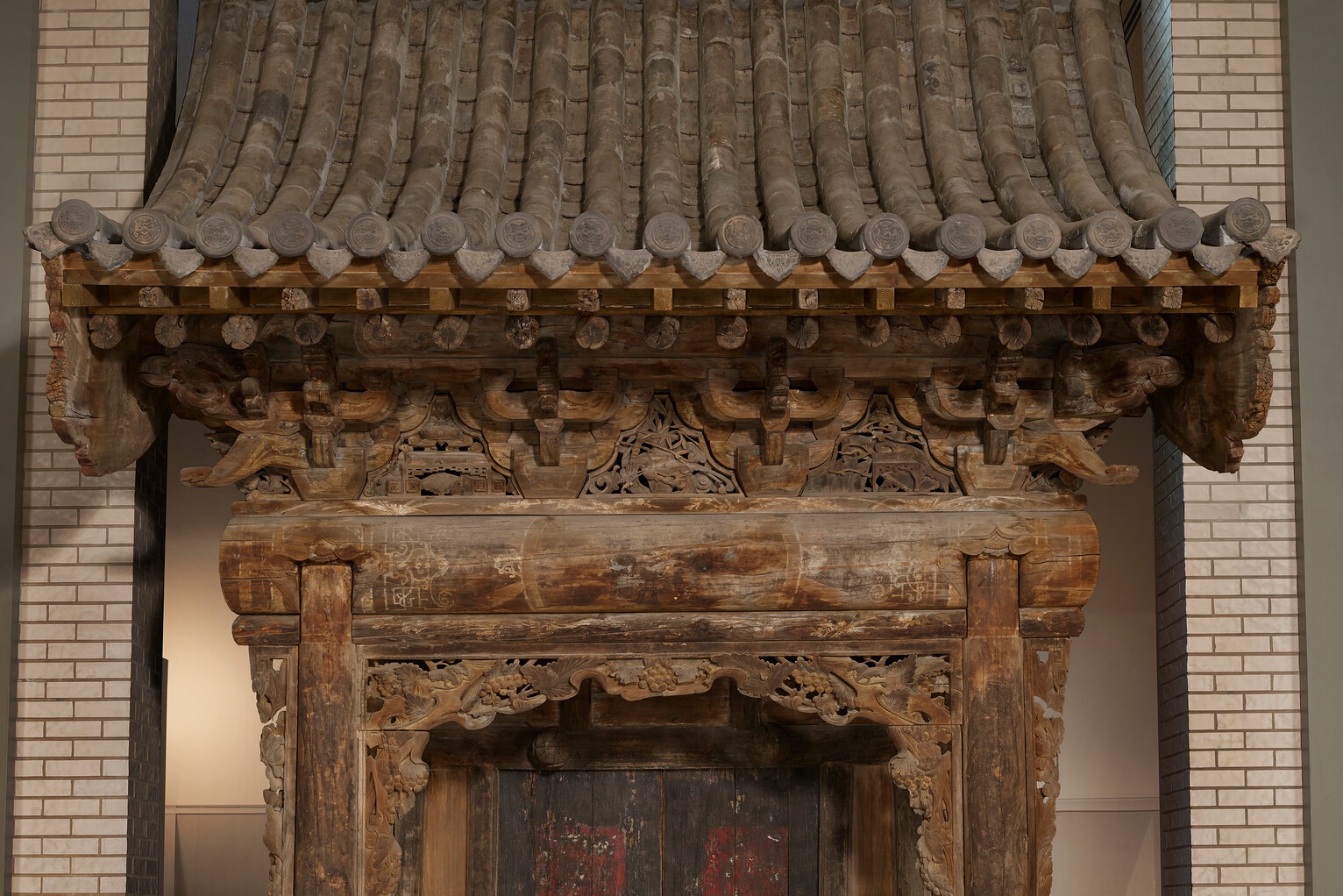
The Qing gate, reinstalled at the second-floor entrance to Mia’s Chinese galleries from the Buddhist sculpture court.
After Dayton bought the gate, it was disassembled, packed into crates, and shipped eastward to the coastal city of Shanghai. There, the 251 packages were fumigated for 24 hours to disinfect them before their transfer via ocean freighter and then rail to Minneapolis—a 6,700-mile journey that puts your 12-hour family road trips in perspective (hint: there were no snacks).
Alas, the gate was not destined to sunbathe on the shores of one of Minnesota’s 10,000 lakes—this was not a leisure trip. In fact, it soon left for San Francisco, where it was reassembled. And it remained in California for another six years.
You Shall Not Pass
The gate, referred to around the museum as the Qing gate, is the 19th-century version of an outer apartment-building door. The kind you stand outside of, scanning the resident directory—Baker, 21B; Ali, 32C; Leung, 33A—until you find the name you’re looking for, press the button, and your friend on the inside buzzes you through to the next door.
Such outer gates served as an entry point to the residential compounds of wealthy Chinese families during the Qing dynasty (1644–1912). There, servants welcomed visitors, and the women of the household could stand and watch processions or buy goods from vendors at the edge of the bustling street.
As the outermost emblem of the household, the gates were both pragmatic and demonstrably beautiful to passersby, with brightly painted eaves and curving roofs that suggested both good taste and good fortune. Mia’s wooden gate is decorated with carvings of grapes—representing wishes for many sons and daughters—as well as bats, regarded as symbols of luck.
Of the two doors leading into the residence, much like the layout of a Chinese temple, the first door was always open and the second always closed. Families only opened the second door, made of intricate latticework, for a wedding or a funeral—at any other time, visitors had to walk around this doorway.
Raising the Roof
After the gate’s eventual return to Mia, it was stored and finally uncased when three craftsmen from China arrived to install it. It stands at the back of the second-floor Buddhist sculpture court as a grand entry to the Chinese galleries.
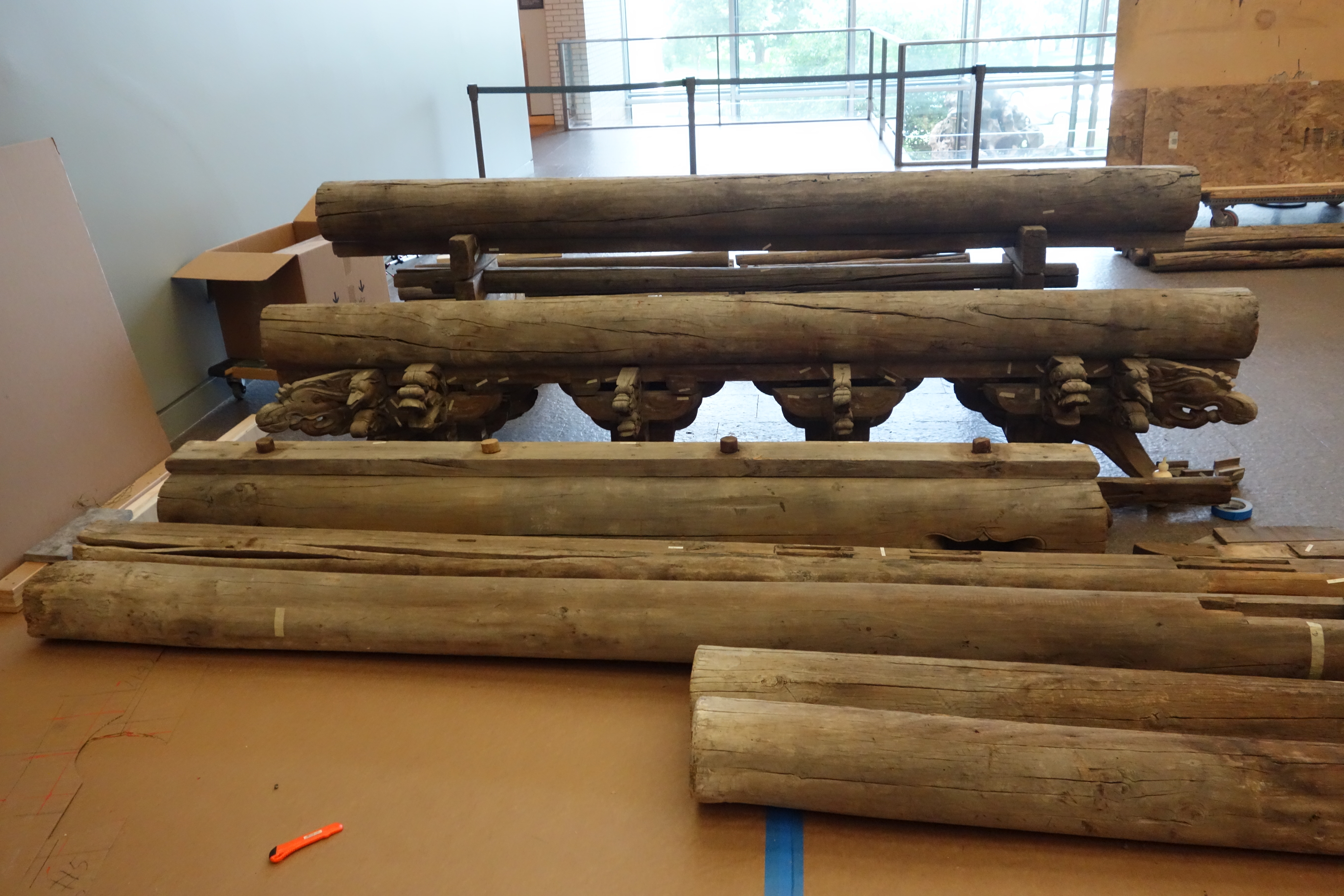
The staging area for reconstructing the gate at Mia.
Like most traditional Chinese architecture, the gate was built without nails (each piece interlocks and fits perfectly), which made its reconstruction in the museum tricky. With help from Mia’s woodshop, the craftsmen repaired some parts and re-created others that were missing. They dispensed with the six stone bases that were once sunk into the ground beneath the pillars on either side of the doorway, because they proved too difficult to bury in the gallery floor. They inserted six metal rods into the pillars and the floor to ensure stability, carved out some rotted Yu wood and pinewood, and filled the gaps. Finally, they rebuilt the roof using hundreds of ceramic bricks from the 1800s, imported from China.
It took them a month. Since then, a larger, unseen transformation has begun. The gate no longer stands as an impenetrable and imposing barrier but a kind of welcome mat, inviting visitors in to explore the knowledge and treasures beyond its sturdy pillars.
Learn more about the Qing Gate.