
Five Horses that Show Why the Year of the Horse Is the Best Year
By Tim Gihring
February 18, 2026—This is the year of the horse, beginning February 17, 2026, in the Chinese zodiac, which doesn’t get as much attention as the year of the dragon or the tiger. But maybe it should.
As Mia’s new exhibition “Year of the Horse: Hoofbeats through Time” demonstrates, Equus has long galloped through China’s cultural imagination, serving as perhaps the best companion one could have in both life and death.
Here, five depictions of horses from the exhibition reveal their power, elegance, and charisma, making a case for being the zodiac’s, well, dark horse.
Horses Guide Your Spiritual Journey

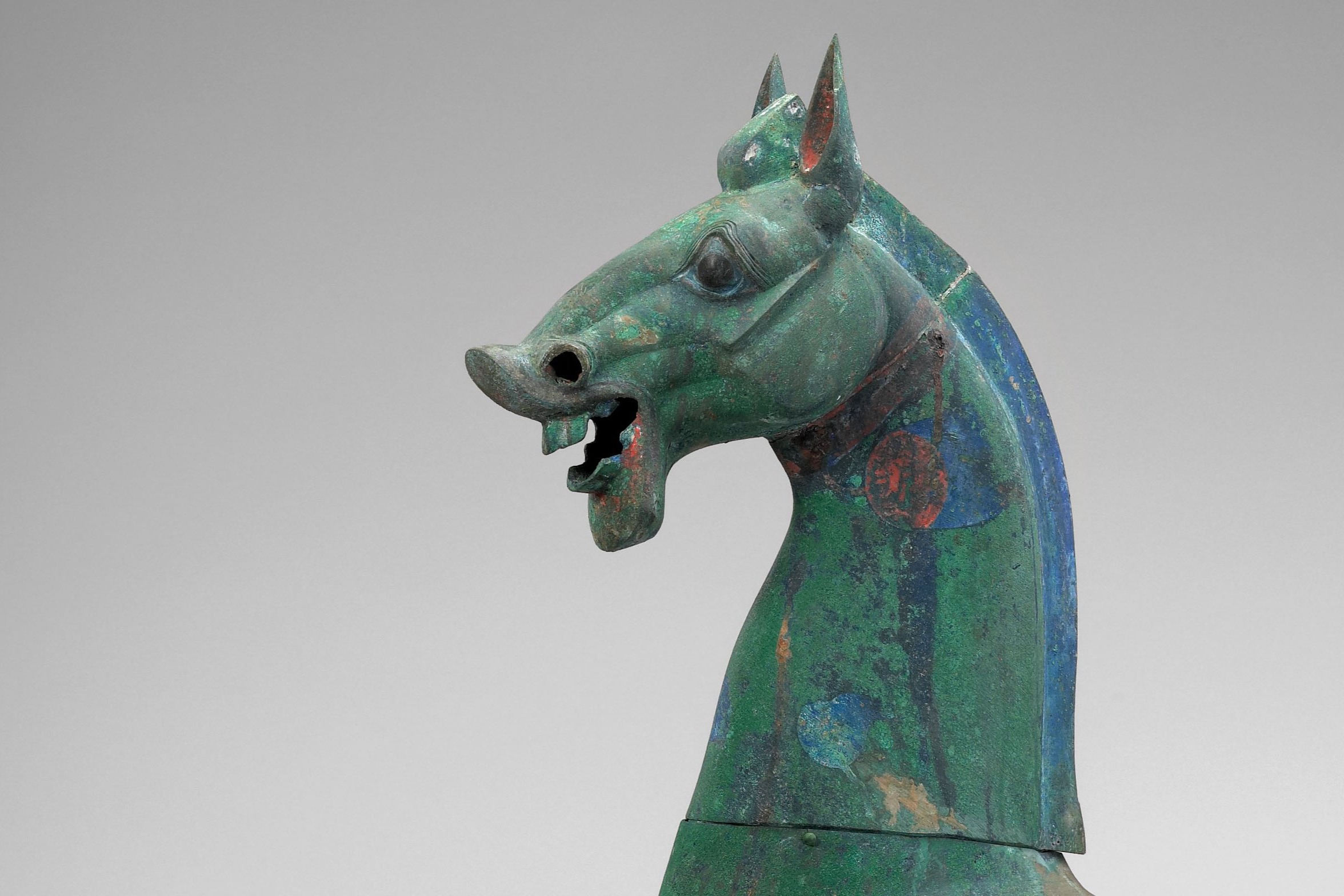
China, Eastern Han dynasty (25–220 CE), Celestial Horse, 1st century CE, bronze with traces of polychrome, gift of Ruth and Bruce Dayton, 2002.45
Horses long served as transportation, taking you from place to place. But in ancient Daoist tradition, they also took you from this world to the next. Which is why so many horse sculptures, including most of the ones in Mia’s exhibition, have been found in ancient tombs.
Mia’s beloved Celestial Horse, a bronze sculpture originally buried with an unknown aristocrat a couple of thousand years ago, was designed to resemble the so-called heavenly horses that roamed Central Asia at the time. Stout and powerful, with an apparently relentless work ethic, the breed became an obsession of the Chinese emperor. Their depictions ended up in the graves of those who could afford the very best for their onward journey—horses that could take you as far as you could go, spiritually speaking, in the afterlife.
Horses Make You Look Good
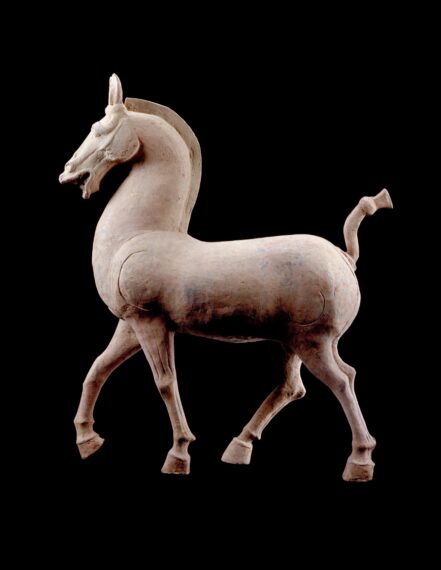
China, Eastern Han dynasty (206 BCE–25 CE), Prancing Horse, 1st century CE, bronze with traces of polychrome. Gift of Ruth and Bruce Dayton, 98.19
If you’ve ever ridden a horse, you know they’re often larger than you expect—it’s a long way down. Which is helpful if you a) want to stay out of the fray of battle or b) want to look like a big shot. The horse as a status symbol goes way back in China. We know this from tomb art showing horses at the head of grand processions. But it’s often not their size that matters so much as their self-control. The better-behaved the horse, the bigger the man.
The prancing horse seen here is powerful, certainly, but also disciplined—the ideal of a warrior-leader. For upper-class tombs, working horses and even war horses were eschewed for horses with good posture, dignified and proud. Horses that would be remembered not for what they did but how they did it.
Horses Help You Win
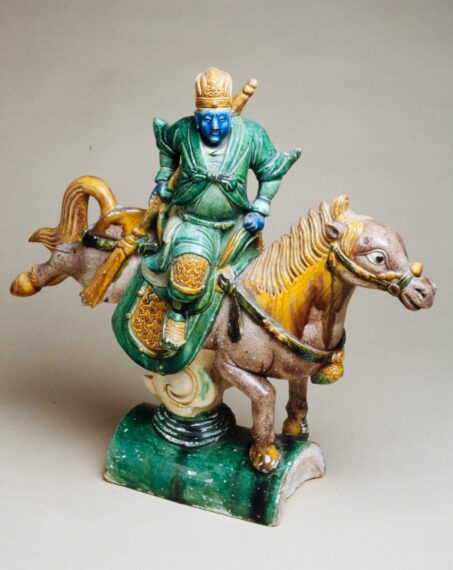
China, Ming dynasty (1368–1644), Roof tile in the form of a mounted warrior, 14th–17th century, stoneware with molded and incised decor under polychrome glaze. Gift of Robert B. Mayer Memorial Loan Collection, 92.38.21
For thousands of years, horses were as indispensable in war as the weapons themselves. Even as their usefulness faded, they still symbolized the qualities of speed and strength, victory and valor. Similarly, as hunting helpers they suggested the privilege of the leisure class and a mastery over nature. A well-bred horse was an emblem of your own good breeding.
A roof tile like this one, of a fierce warrior racing around on horseback, was thought to be protective against everything from fire to evil spirits to bad luck. Anyone under its cover, it broadcast, was no one to mess with. And if there was any trouble, the cavalry, as it were, would be coming.
Horses Take Your Imagination for a Ride
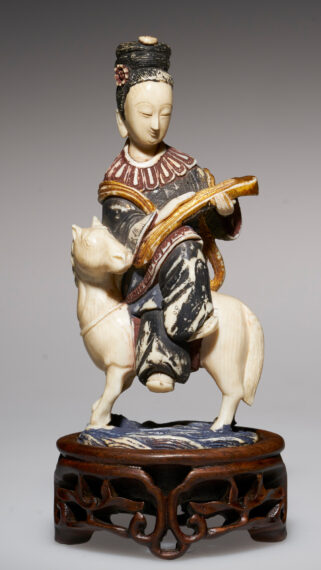
China, Qing dynasty (1644–1911), Snuff bottle in the form of a lady on horseback, 19th century, ivory. Gift of Mr. and Mrs. Augustus L. Searle, 27.1.14a-c
Horses, along with camels, were the primary transport on the Silk Road, which imported new ideas, traditions, and stories into China as well as goods. As such, horses came to be seen as poetic creatures, wandering beyond the known world, symbolizing the pursuit of knowledge. Often, in paintings and sculptures, they were depicted ferrying scholars on long journeys through remote landscapes—and the mind itself.
Here, in the form of a carved ivory snuff bottle, a horse carries an elegant woman. The woman’s serene appearance suggests the ideals of refinement and femininity, while the horse conveys movement and vitality. A fine ride into the world of art and imagination.
Horses Help You Navigate a Changing World
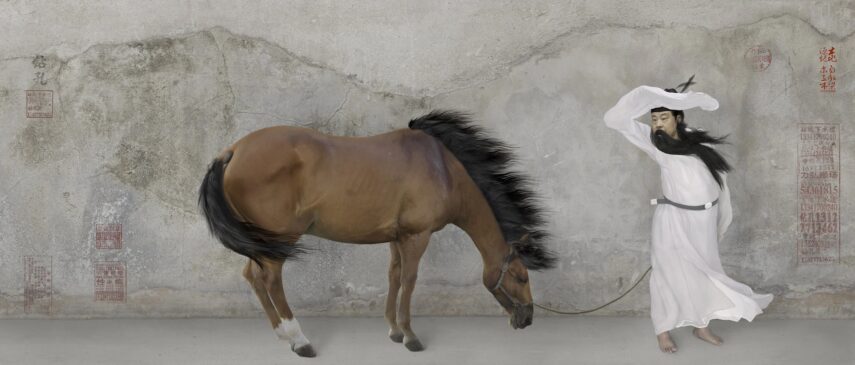
Yang Yongliang (Chinese, b. 1980), Taming the Horse, 2011, giclée print on fine art paper. On loan to the Minneapolis Institute of Art
Modern depictions of the horse bring its symbolism into a new context, reflecting both a continuity with the past and a juxtaposition with the present. What does the horse mean in a time of fast cars and big cities? Perhaps the anachronism is the point—the horse is a symbol of change itself.
This contemporary work reinterprets an iconic painting from the medieval era, placing the horse and rider on an urban wall. Amid the stains, cracks, and peeling advertisements, the virtuous nature of a noble steed is compromised, its strengths are diminished. And yet the horse remains a potent emblem. It is not the horse that has changed, after all, but us.
More to See
“Year of the Horse: Hoofbeats through Time” is a free exhibition at Mia, on view through August 30, 2026, in the Bell Family Decorative Arts Court.