
Photo Study Picks: Shaking the House
By Joe Doherty
April 10, 2026—In Persian, khāne-takānī, an Iranian spring-cleaning ritual associated with Nowruz, literally means “shaking the house.” Not sweeping. Not tidying. Shaking. The force of the word matters.
What the season requires is not maintenance but disturbance, the deliberate unsettling of everything that accumulated in the dark. It is not done alone. The whole household participates.
Alec Soth
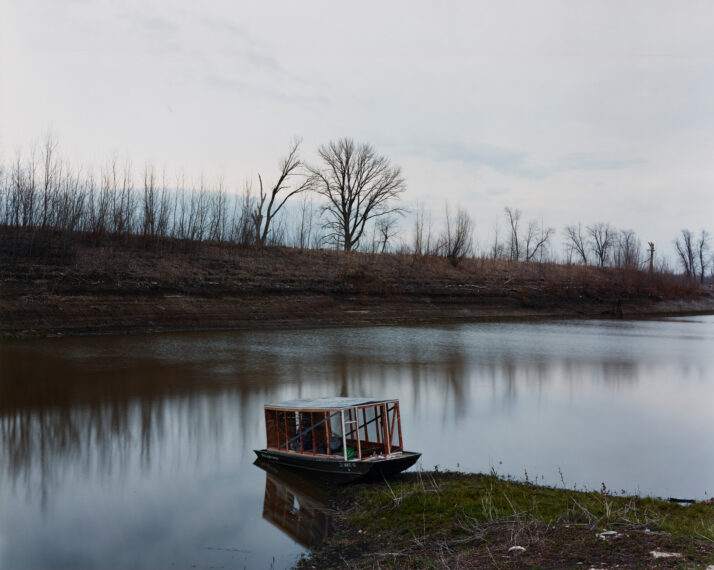
Alec Soth (American, b. 1969). Saint Genevieve, MO, 2002 (printed 2003). Chromogenic print. Bequest of Harry Drake. 2013.35.11. Copyright © Alec Soth
Alec Soth made Saint Genevieve, Missouri, in 2002, early in the work that would become Sleeping by the Mississippi. The river is still, the trees bare, and the far bank lies across the frame like a horizontal brushstroke of mud and debris, softened at its edges by the reflected sky. A boat sits at the bank, half-built or half-abandoned. A small patch of green survives in the lower right corner.
The image doesn’t ask you to hope, but it doesn’t prevent you from hoping either. What it understands is that this is how spring arrives—not as release, but as something that has to be waited through, together, in weather that keeps changing its mind.
Harold Edgerton
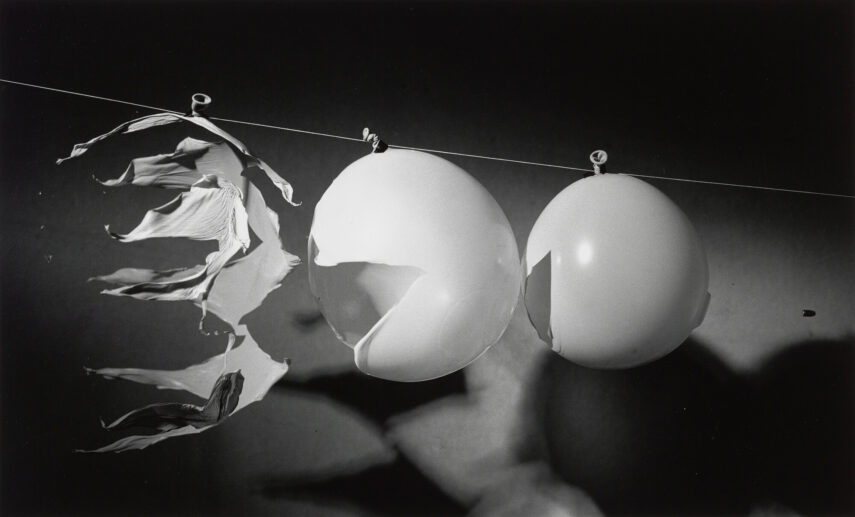
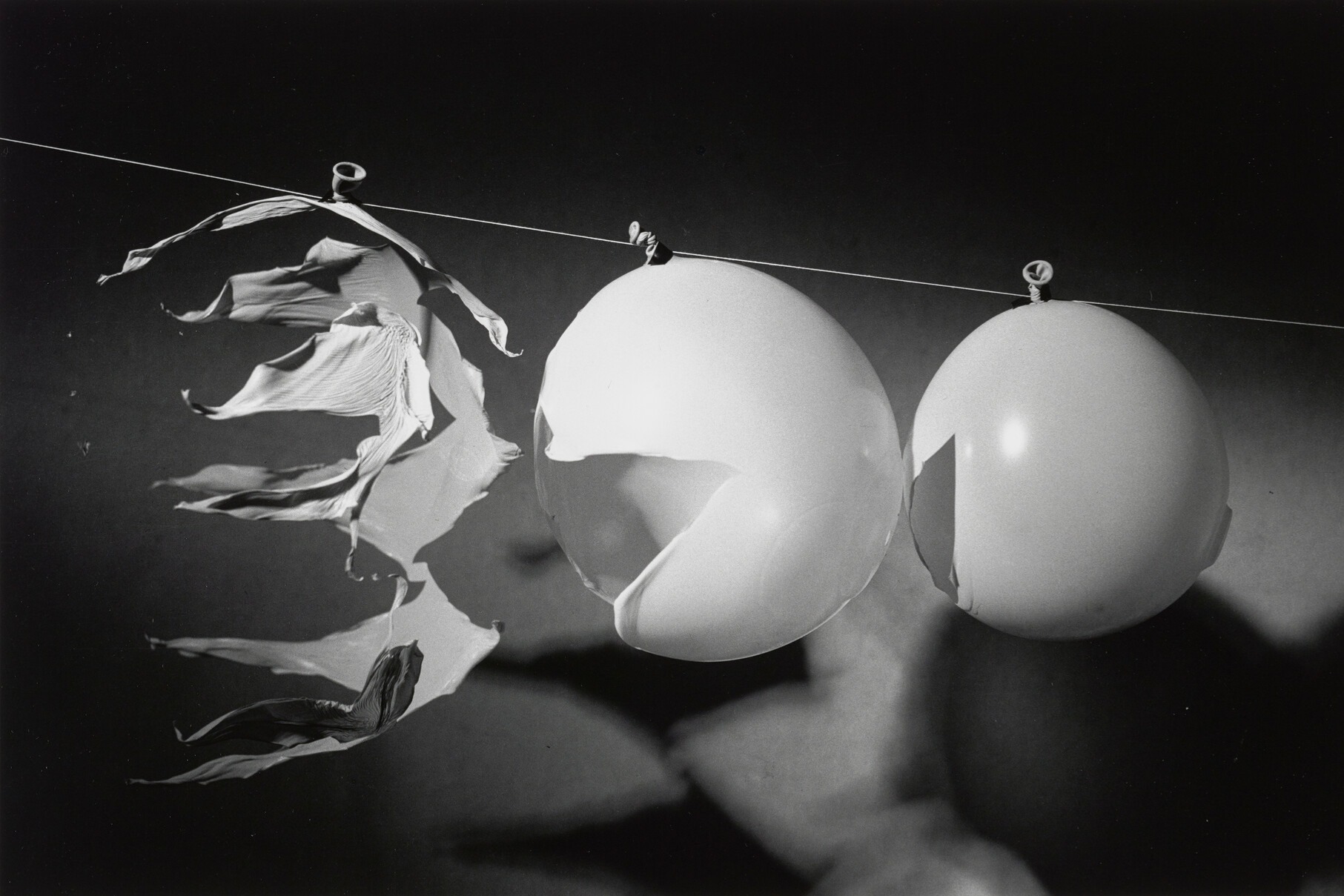
Harold E. Edgerton (American, 1903–1990). Bullet Through Balloons, 1959. Gelatin silver print (printed 1981). Gift of the Harold and Esther Edgerton Family Foundation. 96.149.28. ©The Harold & Esther Edgerton Foundation, 2001, Courtesy of Palm Press, Inc.
Harold Edgerton spent his career photographing what the eye cannot hold, events so fast they leave no trace in ordinary vision. Bullet Through Balloons appears to show a sequence: One balloon already gone, one splitting open, one still intact. Before, during, after.
But the photograph doesn’t actually give us a sequence. It holds several states at once, while the moment of change itself remains invisible. You can tell pressure has moved through. Something has already been broken open, and something else hasn’t yet given way.
André Kertész
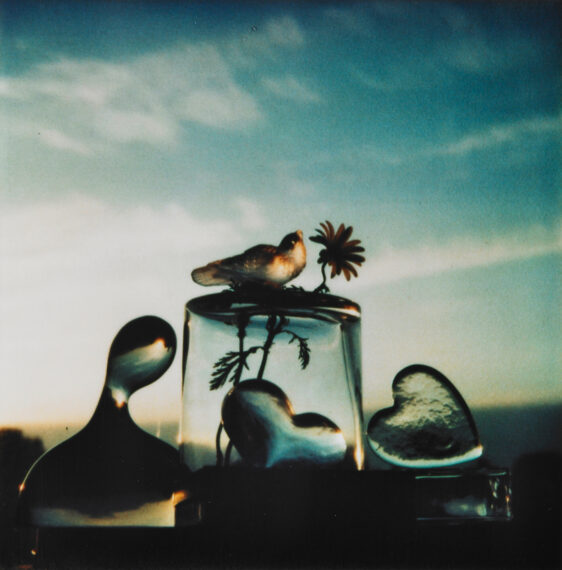
André Kertész (American, born Austria-Hungary, 1894–1985). Untitled, 1979. Dye bleach color print. Gift of Frederick B. Scheel. 2007.35.144. © Estate of André Kertész
This untitled work highlights the necessity of looking. André Kertész arranged a glass stone, a ceramic bird, and a single flower on a surface, and photographed them against a sky that could be dawn or dusk. It’s unclear which direction time is moving. The bird is oriented toward the flower as if something is about to happen between them. The stem distorted behind the glass cup’s lens. The light is warm viewed through the objects and cool in the sky, two temperatures not yet resolved into one.
Khāne-takānī. The house is shaken to stir loose and set in motion what winter left behind. This shaking is traditionally communal, neighbors moving through each other’s spaces, the work distributed across households, renewal understood as something no single family accomplishes alone. You don’t shake a house because you’re certain spring is coming. You shake it to help spring arrive.
About Joe Doherty, Collection Care Specialist
A collection care specialist with a focus in photography, Joe Doherty oversees the preservation and management of Mia’s nearly 13,000 photographs. He has a graduate certificate in Museum Collections Management and Care from George Washington University and earned his master’s degree in fine art at the University of Alberta, Canada. Doherty has a passion for preventive conservation; education; and diversity, equity, accessibility, and inclusion work within the cultural heritage sector.