
Print Study Picks: All About Hell
By Lori Williamson
October 19, 2025—By late October in Minnesota, temperatures drop, leaves turn brown, and darkness arrives a little earlier each night. Greek mythology has an explanation: Autumn and winter are when Persephone returns to Hades. It’s a time for all things spooky and otherworldly. Or shall we say, underworldly?
In honor of Mia’s restored Dante tapestry, on view after some 70 years, this edition of Print Study Picks examines a few works on paper that capture terrifying trips to hell.
The Inferno
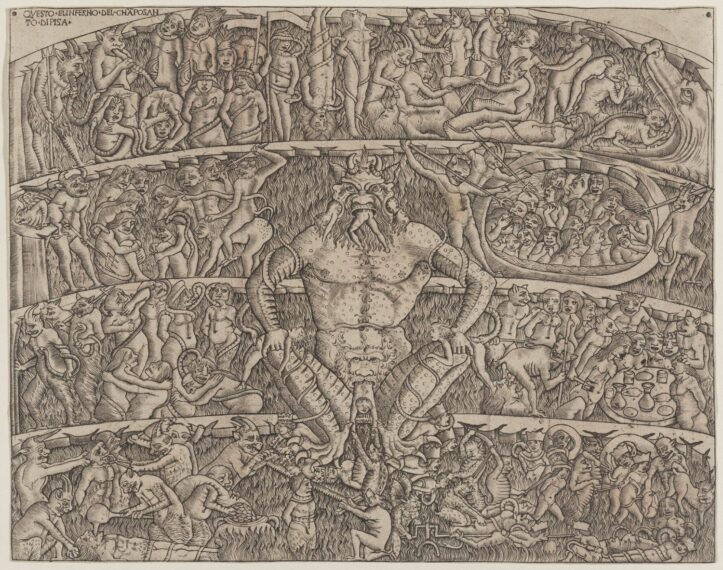
Unidentified artist, Italy (Florence), The Inferno, c. 1460–80, engraving. Gift of Herschel V. Jones, P.10, 586
This engraving is one of the most frightening images in Mia’s collection—observe Lucifer, also known as Satan, eating people with his multiple, horrific mouths! Around him, in the ghastly circles of hell, demons torment souls in various terrible ways—they’re dismembered, entwined with snakes, roasted on spits, and sawed in two.
Dante’s Inferno was published around 1314 in Florence; this image was made about 150 years after, using the relatively new technology of printmaking.
The River Styx
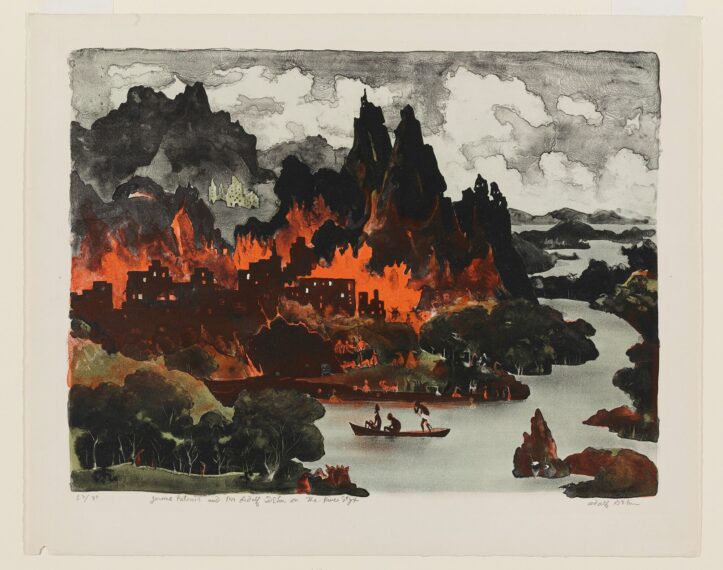
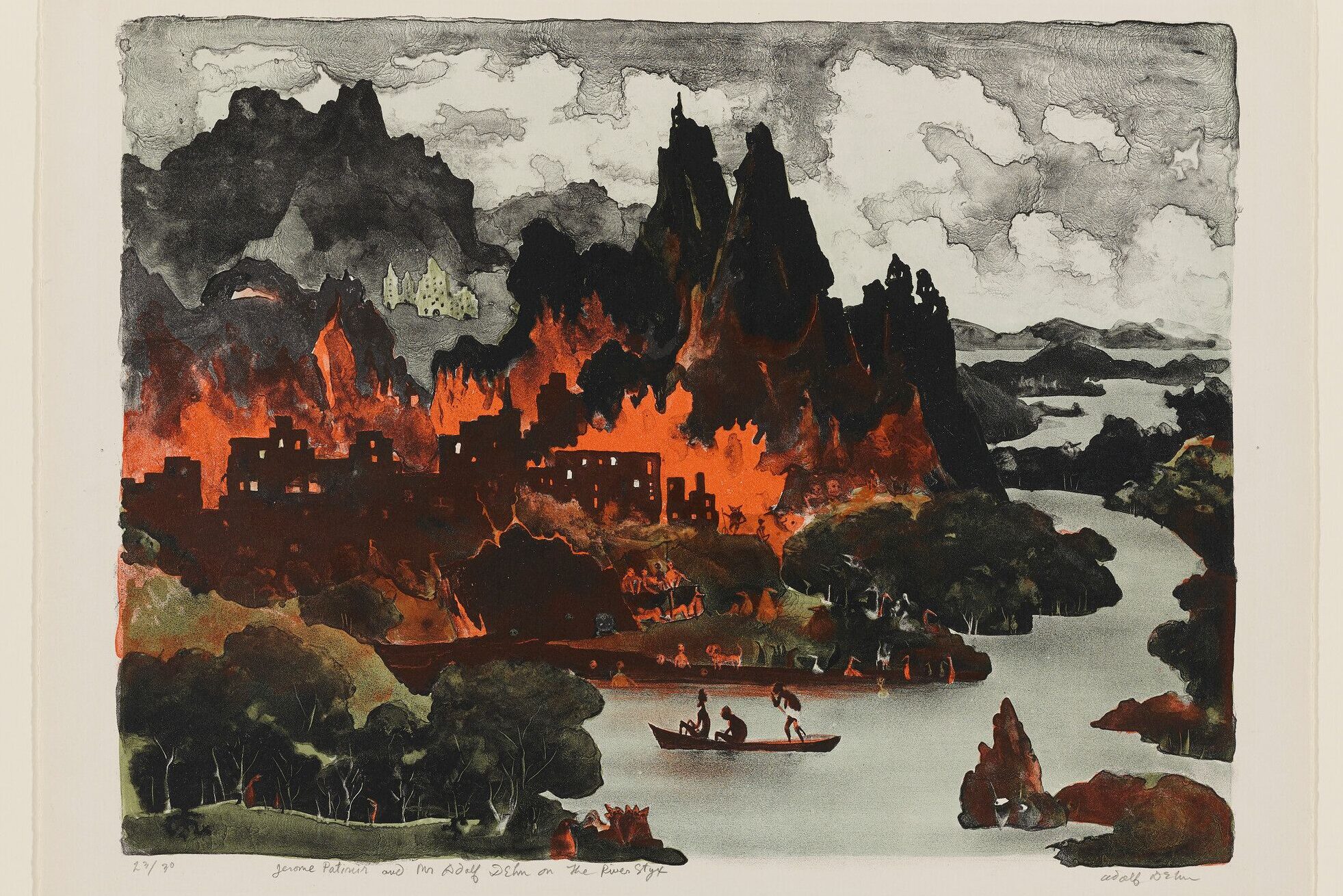
Adolf Dehn, Jerome Patinir and Mr. Adolf Dehn on the River Styx, 1963, color lithograph. Gift of Mrs. Adolf Dehn, 2002.279.14
The orange flames engulfing most of this work are both alarming and beautiful. Minnesota artist Adolf Dehn placed himself in the middle of the action—on the River Styx with another artist, 16th-century Flemish painter Jerome Patinir. Patinir is famous for his panoramic landscapes. Here, Dehn imagined them going to a rather well-landscaped hell together. Don’t miss the hellish animals lining the shore!
The Inferno of Dante
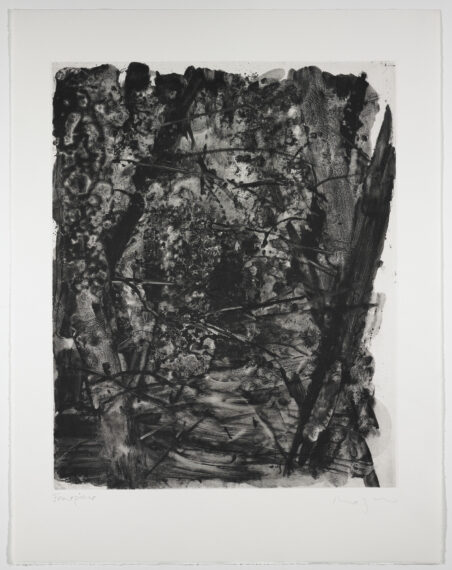
Michael Mazur, L’Inferno di Dante (The Inferno of Dante), 2000, etching. Gift of Dolly J. Fiterman, 2002.25a-ffff
This work depicts the entrance to the dark, intimidating forest where Dante becomes lost and his famous poem begins. Artist Michael Mazur worked with translator Robert Pinsky to illustrate sections of Inferno, in a portfolio that shifts between new translations and large-scale etchings. Breaking from earlier artists, Mazur does not show Dante traveling through hell. Rather, he shows us what Dante saw.
Together, these pieces highlight the importance of a really good story, which can be reused, retold, and reimagined over time. And remember: While the fearful multiple mouths of Satan haunt us, the encompassing fire and creepy animals await on the shore, and the dark woods close in, we can still make it to paradise, like Dante, through the power of art.
About Lori Williamson, Supervisor of the Herschel V. Jones Print Study Room at Mia
 Lori Williamson creates mini-exhibitions and teaches classes and Print Study Room visitors about the museum’s rich collection of works on paper. She’s the primary caretaker for more than 40,000 prints, 6,000 drawings, and 600 artists’ books, collaborating with curators in American, European, and Global Contemporary Art to make these holdings accessible. Williamson supports scholars through research and inquiry, and advocates for the inclusion of works on paper in exhibitions, social media, and outreach, helping to connect diverse audiences with this dynamic collection.
Interested in seeing something in the Print Study Room? All are welcome by appointment. Email Lori Williamson and copy the Print Study Room to make an appointment.
Meet the other curators in the Department of European Art.