
Print Study Picks: Art by Women
By Lori Williamson
March 17, 2026—Women have made their mark on the art world in various capacities—as curators, collectors, teachers, and sources of inspiration. Mostly, women have made art. This edition focuses on the artists, featuring three whose works on paper together span nearly 400 years.
Elisabetta Sirani
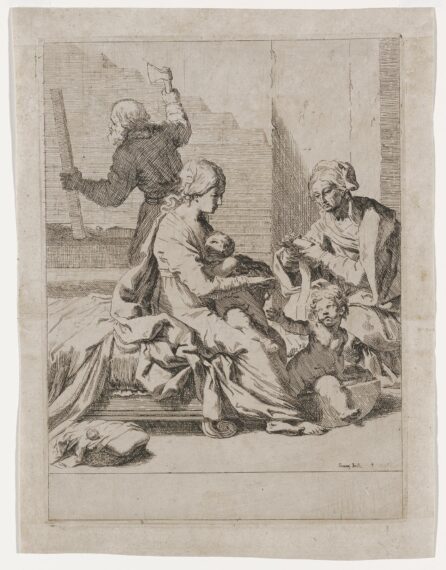
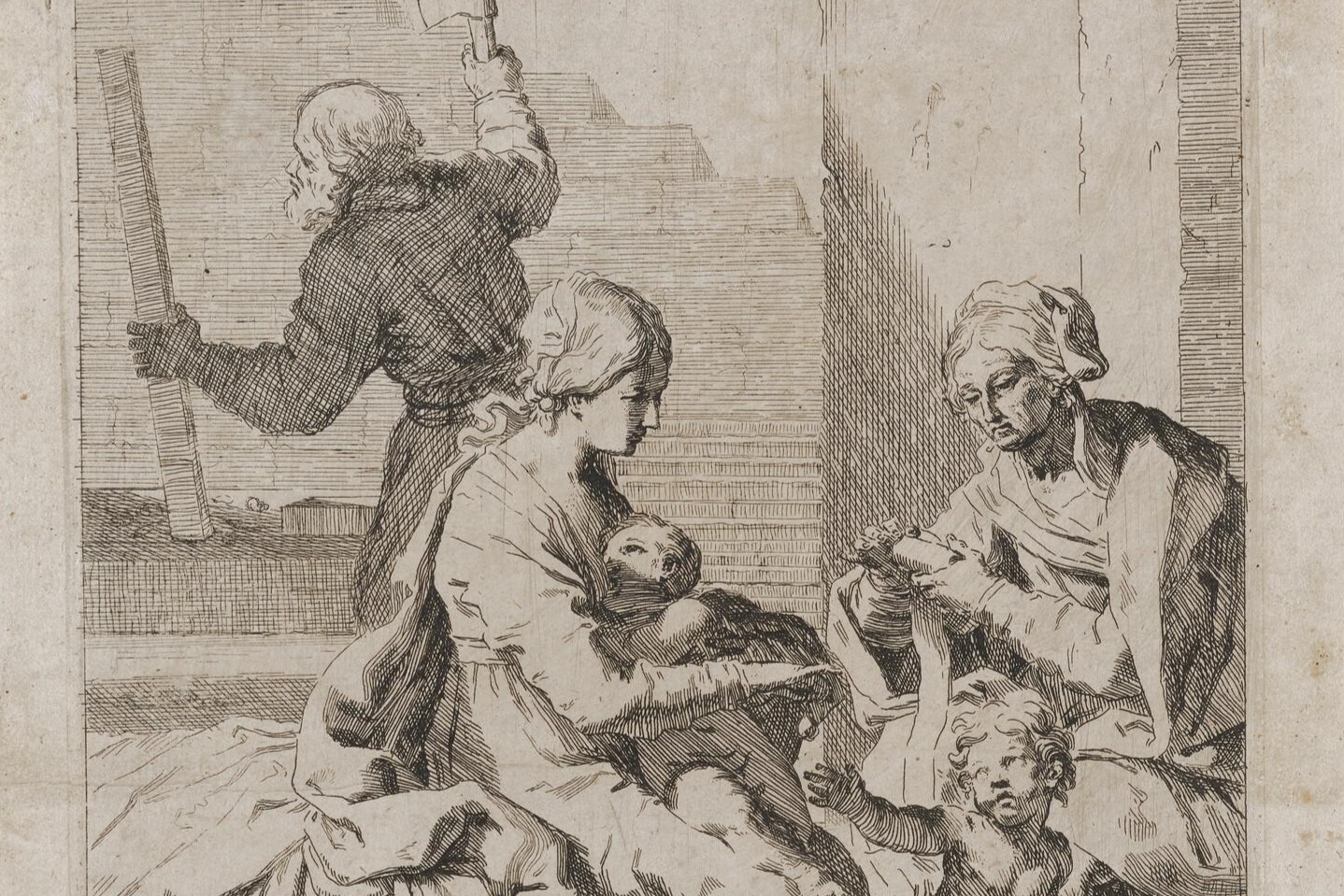
Elisabetta Siran (Italian, 1638–1665), The Holy Family with St. Elizabeth and the Infant St. John the Baptist, 1655–65, etching. The Barbara S. Longfellow Fund for Works on Paper 2020.23
A highly skilled artist in the 17th century, Elisabetta Sirani was a phenomenon. People came from great distances to see her in her hometown of Bologna. As a girl she was already considered a prodigy due to her fine drawings and paintings. Her father was a principal assistant to Guido Reni, the town’s leading artist; so, she had early exposure to serious artistic talent.
In this sober scene of the Holy Family, several elements foreshadow the fate of Mary and her son. She sits on a bed, a piece of furniture closely associated with images of her death. Joseph’s woodworking may allude to the cross and the cloth being rolled by Elizabeth to Christ’s entombment.
This etching will be on view in “Mary,” opening June 13, 2026, in Winton Jones Gallery for Prints and Drawings (G344).
Nell Painter
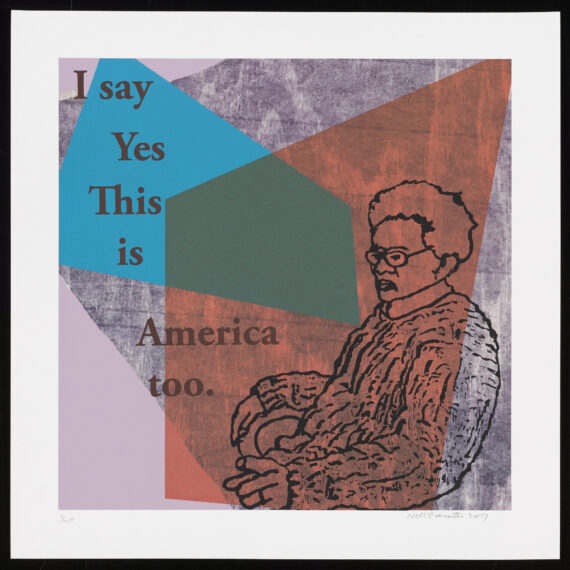
Nell Painter (American, born 1942), You Say This Can’t Really Be America (E), 2017, Color inkjet print with screenprinting on paper. The Eugene and Virginia Palmer Fund for Prints and Drawings, 2018.30.5
You Say This Can’t Really be America takes a step back to view, from a slight distance, the political landscape created by the 2016 U.S. presidential election. Nell Painter offers a perspective to American liberals and moderates bemoaning the statements and actions of the political right. The drumbeat recitation of her text-based conceptual art challenges the idea that the United States has had “better times” with regard to racism and discrimination.
Painter is a renowned historian of the American South and Professor Emerita at Princeton University. Late in her teaching career, she returned to school to earn degrees in studio art. She might be seen as the wise figure who conducts the discourse in this work, which is part of a suite of eight images.
Harriet Bart
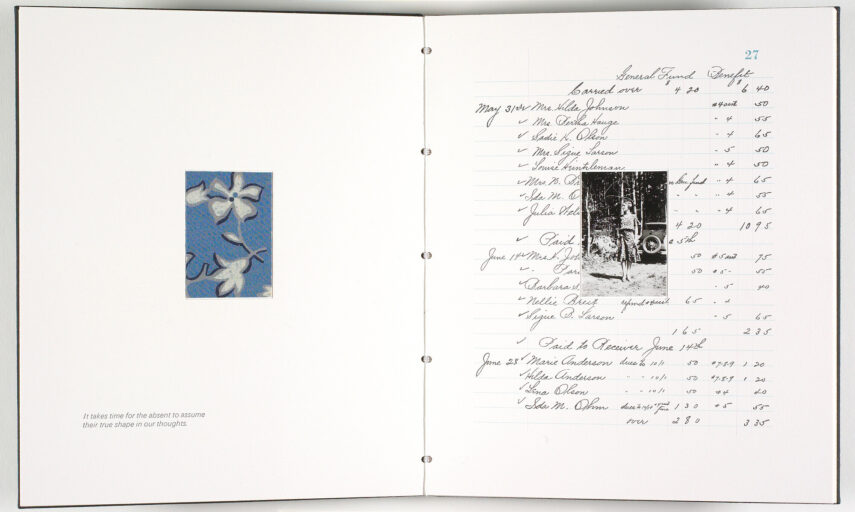
Harriet Bart (American, born 1941); Printer: Philip Gallo; Publisher: Mnemonic Press, Minneapolis; Book binder: Jill Jevne, Garment Register, 2001, Photographic illustrations, fabric samples, and letterpress, bound volume. Gift of the Print and Drawing Council, 2001.99
Garment Register recalls the toils, sacrifices, and experiences of countless anonymous women who contributed to the development of modern U.S. society. Designed by Harriet Bart and Philip Gallo, this artist’s book juxtaposes prose by celebrated artists such as pioneering choreographer Martha Graham and novelists Virginia Woolf, Doris Lessing, Willa Cather, and Collette, with historic photographs, fabric samples, and replicas of pages from an old ledger listing the names of anonymous women and the dues they paid. Though its origin and details are unknown, this handwritten artifact is a poignant commemoration of the myriad women whose civic efforts have gone unrecognized.
Bart is a founding member of WARM, the Women’s Art Registry of Minnesota, celebrating its 50th anniversary this year.
About Lori Williamson, Supervisor of the Herschel V. Jones Print Study Room at Mia
 Lori Williamson creates mini-exhibitions and teaches classes and Print Study Room visitors about the museum’s rich collection of works on paper. She’s the primary caretaker for more than 40,000 prints, 6,000 drawings, and 600 artists’ books, collaborating with curators in American, European, and Global Contemporary Art to make these holdings accessible. Williamson supports scholars through research and inquiry, and advocates for the inclusion of works on paper in exhibitions, social media, and outreach, helping to connect diverse audiences with this dynamic collection.
Interested in seeing something in the Print Study Room? All are welcome by appointment. Email Lori Williamson and copy the Print Study Room to make an appointment.
Meet the other curators in the Department of European Art.