
Print Study Picks: Before IMAX, There Was “The Odyssey”
By Lori Williamson
July 22, 2026—We strive to be erudite in the Print Study Room, but even we can be lured by the siren’s song. This month, we’re looking at a few works related to The Odyssey—the epic poem written nearly 3,000 years ago by Greek poet Homer and recently brought to the IMAX screen in Christopher Nolan’s new film (just as Homer would have wanted). The epic tells the story of Odysseus, the king of Ithaca, and his long, perilous voyage home after the Trojan War.
Like the epic itself, these print works have traveled across centuries and cultures, ready to share their stories of monsters, magic, and war with the next generation.
Polyphemus
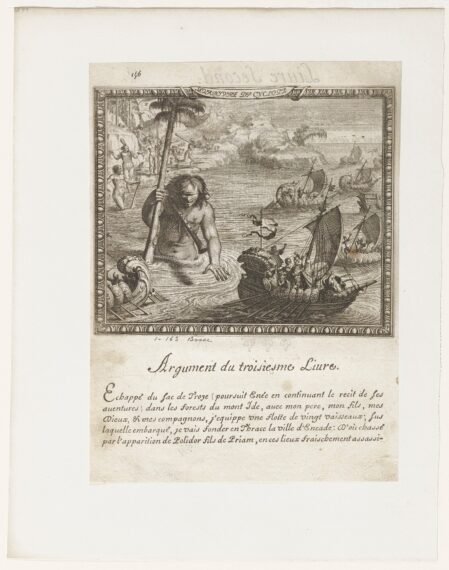
Abraham Bosse, Avanture du Cyclope, 17th century, engraving. Gift of John Crosby, P.47.103
This engraving by 17th-century printmaker and painter Abraham Bosse depicts the cave-dwelling cyclops Polyphemus, one-eyed giant son of Poseidon. When Odysseus and his men surprise him, he begins eating them. The men escape by blinding Polyphemus and hiding among his many sheep.
The engraving of the monster seen here is actually from The Aeneid, another epic poem. This one is by the Roman poet Virgil (visible in Mia’s restored Dante Tapestry, now on view) and is about the survivors of the Trojan War who went on to found Rome. Polyphemus, blind and pathetic after the events of The Odyssey, appears in this story as well. Trojan hero Aeneas saves a member of Odysseus’s crew who was left behind; Polyphemus tries to catch the boats and get him back but fails.
Circe
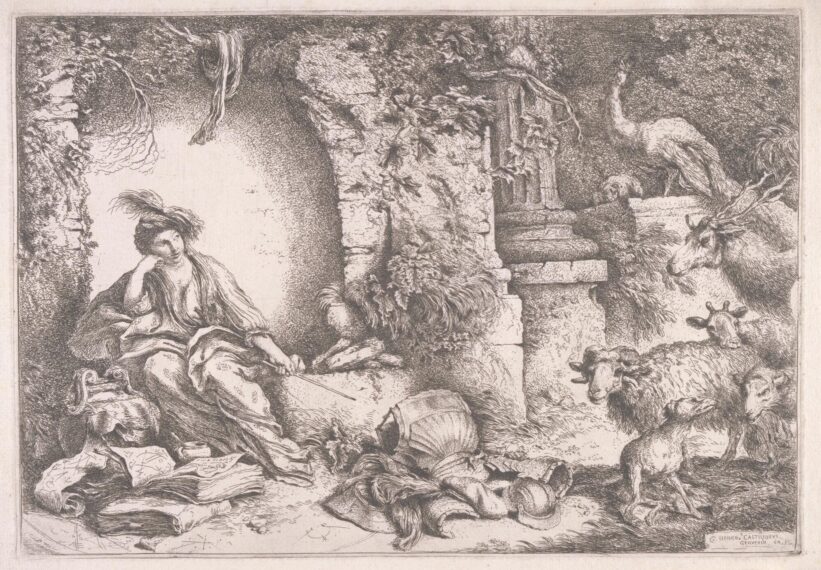
Giovanni Benedetto Castiglione (Il Grechetto), Circe Changing Ulysses’ Men to Beasts, c. 1650–51, etching. Anonymous Gift. P.85.57
Skilled in her use of potions and herbs, Circe is depicted as both a goddess and a witch in Greek mythology. In The Odyssey, she turns Odysseus’s men into pigs, showing their true natures.
In this etching, Circe is shown with her wand, surrounded by an array of animals, including a sheep, a deer, and a peacock. Circe herself looks rather bored—just another day on a magic island.
The Fall of Troy
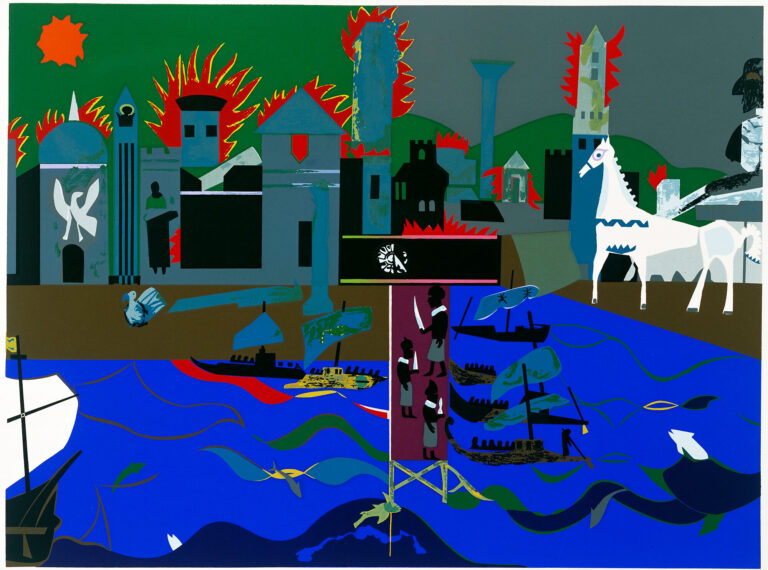
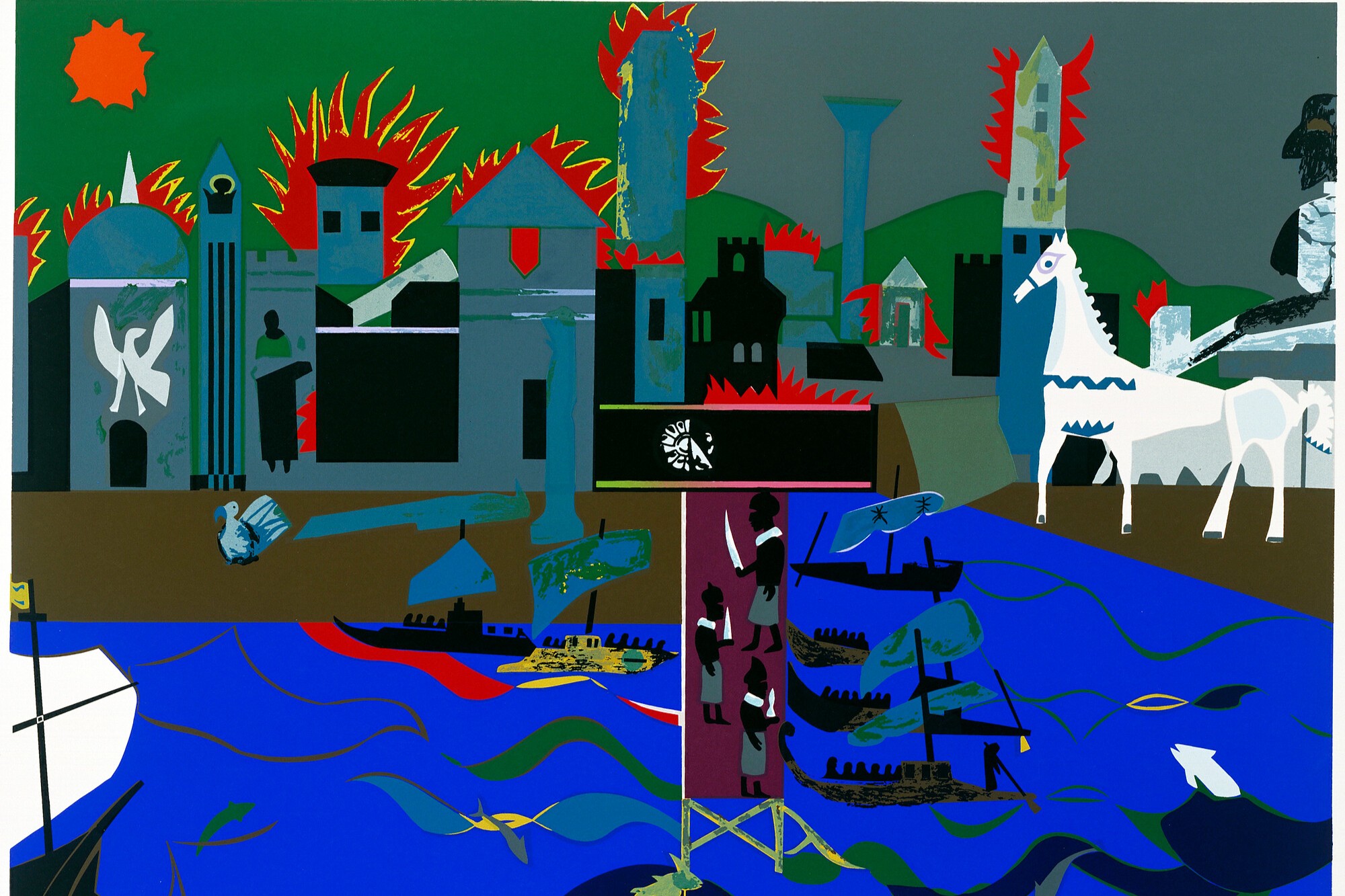
Romare Howard Bearden, The Fall of Troy, 1979, color screenprint on cream paper. Gift of Alan Fingerhut, P.86.33
The Fall of Troy is first recounted in The Odyssey, the result of Odysseus’s plan to hide soldiers in a giant wooden horse, which the Trojans take as a gift and bring inside the city walls. Soldiers jump out; chaos ensues.
Artist Romare Bearden’s work is a striking example of how timeless tales can be used to wrestle with contemporary challenges. His Odysseus Series uses The Odyssey to explore the Black American experience, reflecting on displacement, the search for home, and the challenges of getting there.
About Lori Williamson, Supervisor of the Herschel V. Jones Print Study Room at Mia
 Lori Williamson creates mini-exhibitions and teaches classes and Print Study Room visitors about the museum’s rich collection of works on paper. She’s the primary caretaker for more than 40,000 prints, 6,000 drawings, and 600 artist’s books, collaborating with curators in American, European, and Global Contemporary Art to make these holdings accessible. Williamson supports scholars through research and inquiry, and advocates for the inclusion of works on paper in exhibitions, social media, and outreach, helping to connect diverse audiences with this dynamic collection.
Interested in seeing something in the Print Study Room? All are welcome by appointment. Email Lori Williamson and copy the Print Study Room to make an appointment.
Meet the other curators in the Department of European Art.