
Print Study Picks: Hygge
By Lori Williamson
November 26, 2025—The winter months are cold, dark, and a little depressing here in the Twin Cities. To cope, we lean into coziness, borrowing from a Danish and Norwegian tradition called hygge.
- hyg·ge
/ˈho͞oɡə,ˈho͝oɡə/
Noun. A quality of coziness and comfortable conviviality that engenders a feeling of contentment or well-being (regarded as a defining characteristic of Danish culture).
Crackling fires, soft candlelight, fuzzy socks, sips of cocoa, family, friends: it’s a time to reach for all things comforting. Here are a few works of art that evoke that homey feeling of hygge—reminders that winter, done right, can be the warmest season.
Jean-Pierre Norblin de la Gourdaine
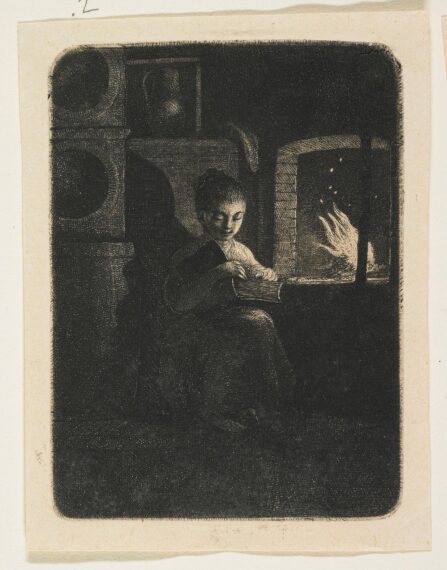
Jean-Pierre Norblin de la Gourdaine, Young Girl Reading by a Fire, 1774–89, etching. Gift of John E. Andrus III, 2010.67.6
Jean-Pierre Norblin de la Gourdaine was a French painter and printmaker active in Poland in the late 18th century. Norblin was greatly influenced by the Dutch painter Rembrandt’s etchings, a quality evident in Young Girl Reading by a Fire, a charming miniature work. The gentle shadows cast by the fire, the large book (nearly finished), and the reader’s peaceful expression all create a feeling of quiet contentment.
Sylvan Boxsius
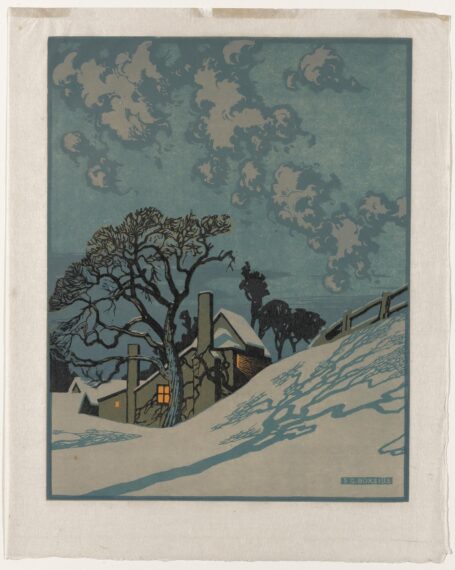
Sylvan Boxsius, Winter, 1930s, block print. Gift of funds from Marla J. Kinney, 2021.66.1
A trope of coziness—a snowy but harsh winter landscape, giving way to a warmly lit home. Winter is an early 20th-century print, created when woodcut block prints were very much in fashion. The heightened appreciation for this style was likely a result of the Arts and Crafts movement, a late 19th- and early 20th-century movement in the United States and Britain that championed the value of fine artisanship and handmade objects in response to the onset of mechanization.
Robert Harding
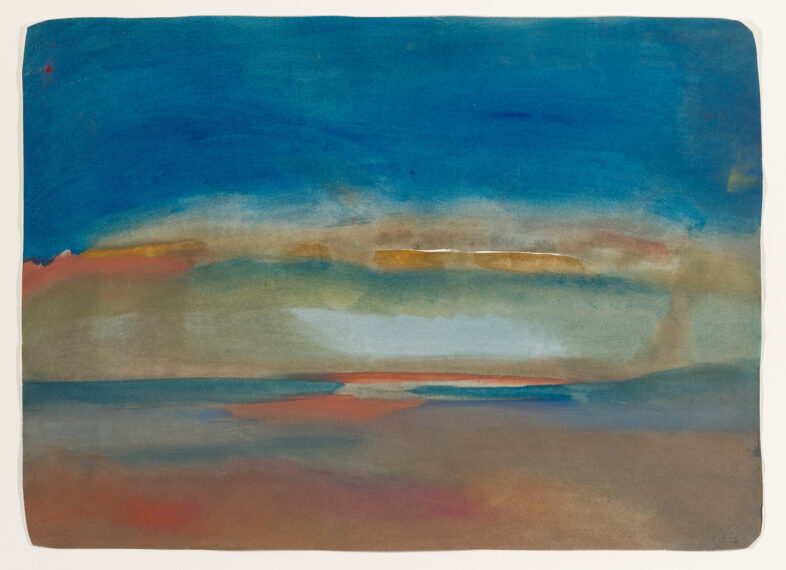
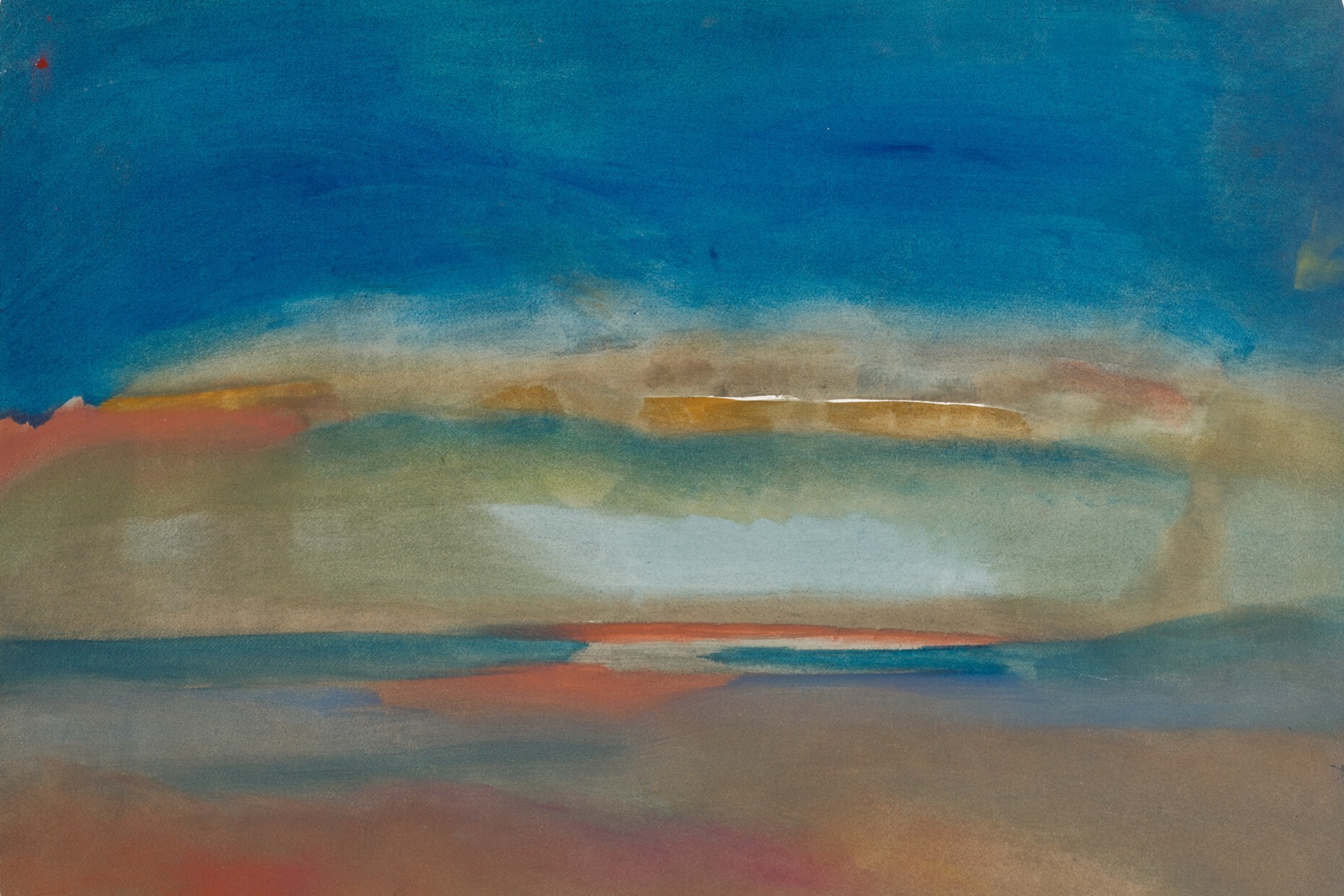
Robert Harding, Winter Landscape, 1974, watercolor on paper. Gift of Felix A. Martucci, 95.83.1
No talk of winter is complete without appreciating the unique, captivating quality of winter light. In frozen, bare landscapes, light spreads and refracts, at times becoming almost blinding.
Robert Harding’s watercolor is a perfect example of such light, with its vibrant colors and moody stillness. Winter Landscape evokes a day so cold that tears well up in your eyes, making everything blurry and strange, yet surprisingly lovely.
About Lori Williamson, Supervisor of the Herschel V. Jones Print Study Room at Mia
 Lori Williamson creates mini-exhibitions and teaches classes and Print Study Room visitors about the museum’s rich collection of works on paper. She’s the primary caretaker for more than 40,000 prints, 6,000 drawings, and 600 artists’ books, collaborating with curators in American, European, and Global Contemporary Art to make these holdings accessible. Williamson supports scholars through research and inquiry, and advocates for the inclusion of works on paper in exhibitions, social media, and outreach, helping to connect diverse audiences with this dynamic collection.
Interested in seeing something in the Print Study Room? All are welcome by appointment. Email Lori Williamson and copy the Print Study Room to make an appointment.
Meet the other curators in the Department of European Art.