
Print Study Picks: Posada, Printmaker to the Mexican People
By Lori Williamson
September 4, 2026—This month’s Print Study Picks focuses on works in Mia’s collection by Mexican artist José Guadalupe Posada.
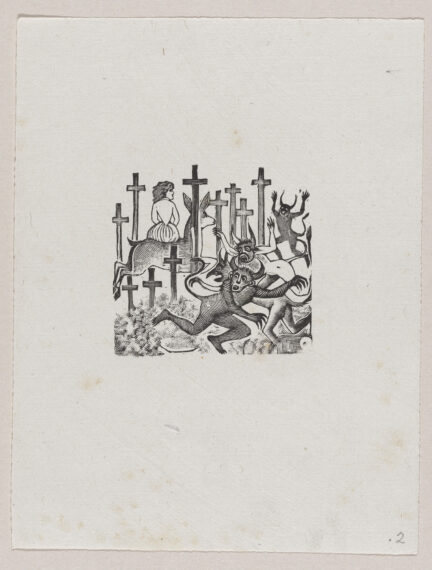
José Guadalupe Posada, Ilustración para un cuento (Illustration for a Song), plate 2 from 25 Prints of Jose Guadalupe Posada, 1942, zincograph on handmade paper. Gift of Lisa and David Erickson, 2017.150.10.2
Born in 1852 in Aguascalientes, in central Mexico, Posada apprenticed as a teen in a workshop, where he learned lithography and etching. Shortly thereafter, he began working as a political cartoonist for a local newspaper. Posada’s illustrated political satires and cultural critique, printed in inexpensive newspapers and periodicals, earned him the title “printmaker to the Mexican people” from artists Diego Rivera and José Clemente Orozco.
Voice of the Mexican Soul
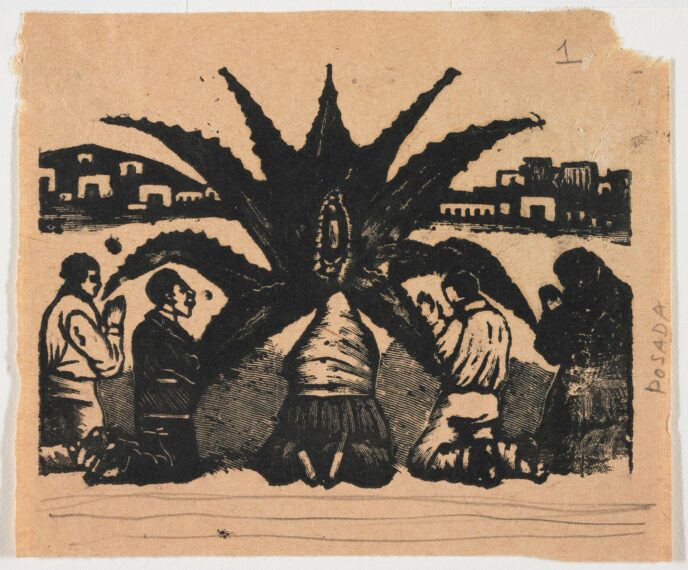
José Guadalupe Posada, Miraculous Apparition of the Virgin of Guadalupe in a Maguey, c. 1890–95, relief engraving. Gift of J. B. Neumann, P.12,969.
Posada had a reputation for finding humor within the toil of daily life. He’s most remembered for his calaveras (skulls), his expression of Mexican soul and sentiment, and his influence on later Mexican muralists. Diego Rivera was known for taking home metal shavings that fell from his plates. José Clemente Orozco said of him: “Posada is the equal of the greatest artists, an admirable lesson in simplicity, humility, equilibrium, and dignity.”
Posada’s Work in Mia’s Collection
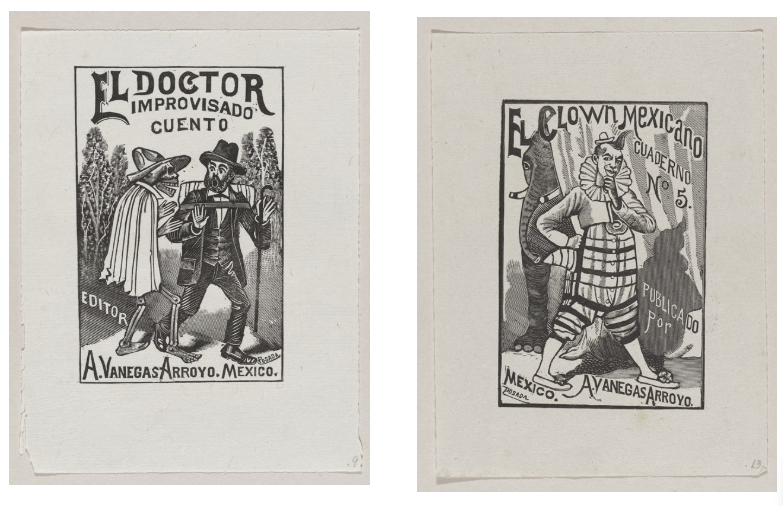
José Guadalupe Posada, El doctor improvisado (The Quack Doctor), plate 9 (left) and El clown mexicano (Mexican Clown), plate 13 (right) from 25 Prints of Jose Guadalupe Posada, 1942, zincograph on handmade paper. Gift of Lisa and David Erickson, 2017.150.10.9 and 2017.150.10.13
Posada worked extensively during the Mexican Revolution, in 1910, until his death, in 1913, documenting public sentiment and government abuses of power. He’s said to have made more than 15,000 unique images in his lifetime. The works include political cartoons, broadsides, and pieces printed on cheap paper to be affordable to all.
Mia is fortunate to have in its collection a set of relief engravings depicting populist devotional acts, such as worshipping an image of the Virgin of Guadalupe appearing in a cactus. Mia also holds a set of 25 prints created from his plates in 1942, 29 years after his death. They depict a cavalcade of skeletons, demons, clowns, and questionable politicians, simultaneously humorous and biting.
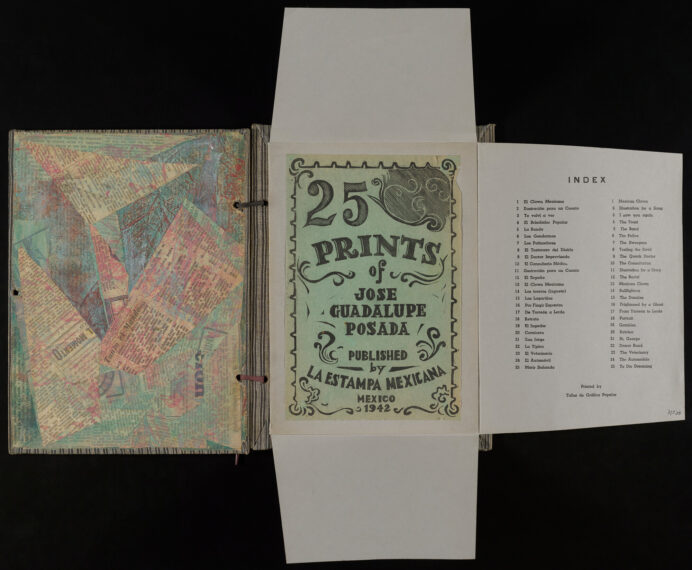
Case for 25 Prints of José Guadalupe Posada, 1942, zincograph on handmade paper. Gift of Lisa and David Erickson. 2017.150.10.9
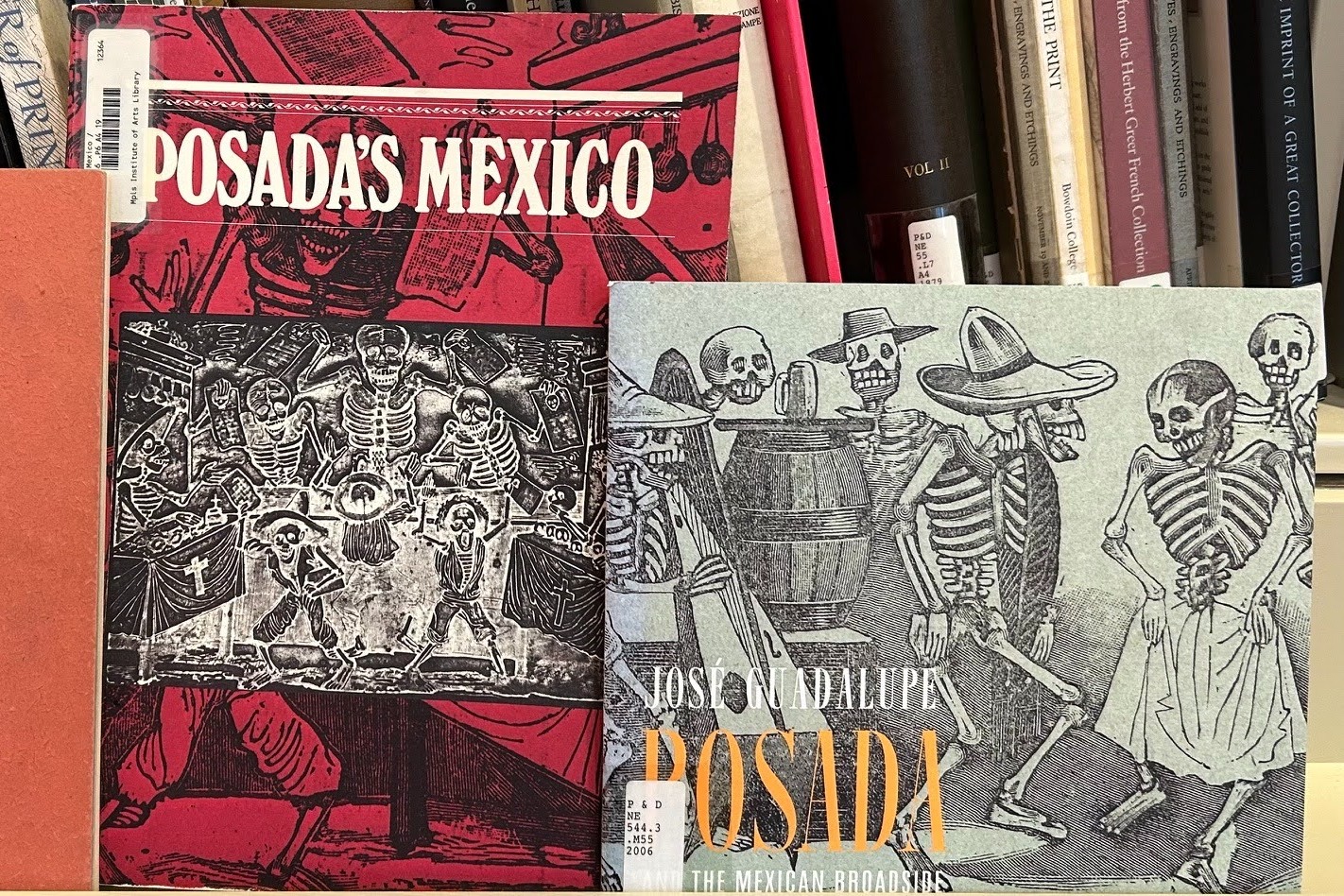
The Print Study Room also holds several books about Posada, his work, and his influence.
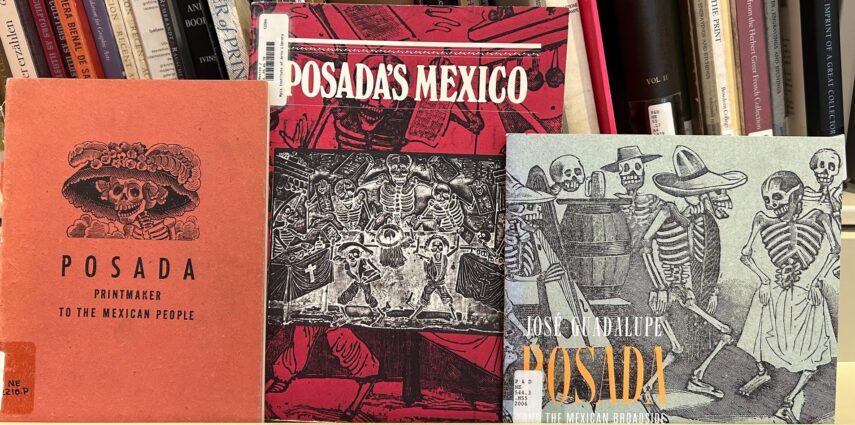
José Guadalupe Posada books available in Mia’s Print Study Room
While Posada himself died in obscurity in 1913, his vision and images live on. The catalogue essay from his first major exhibition outside Mexico, at the Art Institute of Chicago in 1944, ends with this quote: “Such is the force of this genius, the creator of Mexican engraving, whose work—before it passes to posterity by way of the connoisseurs—lives today as a fertile influence in the soul of his beloved country.”
About Lori Williamson, Supervisor of the Herschel V. Jones Print Study Room at Mia
 Lori Williamson creates mini-exhibitions and teaches classes and Print Study Room visitors about the museum’s rich collection of works on paper. She’s the primary caretaker for more than 40,000 prints, 6,000 drawings, and 600 artist’s books, collaborating with curators in American, European, and Global Contemporary Art to make these holdings accessible. Williamson supports scholars through research and inquiry, and advocates for the inclusion of works on paper in exhibitions, social media, and outreach, helping to connect diverse audiences with this dynamic collection.
Interested in seeing something in the Print Study Room? All are welcome by appointment. Email Lori Williamson and copy the Print Study Room to make an appointment.
Meet the other curators in the Department of European Art.