
Print Study Picks: Florals for Spring
By Lori Williamson
April 14, 2026—Whether our attraction to flowers stems from some animal, bee-like instinct, an evolutionary reflex, an appetite for beauty, or the existential need to seek sources of renewal, flowers have always had an abiding draw. And while the real ones only live short, beautiful lives, there are, luckily, plenty immortalized in art.
Orchids
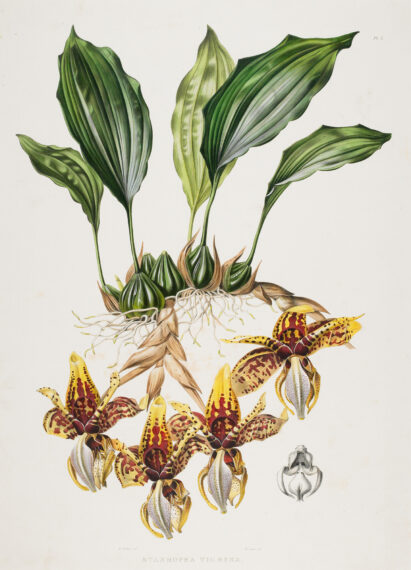
After Augusta Innes Withers; Lithographer: Maxim Gauci; Printer: Paul Gauci; Author: James Bateman; Publisher: J. Ridgeway & Sons, London, for the author, Tiger-Like Stanhopea (Tiger Orchid), 1838, hand-colored lithograph. The Minnich Collection The Ethel Morrison Van Derlip Fund. P.18,636
The 18th and 19th centuries saw the publication of large, intricate, scholarly, and scientific books, like this one by James Bateman, Orchidaceae of Mexico and Guatemala, London, 1837–43. It’s an illustrated publication on Central American orchids that’s considered the finest botanical book executed in lithography.
Wealthy members of society often sought to demonstrate their interest in intellectual life by purchasing these gorgeous publications. This one was such a behemoth, however, that it was dubbed “The Librarian’s Nightmare.”
Poppies
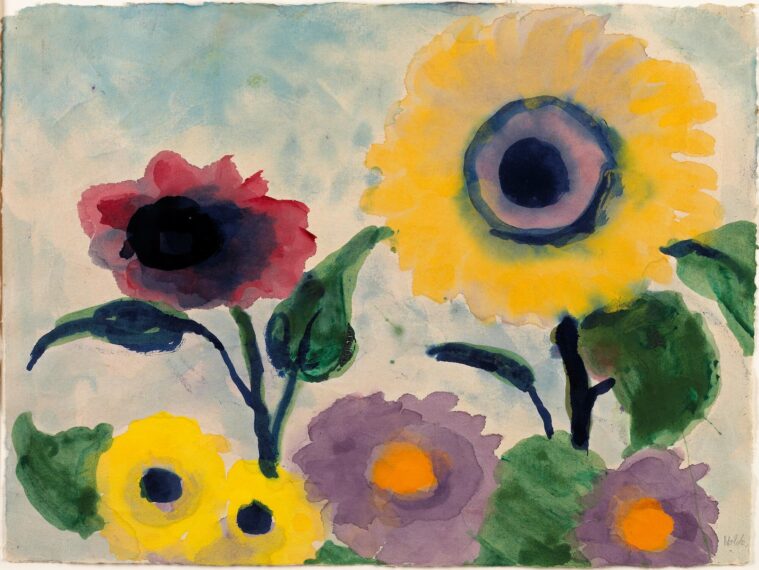
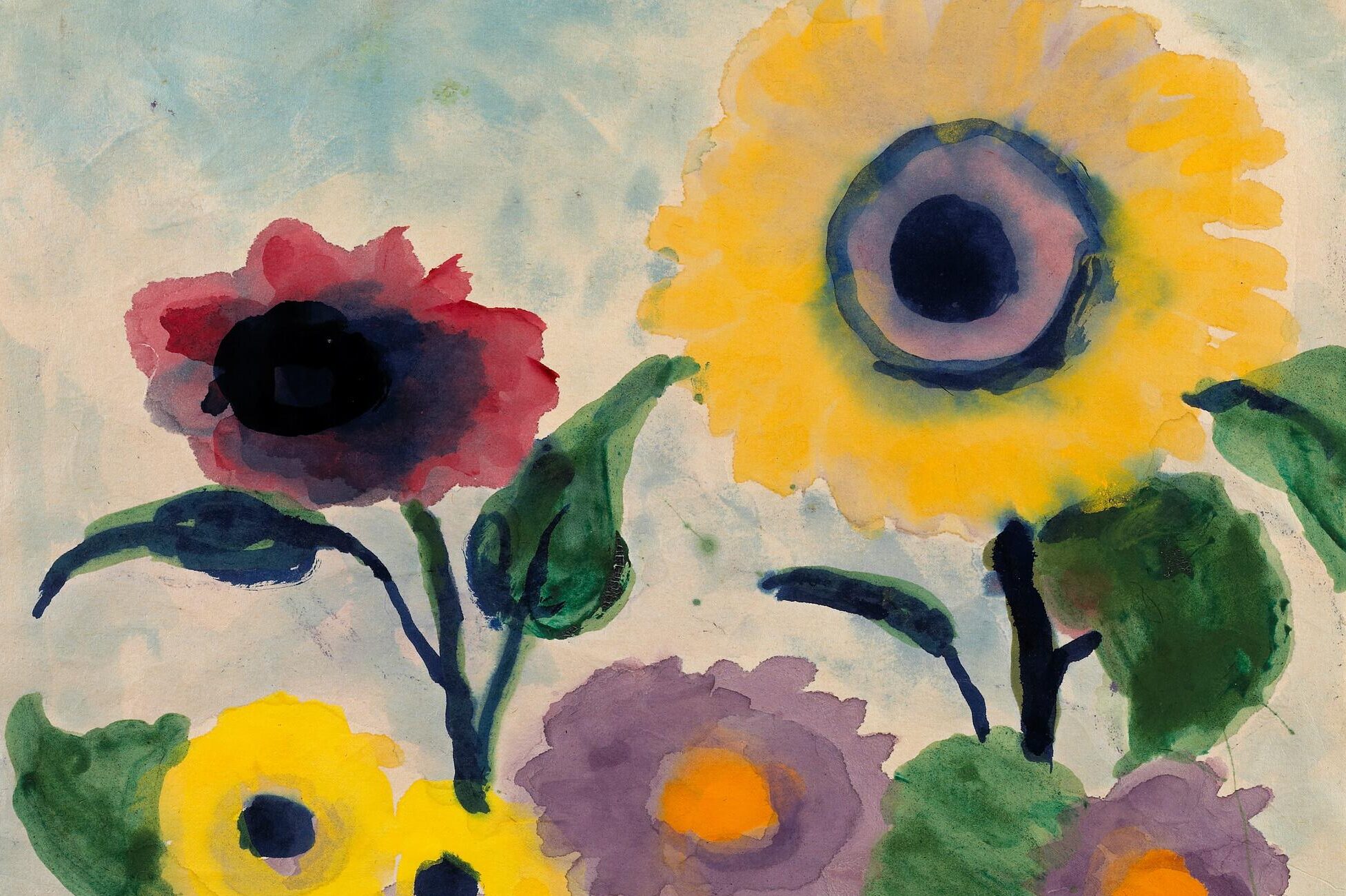
Emil Nolde (born Emil Hansen), Poppies, c. 1937–45, watercolor on Japan paper. Gift of Mr. and Mrs. James T. Wyman. 2004.220.2
Emil Nolde was a complicated artist. He was a member of the influential Die Brücke group of Expressionist artists in Germany, and his art was included in the Entartete Kunst (Degenerate Art) exhibition of 1937. But Nolde himself was a member of the Nazi Party, with racist and antisemitic views, and a staunch supporter of Nazi Germany.
Nolde’s interest in painting flowers reflected his appreciation for the color and vibrance of the works of Vincent Van Gogh. While this watercolor was created during the years of World War II, poppies were actually a symbol associated with World War I.
See works by Nolde and other artists of his time in “Modern Art and Politics in Germany 1910–1945: Masterworks from the Neue Nationalgalerie, Berlin,” now on view in Mia’s Target Galleries.
Birch Bark Blooms
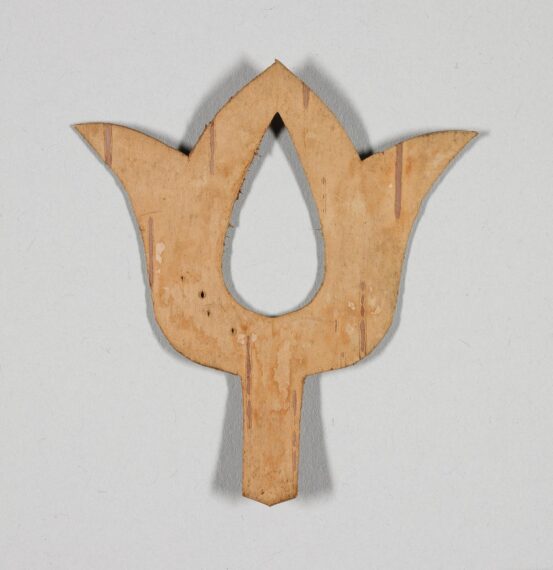
Nancy Fisher Cyrette, Birch Bark Flower, before 1958, birch bark. Bequest from the Karen Daniels Petersen American Indian Collection. 2008.99.16
Anishinaabe artist Nancy Fisher Cyrette, of the Grand Portage Band of Lake Superior Chippewa, created this flower as one of a series of 25 birch bark (and some paper) cutouts, which also include geometric and animal motifs. Birch bark is both a traditional and contemporary medium. Often, the patterns or stencils were used for design in beadwork or as an art form in themselves. The symbolism and beauty of nature shine through this delicate piece.
About Lori Williamson, Supervisor of the Herschel V. Jones Print Study Room at Mia
 Lori Williamson creates mini-exhibitions and teaches classes and Print Study Room visitors about the museum’s rich collection of works on paper. She’s the primary caretaker for more than 40,000 prints, 6,000 drawings, and 600 artists’ books, collaborating with curators in American, European, and Global Contemporary Art to make these holdings accessible. Williamson supports scholars through research and inquiry, and advocates for the inclusion of works on paper in exhibitions, social media, and outreach, helping to connect diverse audiences with this dynamic collection.
Interested in seeing something in the Print Study Room? All are welcome by appointment. Email Lori Williamson and copy the Print Study Room to make an appointment.
Meet the other curators in the Department of European Art.