
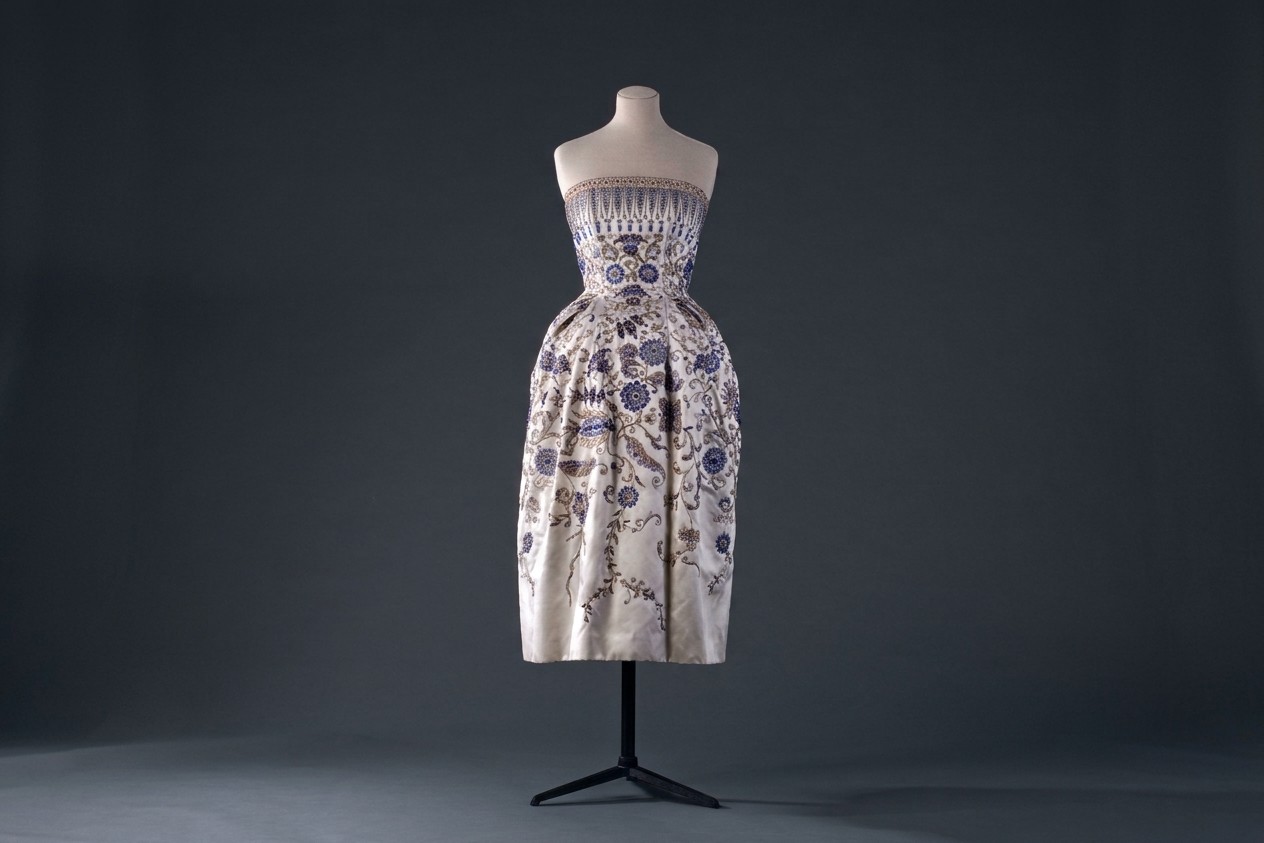
Who Wore It? The Rich, Famous, and Forgotten Faces Behind “Paris Couture”
By Tim Gihring
October 29, 2026—Admiring the artful outfits in “Paris Couture,” the exhibition of French fashion now on view at Mia, you could forget that someone actually wore them. Not all of them, and sometimes only on a runway. But many pieces did slide into wardrobes like the statements they are, commissioned by celebrities, socialites, royals—anyone with a taste for the finest garments in the world and the wherewithal to wear them.
“Clothes can be deeply intimate works of art. They really embody the hopes and dreams of their wearers,” says Max Bryant, curator of decorative arts at Mia and co-curator of the exhibition. “The commissioned looks in the show carry a unique meaning: treasured by their owners, preserving that singular connection between designer, dress, and wearer.”
Here’s a look at the women (and sometimes men) who said yes to the dress.
The Early Adopters
Anna Gould
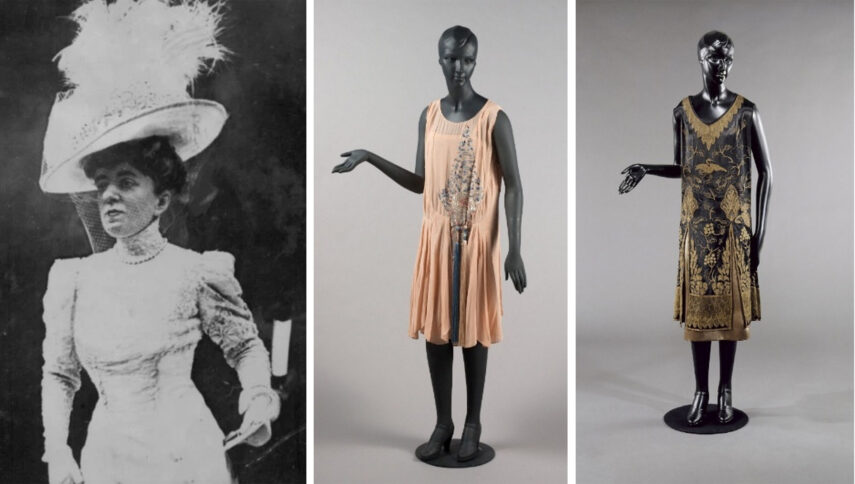
Evening dresses by Agnès (Jeanne Havet) and Jérôme (Jérôme Feldstein), c. 1925–27
Of the so-called robber barons of the late 19th century, Jay Gould had perhaps the most money and the fewest scruples. His baronial Manhattan lifestyle was such that European aristocrats often came calling. One, a minor French nobleman, married his daughter Anna, and the couple built the Palais Rose (Pink Palace) in Paris, a smaller version of Versailles. The cad spent about $10 million of her money on parties and mistresses until she divorced him, cutting off his funding and even his electricity. Then she married his cousin.
She was in her fifties when she wore these evening dresses by the couture houses of Agnès and Jérôme. The Agnès piece, especially, was designed for dancing, suggesting that, like her father, Anna was not going to let a little disrepute keep her down.
Daisy Fellowes
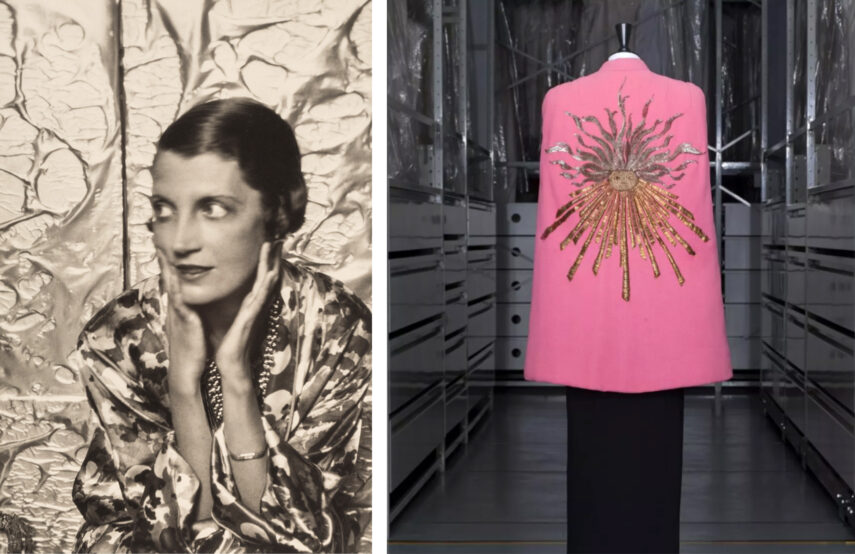
Evening cape known as Phoebus by Schiaparelli (Elsa Schiaparelli), Autumn–Winter 1938–39
Marguerite Séverine Philippine Decazes de Glücksberg, who went by Daisy, was an heir to the Singer sewing machine fortune. Born in Paris, she married a prince and edited the French version of Harper’s Bazaar. When the prince died, toward the end of World War I, she tried to seduce Winston Churchill before marrying his cousin.
In fashion, as in much else, she lived on the edge, cultivating “the elegance of the damned,” as one contemporary put it. Elsa Schiaparelli was a natural fit. The designer’s collaborations with Salvador Dalí would result in a “shoe hat” and a “skeleton dress,” among other provocations. In the 1930s, she was inspired by an enormous pink diamond owned by Fellowes—“bright, impossible, impudent,” she called it—to make the pink cape with a sunburst motif that Fellowes was more than happy to wear.
Wallis Simpson
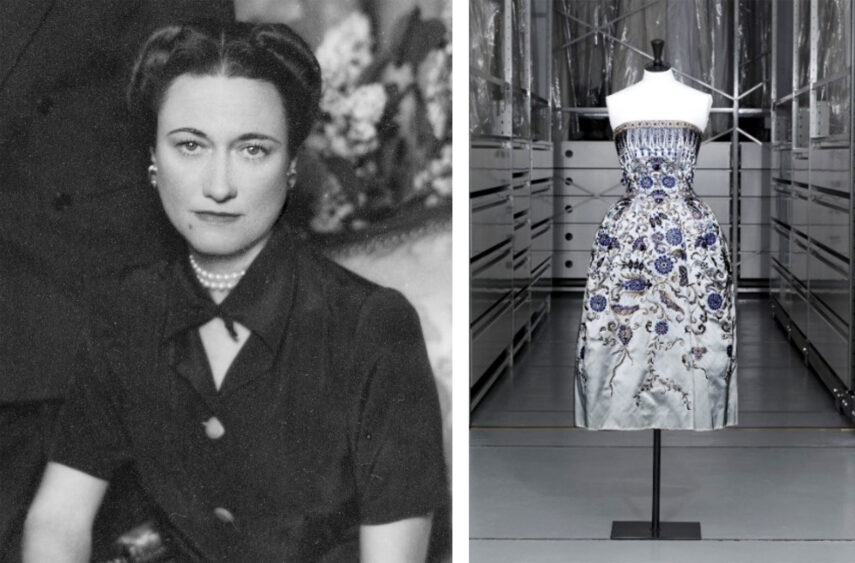
Palmyre (Palmyra) evening gown from the Profiled line by Christian Dior, Autumn–Winter 1952–53
Wallis Simpson grew up in Maryland, and when her father died shortly after her birth the family became dependent on wealthier relatives. This would become a theme as Simpson married up twice—with various affairs in between—before becoming the mistress of Prince Edward of Wales in the early 1930s. (Displacing his previous mistress, as the besotted prince showered Simpson with jewels and cash.)
When Edward became king, his insistence on marrying the twice-divorced Simpson proved too much for the crown to bear. He abdicated, freeing the notorious couple to become jetsetters. By the time Simpson would have worn this Dior gown in the 1950s, they were living in Paris, further disgraced by their alleged sympathy for Hitler.
Jacqueline, Comtesse de Ribes
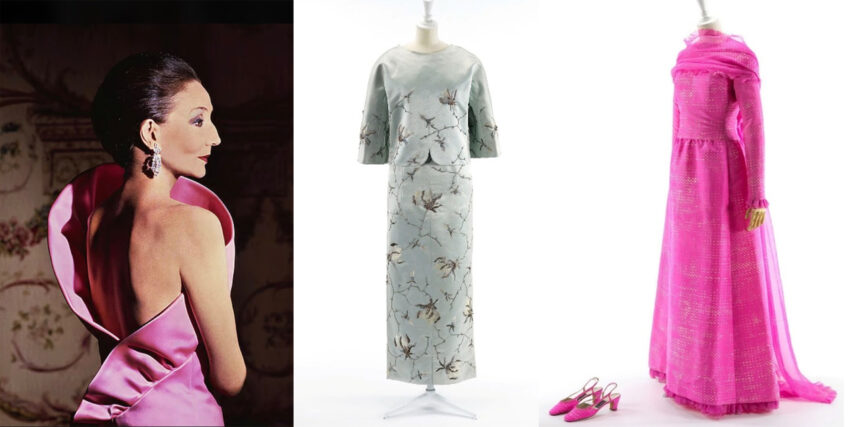
Nuit d’hiver (Winter Night) dress and bodice by Jean Patou (designed by Karl Lagerfeld), Autumn–Winter 1959–60; Dress and stole by Christian Dior (designed by Marc Bohan), Spring–Summer 1972
Jacqueline Bonnin de La Bonninière de Beaumont was born in Paris to a count and countess, a decade before World War II. When the Nazis invaded, she went to live in the countryside with her nanny. After the war, she became involved in French fashion.
She commissioned clothing from couturiers—like this outfit designed by rising star Karl Lagerfeld—before designing her own, including a popular line for Saks Fifth Avenue. She remained a favorite of the couturiers, though, wearing Dior in the so-called Battle of Versailles charity show in 1973 that pitted French haute couture against American ready-to-wear. The Americans were victorious, but the comtesse de Ribes won the day.
The Mid-Century Mods
Juliette Gréco
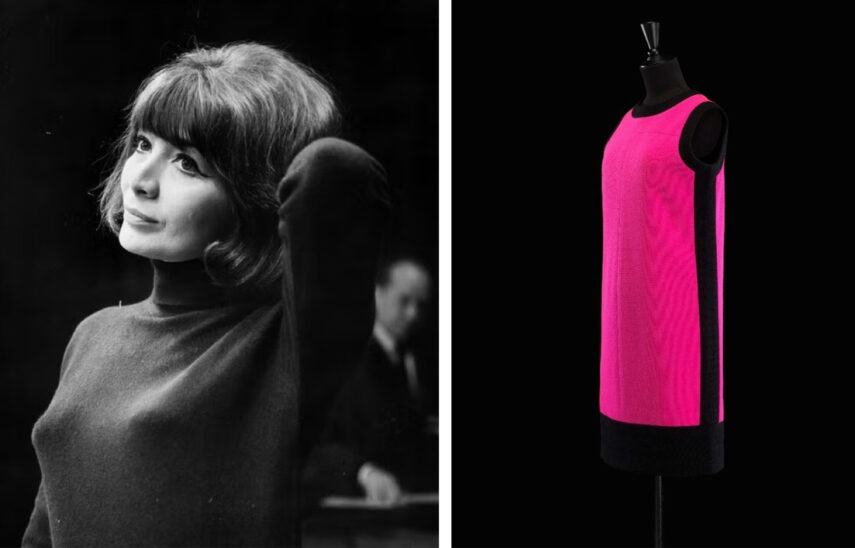
Cocktail dress from the Mondrian series by Yves Saint Laurent, Autumn–Winter 1965–66
Juliette Gréco had a traumatic childhood: shamed by a mother who regretted her birth, imprisoned by the Nazis. After the war, she joined the bohemians in the cafes of Paris, shrouded in black turtlenecks, debating existentialism.
Eventually, she ventured onstage, becoming a cabaret singer and a muse to musicians like Miles Davis and Quincy Jones. Paul McCartney said she inspired Michelle, the wistful, bilingual Beatles song: “We fancied Juliette like mad. Have you ever seen her? Dark hair, real chanteuse, really happening.”
In the mid-1960s, her art-school aura influenced fashion’s turn toward the dark side and boho chic, but this Mondrian-inspired dress from Yves Saint Laurent captured her off-stage look, which leaned more colorful.
Gersende de Sabran-Pontevès, Duchesse d’Orléans
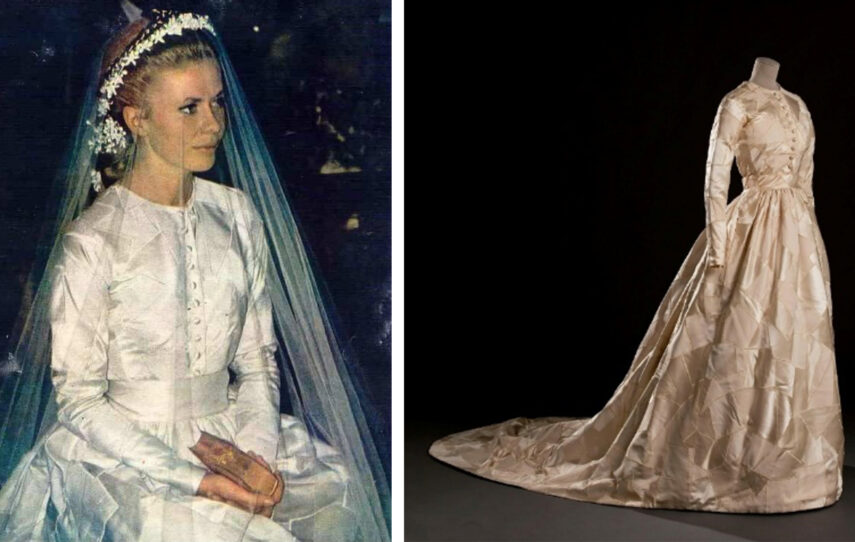
Wedding dress by Yves Saint Laurent, Spring–Summer 1969
European aristocracy had a rough go in the 20th century, as democracy displaced lords and ladies. But some handled the transition more gracefully than others—like Gersende de Sabran-Pontevès, a pianist by training. In 1969, she married Prince Jacques, of the House of Orléans, whose dukes were once first in line to the French throne.
The wedding became something of an international sensation. Prince Rainier III and Princess Grace (Kelly) of Monaco were there, along with other royals, but it was the wedding dress by Yves Saint Laurent that became the real star—relatively simple, flowy, and patch-worked, worn with a daisy headpiece. Hippie-chic almost, suggesting that the old aristocracy was not completely out of touch with the zeitgeist.
Rachel “Bunny” Mellon
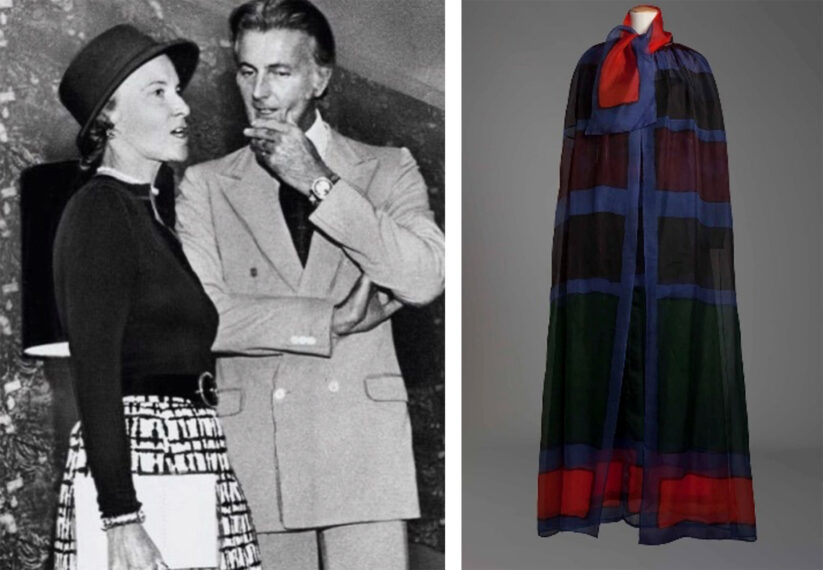
Cape, bustier (strapless) dress, and scarf by Givenchy (Hubert de Givenchy, pictured with Bunny Mellon), Spring–Summer 1971
Rachel Lambert was born into newish money (her grandfather invented Listerine) and married into old (the Mellon banking fortune). Nicknamed Bunny by her mother, she fell comfortably into the tropes of the lifestyle: boarding school, horse breeding, art collecting, couture. But she cultivated, literally, her own path as a garden designer.
When President Kennedy asked her to redo the White House grounds (recently torn up by the Trumps), she did so in Balenciaga and Givenchy smocks. Hubert de Givenchy became a close friend and designed this ensemble after she invited him to Mark Rothko’s studio. A luminous, even haunting look, possibly violating her WASPy mantra that “nothing should be noticed.”
Princess Grace of Monaco
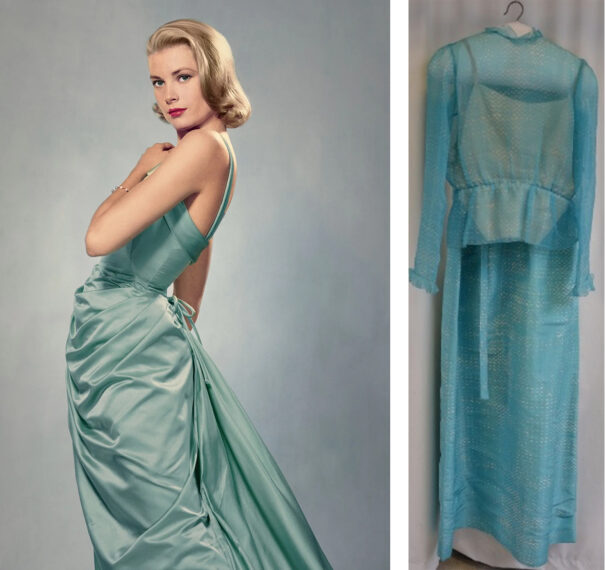
Bodice, skirt, and stole by Christian Dior (designed by Marc Bohan), Spring–Summer 1972
Grace Kelly was the ultimate movie star in the 1950s—the fantasy of men and women alike—before abruptly quitting the business at 26 after marrying Prince Albert of Monaco.
From then on, in a sense, the fairy tale was real. She was a princess, fulfilling her royal duties with the same elegance she had projected onscreen, in outfits from some of the same top designers. She wore this outfit from one of her favorites—Marc Bohan, then artistic director at Dior—during Princess Anne’s 1972 visit to Monaco.
The New Bohemians
Renée Fleming
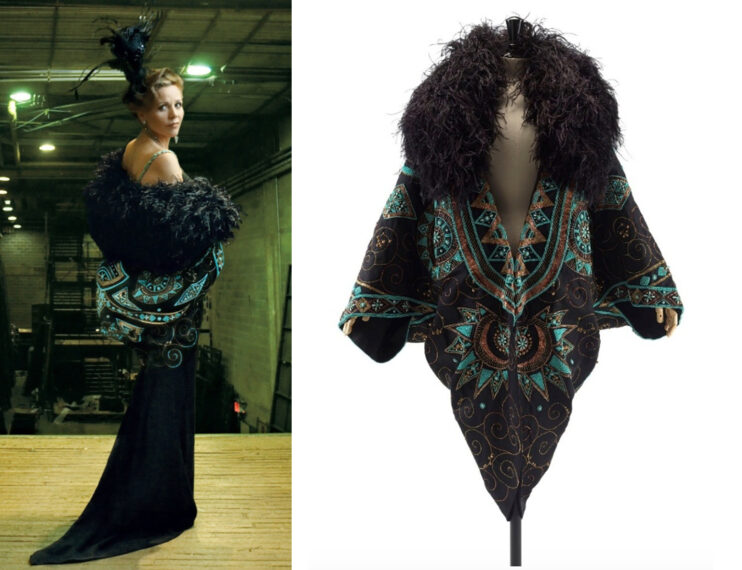
Coat by Christian Dior (designed by John Galliano), Spring–Summer 2008
Renée Fleming was born to a pair of music teachers and early on began working as a singer in both jazz and opera. She won the famous Met Auditions singing competition in 1988, at age 29, and soon took on some of the greatest roles in opera.
A legit diva, she began amassing a collection of couture gowns. She wore this Dior coat during the opening gala of the Metropolitan Opera in 2008, the first time a woman had soloed the event. She performed three of her favorite roles in three different couture outfits.
Jordan Roth
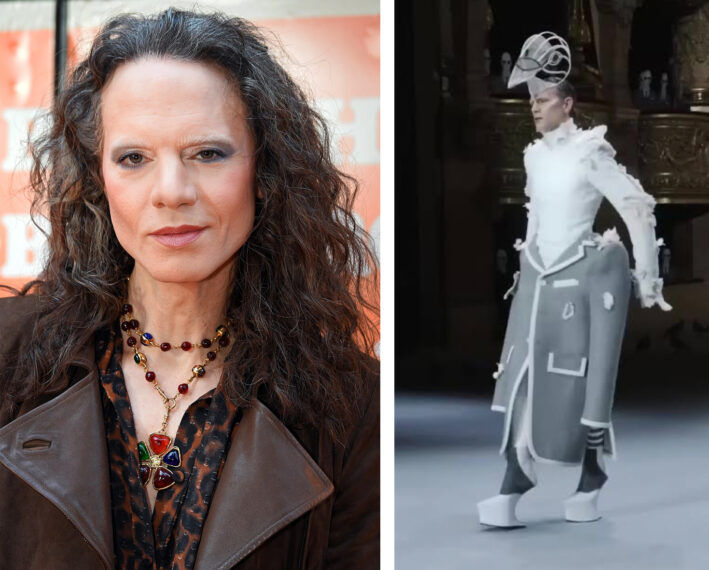
Ensemble consisting of a hat, top and skirt by Thom Browne, Fall–Winter 2023
Jordan Roth grew up around New York City, where his mother was a theater producer. He followed her into the trade, showing an early knack for notoriety—setting Shakespeare to disco; working Joan Jett, Luke Perry, and other stars into a revival of The Rocky Horror Show.
More recently, Roth has combined his interests in fashion, art, and theater into productions at the Louvre Museum in Paris and this year’s Venice Biennale. A prominent client of haute couture, he’s walked the runway in dress that blurs traditional gender norms, including this outfit by fellow American Thom Browne.
About the Exhibition
“Paris Couture” features more than 80 haute couture masterpieces from the Palais Galliera, spanning the late 19th century to today, from fashion icons such as Dior, Balenciaga, Schiaparelli, and Grès. Together, these extraordinary garments show couture as one of the great art forms of the modern era. You’ll see imagination matched with flawless technique and lavish materials. Get close to the details and discover how couture ateliers transformed dressmaking into high art.
The exhibition is on view through January 17, 2027, in the Target Galleries.