
Transatlantic Masterpieces: Mia’s Postwar Collection Heads to France in Landmark Museum Exchange
August 20, 2026—This summer, Mia is inviting new audiences to reconsider the story of American art—and demonstrating the role museums can play in shaping that conversation across borders. One hundred and one works have traveled from Minneapolis to the Musée d’art moderne et contemporain de Saint-Étienne Métropole (MAMC+), in France, as part of “Flying Colors: A Dialogue with the Collections of the Minneapolis Institute of Art,” an exhibition of 164 works by 46 American artists.
On view from June 27, 2026, through January 3, 2027, the exhibition brings together two of the world’s strongest collections of postwar American art while extending the reach of Mia’s collection beyond its galleries in Minneapolis.
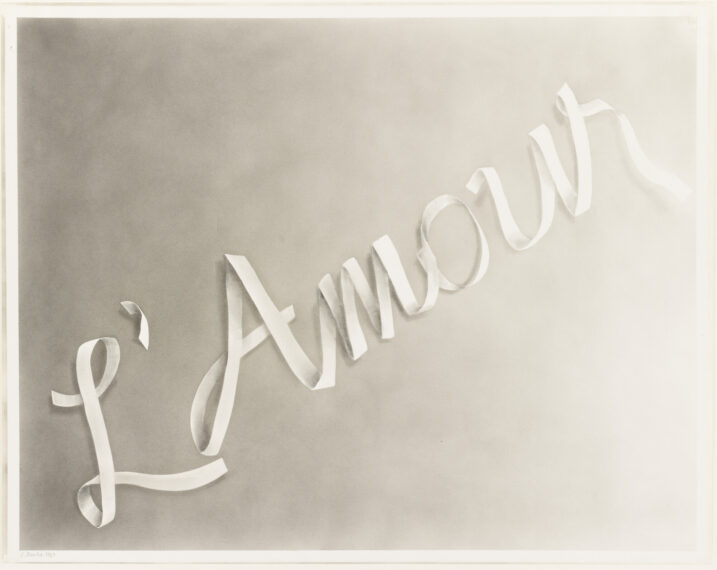
Edward Ruscha (American, born 1937), L’Amour, 1967, graphite with stumping on paper. The David M. Daniels Fund, 72.50
Two Collections, One Conversation
Conceived and curated by Aurélie Voltz, director of MAMC+, “Flying Colors” draws from Mia’s holdings and MAMC+’s renowned collection of American art. For more than 50 years, MAMC+ has built one of France’s most important public collections of American art, now numbering nearly 500 works.
Mia, meanwhile, has spent decades developing a distinguished collection of postwar and contemporary American art through thoughtful collecting, gifts, and curatorial scholarship. Its holdings encompass abstraction, Minimalism, Pop, fiber art, photography, sculpture, and politically engaged contemporary works, making it a natural partner for an exhibition that seeks to trace the breadth of American artistic innovation.
Rather than presenting American art as a fixed national story, the exhibition reveals it as an evolving dialogue—one shaped by migration, experimentation, collaboration, and cultural exchange.
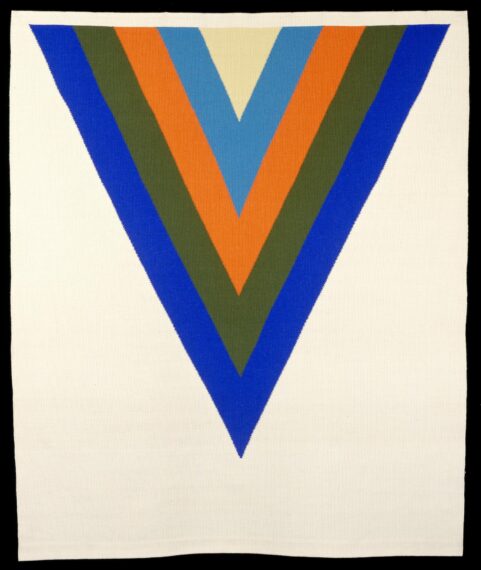
Kenneth Noland (American, 1924–2010), Ramona Sakiestewa, weaver, Ute Point, 1991, wool, tapestry. Gift of the Estate of Gloria F. Ross, 99.99.1
A Partnership Built on Trust
Reciprocity lies at the heart of the partnership between Mia and MAMC+. The exchange was developed through FRAME (FRench American Museum Exchange), a consortium of 32 museums across France and North America dedicated to fostering long-term institutional partnerships through collection sharing, scholarship, and professional exchange.
“A genuine exchange means both institutions take the risk of lending, and both audiences benefit,” says William Beekman, FRAME co-president for North America.
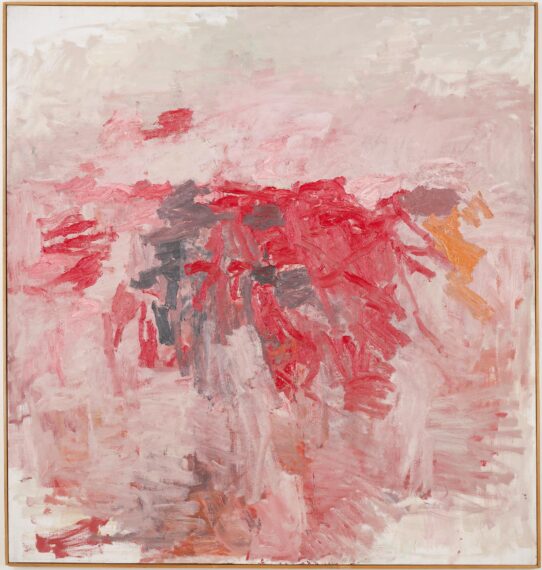
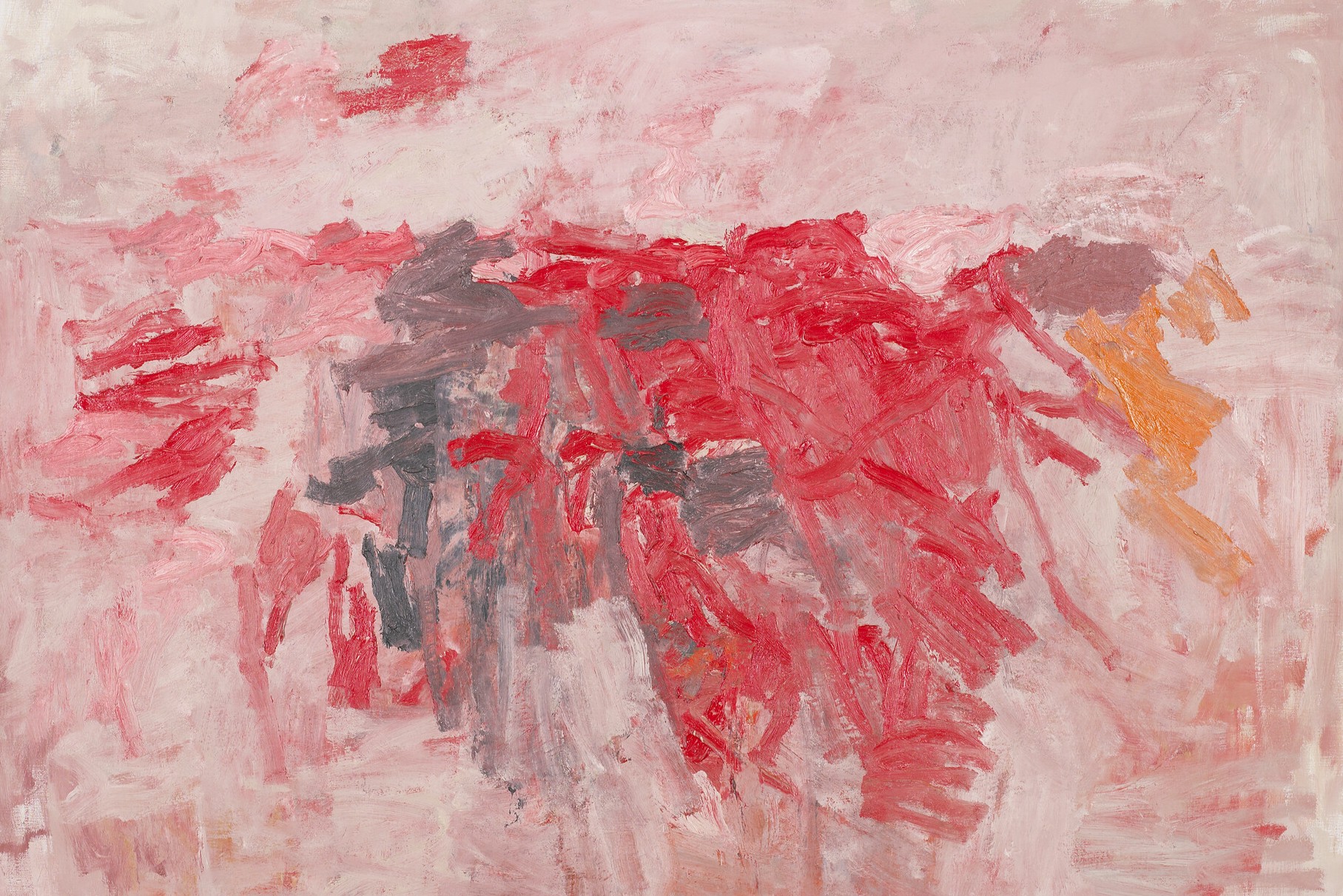
Philip Guston (American [born Canada], 1913–1980), Bronze, 1955, oil on canvas. The Julia B. Bigelow Fund, 58.34
American Art in a New Context
The exhibition traces nearly 75 years of artistic experimentation. A few highlights from Mia’s collection are Philip Guston’s Bronze, an abstract painting inspired by the dramatic color, gesture, and movement of the European Baroque masters; Edward Ruscha’s L’Amour, a paper-ribbon illusion of the French word for love; and Kenneth Noland’s Ute Point, a striking tapestry brought to life by Hopi artist and weaver Ramona Sakiestewa.
The exhibition’s greatest strength, though, lies in the dialogue created by combining the two collections.
Black Mountain College and the Federal Art Project
Works by Josef Albers, Willem de Kooning, Robert Motherwell, Robert Rauschenberg, Cy Twombly, and Louise Nevelson illuminate two defining forces in 20th-century American art: the experimental environment of Black Mountain College and the New Deal’s Federal Art Project. Together, Mia and MAMC+ reveal how these educational and public initiatives fostered generations of artists whose influence continues to shape contemporary practice.
Color Field Painting and the Washington Color School
Mia’s holdings in postwar abstraction—including works by Helen Frankenthaler and Philip Guston—enter into dialogue with MAMC+’s representation of Color Field painting and the Washington Color School. Seen together, they trace how artists transformed color into an immersive visual language, demonstrating connections across artists, regions, and generations that become visible only through the partnership.
Minimalism
Sculptures and installations by Donald Judd, Dan Flavin, and Sol LeWitt demonstrate the movement’s pursuit of clarity, geometry, and industrial precision. Displayed across the combined collections, these works reveal how artists fundamentally reimagined sculpture as an experience of space rather than an object alone.
Pop Art, Appropriation, and Postmodernism
Works by Andy Warhol, Roy Lichtenstein, Robert Rauschenberg, and Jim Dine capture the explosion of consumer imagery that reshaped American art during the second half of the 20th century. Together, the two collections chart how artists borrowed from advertising, comics, mass media, and everyday life to question originality, authorship, and popular culture.
The Other and the Beyond
Louise Nevelson, Sari Dienes, Sheila Hicks, Robert Morris, and James Turrell demonstrate the expanding possibilities of sculpture, textiles, assemblage, and environmental art. By bringing together complementary strengths from both museums, the exhibition reveals how artists increasingly blurred distinctions between art, architecture, landscape, and lived experience.
Speaking Out!
The exhibition concludes with artists who challenged dominant narratives surrounding race, identity, gender, sexuality, and political power. Works by Beauford Delaney and Sam Gilliam join those of Lorna Simpson, Catherine Opie, and David Wojnarowicz, demonstrating how abstraction, photography, portraiture, and conceptual practice became powerful tools for social commentary and cultural change.
Why Seeing These Works in France Matters
Placed alongside MAMC+’s holdings, Mia’s collection becomes part of a broader international conversation about artistic influence, migration, and identity. The exchange allows French audiences to encounter works that rarely travel while creating new opportunities for scholarship through direct comparison between the two museums’ collections.
“Mia has long believed that American art is best understood in conversation with the world, not in isolation from it,” says Katie Luber, Mia’s Nivin and Duncan MacMillan Director and President. “Seeing our collection placed alongside MAMC+’s in Saint-Étienne—and welcoming works from MAMC+ to Minneapolis in return—is exactly the kind of partnership that deepens what museums can offer their communities.”
This partnership is a reminder that the most important museum exchanges aren’t just moving objects from place to place. They place those objects in new contexts, where new conversations can begin.