
A Journey of Quilts: How Five of the Famous Gee’s Bend Textiles Came to Mia
March 23, 2026—The hamlet of Gee’s Bend is in the Black Belt of Alabama, a reference to the rich, dark soil that enabled the region’s cotton plantations and to the thousands of enslaved African Americans who worked them. After emancipation, Gee’s Bend fell into a cycle of sharecropping, debt, and poverty. A dam built in 1962 flooded much of the area’s best farmland. Ferry service across the river was halted to dissuade African Americans from voting. Many people left.
But in the 1980s, a colorful collector named William Arnett began driving up the red-dirt roads of the Black Belt, into areas no one had gone looking for art before. One day, Arnett crossed the Alabama River into Gee’s Bend and found a community of resourceful quilters who, for decades, had kept their families warm by patching old fabrics into uniquely free-form, abstract patterns. Arnett and his sons returned again and again, acquiring dozens of quilts.

In this 1937 photograph taken by Arthur Rothstein for the Farm Security Administration, Gee’s Bend quilter Jorena Pettway works as two young women hold fabric for her.
In the early 2000s, the Arnetts helped organize a touring exhibition of these quilts, which made Gee’s Bend almost instantly famous, if not rich. In 2010, the Arnetts created the Souls Grown Deep Foundation, in Atlanta, to help the artists make the most of this infusion of interest and to preserve what they’d collected: over a thousand textiles, sculptures, paintings, and other works by more than 160 African American artists in the South. It’s an unparalleled representation of a still largely unheralded tradition, what William Arnett has called “the one great thing America has ever had to give to the history of visual arts.”
Since 2014, the foundation has pivoted toward disseminating and preserving this heritage, placing the work in major museums across the country. The goal is to eventually place almost all of it. If this art belongs in the company of work by Jasper Johns, Robert Rauschenberg, and other better-known American artists, as Arnett has long argued, then it literally needs to be there — in the so-called encyclopedic collections of the country’s largest art museums.
Kaywin Feldman, now the director of the National Gallery of Art, was head of Mia when she got a call from Souls Grown Deep. They were offering dozens of artworks—including Gee’s Bend quilts—at a substantial discount, a partial gift. The foundation had already partnered with the Metropolitan Museum of Art, the High Museum of Art, and several others, and was now similarly drawn to Mia’s broad global collection.
“They wanted this art put in dialogue with other kinds of artworks, not just relegated to one gallery,” says Nicole LaBouff, Mia’s former associate curator of textiles. “As an encyclopedic museum, we could do that.”
Mia ended up acquiring 33 artworks from Souls Grown Deep. LaBouff chose five quilts from Gee’s Bend, all made well before the Gee’s Bend phenomenon of the early 2000s. (One was featured on a Gee’s Bend series of postage stamps issued in 2006.) Other works include an assemblage by Lonnie Holley, the artist and musician from Birmingham, Alabama, who was among Arnett’s early discoveries, and a wall relief by Thornton Dial, who died in 2016 and remains one of the best-known self-taught artists in contemporary art.
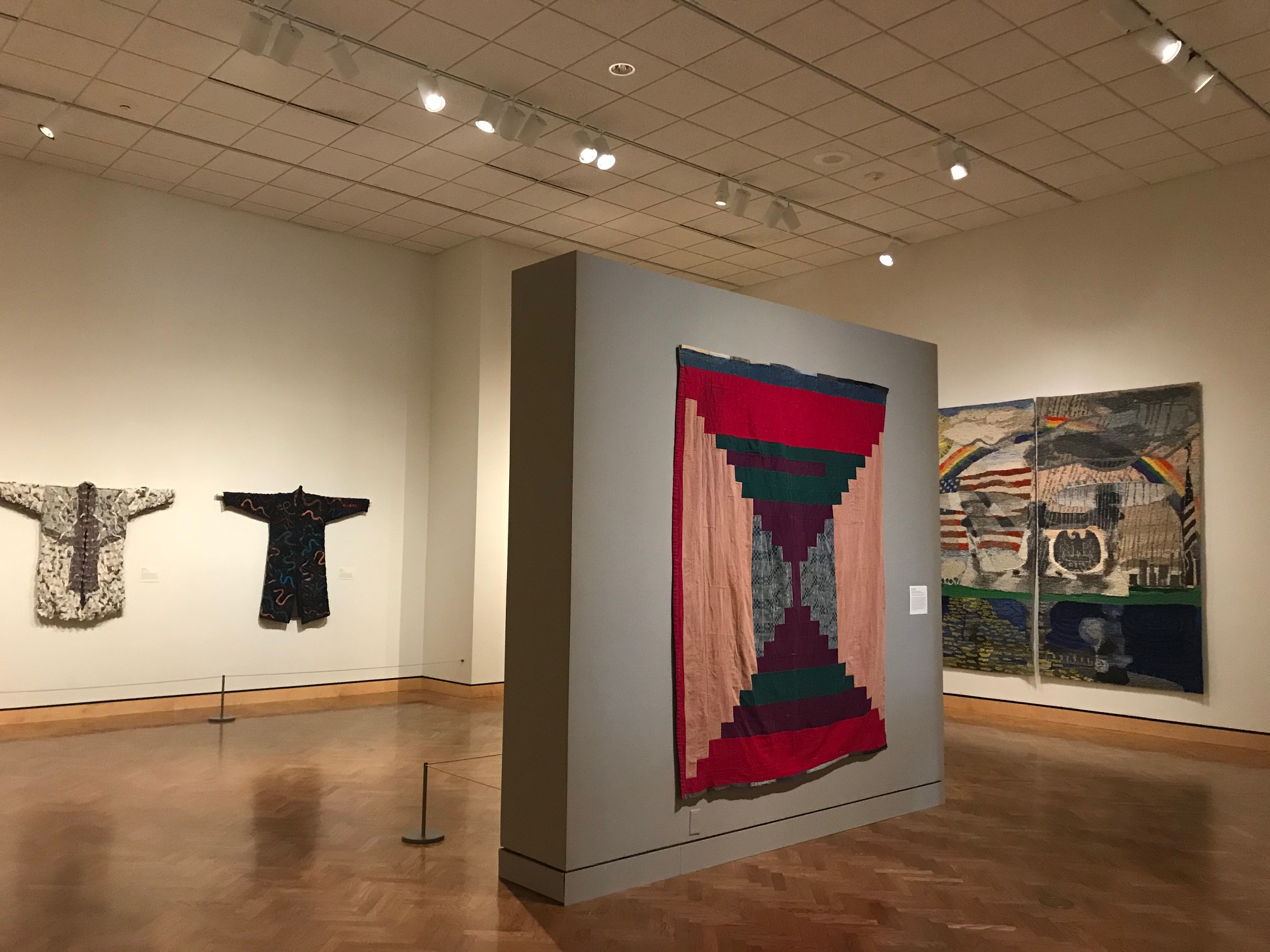
Loretta Pettway’s quilt on display with Helena Hernmarck’s “Moot” tapestry and coats by Tim Harding in Mia’s exhibition “Recent Acquisitions: Fiber Art at Mia.”
Mia quickly began integrating these pieces into exhibitions, such as “The Enduring Soul,” featuring works by African and African-American artists, and “Recent Acquisitions: Fiber Art at Mia,” where a quilt by Loretta Pettway of Gee’s Bend is prominently displayed alongside a tapestry by Swedish American artist Helena Hernmarck and a finely wrought sculpture of lace by Slovenian artist Anda Klancic.
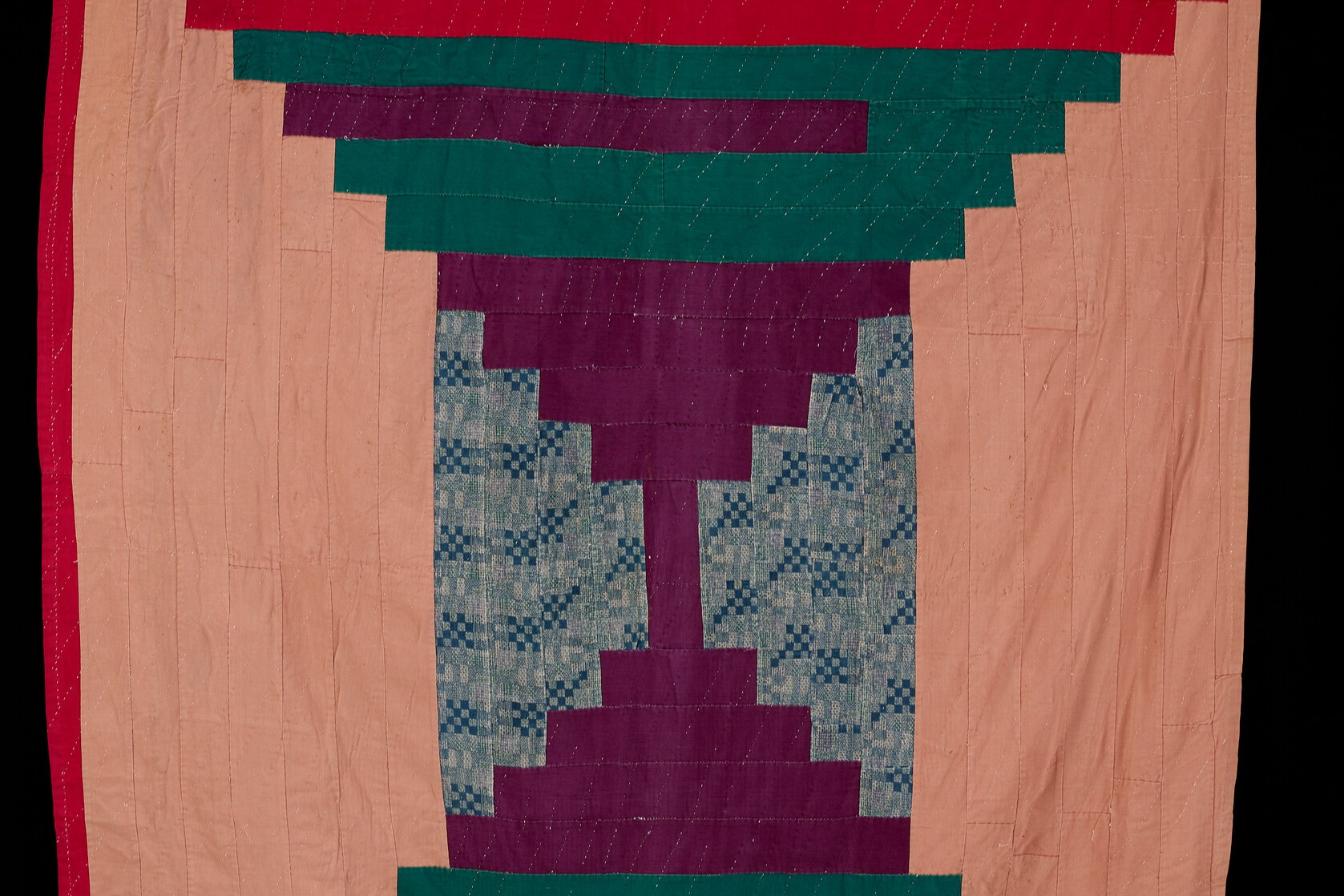
Pettway’s piece, made in 1958, is notable not just for its traditional “bricklayer” pattern, resembling pyramids of fabric strips (she apparently fantasized about living in a big brick house), but also for its pieced back. Typically, a quilt backing is made of whole cloth, but here Pettway has pieced it together just like the front — suggesting a scarcity of materials and her resourcefulness in making colorful use of what she had: worn denim, patched pants, and whatever else was on hand.

Loretta Pettway (American, born 1942), “Log Cabin” quilt–single block “Courthouse Steps” variation (local name: “Bricklayer”), 1958, cotton, twill, printed corduroy, denim. The Ethel Morrison Van Derlip Fund and Gift of the Souls Grown Deep Foundation from the William S. Arnett Collection 2019.16.18
Some things have changed since the Gee’s Bend boom. Ferry service was restored in 2006, and the terminal now includes a Welcome Center with a row of sewing machines, where visitors can watch women quilt in the mornings and purchase their work. A Quilt Trail winds through the area, marking quilters’ homes. In 2007, at the height of the frenzy, a few quilters had sued the Arnetts, alleging they had defrauded them. But the suit was soon resolved, and Browning is now working with artists and their descendants to claim copyrights and compensation, and to sustain their legacy.
The frenzy of a decade ago has settled into resolve. The foundation has partnered with the quilters on projects in town, placed the art in museums, and has more plans in the works.
When ferry service was cut off in 1962, at the height of voter registration drives in the South, the local sheriff reportedly said, “We didn’t close the ferry because they were Black, we closed it because they forgot they were Black.” At the time, quilting helped bring people together in a kind of communal self-determination.