
North by Southwest: What the Mary Ingebrand-Pohlad Collection of Latin American Art Brings to Mia
By Tim Gihring
July 10, 2026—Mary Ingebrand-Pohlad has a rule about collecting: “I need to have an immediate visual response to a piece. When I buy something, it means I really love it.”
In the early 1980s, Ingebrand-Pohlad attended a collectors forum at Mia on American folk art—work by largely self-taught artists. She was entranced. “I said, ‘That’s what I want to collect,’” she remembers, and she has, particularly the Mexican-influenced art of the American Southwest.
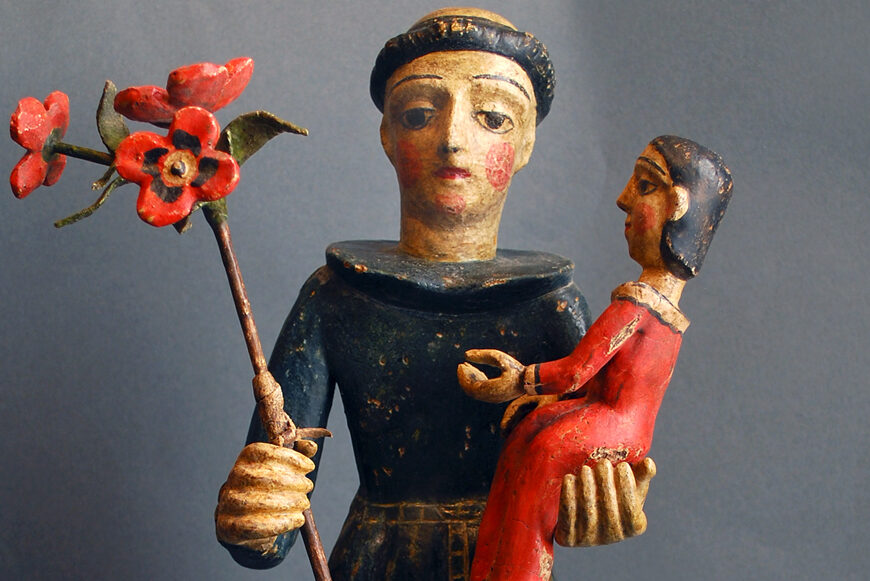
“Meeting Point: The Mary Ingebrand-Pohlad Collection of Latin American Art” is open at Mia in the Cargill Gallery. It includes paintings and drawings by well-known Mexican artists who spent time in the United States—Diego Rivera, Alfredo Ramos Martínez, David Alfaro Siqueiros—as well as religious works like bultos (carved figurines), retablos (portable shrines or altars), santos (painted tablets), and ex-votos (small paintings commemorating divine interventions).
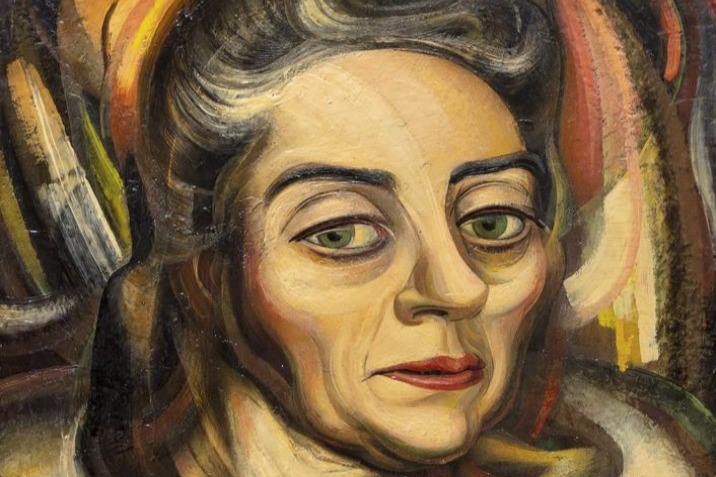
David Alfaro Siqueiros (Mexican, 1896–1974),
Retrato de Dama (Olga Costa) (detail), 1949, oil on panel. Lent by Mary Ingebrand-Pohlad.
The 82 works in the exhibition are promised gifts to Mia from Ingebrand-Pohlad, a longtime trustee of the museum and an artist who has completed seven murals in the Midwest and exhibited across the country. “Every day I feel very lucky to be an artist,” she says, “and that I’m able to collect what I love, live with what I love, and ultimately share it with everyone.”
Valéria Piccoli, Mia’s curator of Latin American art, remembers seeing some of the collection at Ingebrand-Pohlad’s Edina home and noting a narrative in the making. “There is this special situation in the Southwest where Mexican culture combines with U.S. culture, mixes together, and becomes something different and unique,” Piccoli says. “Her collection allows the museum to tell this story.”
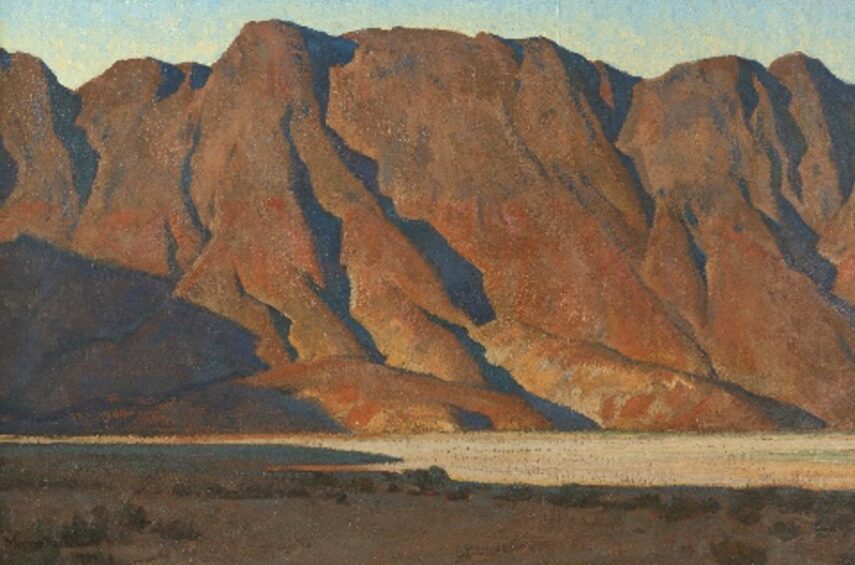
Maynard Dixon (American, 1875–1946), Landscape, 1920–40, oil on canvas. Mary Ingebrand-Pohlad Collection
The California Connection
Ingebrand-Pohlad grew up in St. Paul and first visited Palm Springs, California, in the 1970s. She began spending winters there in 2009 and soon was looking for more than mahjong and pool-time. “It is a priority for me,” she says, “to give back and be involved in whatever community I live in.” She answered an ad looking for volunteers to read to the children of migrant laborers working the fields in the surrounding Coachella Valley.
She began keeping a journal of students’ stories and she painted portraits of some of the people she met. Eventually, she funded the construction of a shelter housing up to 100 people a night and, a few years ago, helped produce a documentary film, Invisible Valley, about the migrant experience. “I wanted to open people’s eyes to a side of life that most of them never see or even know about,” she says, “to show the color and richness of this culture.”
She initially collected historic California art. (Several early 20th-century landscapes in the show, including works by San Francisco painter Maynard Dixon and Palm Springs painter and cartoonist James Swinnerton, offer context for the rugged desert region.) But she soon dove into the folk art of New Mexico and the borderlands—a border that has of course shifted over the centuries.
After the Mexican-American War ended in 1848, Mexico ceded nearly 55 percent of its territory to the United States, complicating our understanding of “Mexican” and “American”—and the art of the area. “With works made before 1848, we consider these artists Mexican,” says Piccoli. “And after 1848, we consider them American from the Southwest.”
For Piccoli, who became Mia’s first curator of Latin American art in 2022, the collection neatly maps onto her curatorial practice. “I want to really understand how cultures interact and transform each other,” she says. “Culture is never defined by geographical boundaries. How do these cultural conversations happen across borders?”
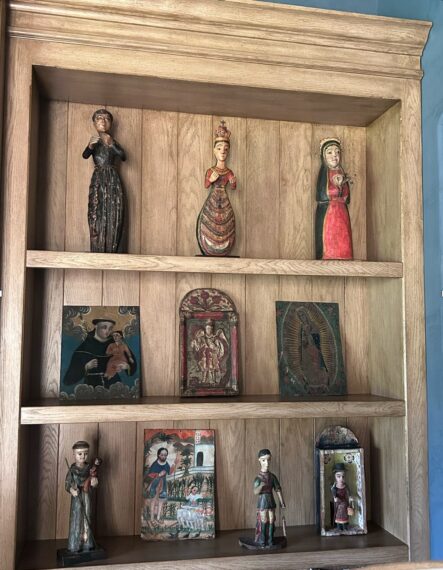
Religious statues and paintings (bultos and santos) from the collection of Mary Ingebrand-Pohlad.
Stories of Faith and Family
While some of the artworks—the santos and bultos—were made for display in churches, others are highly personal. The ex-votos, for instance, can seem like diary entries, with their brief, enigmatic inscriptions of near-death experiences and their sketch-like illustrations of deathbeds and disasters.
These artistic thank-you notes are widespread in the Americas. But when they arrived in the Southwest via Mexico, the Christian imagery took on some of the flavor of the Indigenous cultures there—especially the Pueblo. At the same time, figures like the Black Christ of Esquipulas, popular in Guatemala, found a home in New Mexico. “Images of devotion can travel widely,” says Piccoli, “and at this ‘meeting point’ in the Southwest, everything comes together and evolves.”
Ex-votos were usually created by the grateful survivors themselves, on scraps of tin. But major artists like Francisco Goya and Frida Kahlo invoked them as well—Goya in an 1820 self-portrait with his doctor, a painting now at Mia; Kahlo in nearly everything she made—blurring the line between fine and folk art. (Piccoli prefers the term “self-taught” instead of “folk,” while generally eschewing classification: “Good art is good art.”) Indeed, the ex-votos in Ingebrand-Pohlad’s collection are full of evocative details, like the swirling waves of a flood or a man bargaining with a devil under his bed, that lend the small works an outsize artfulness.
Pohlad, who grew up Catholic, says these works resonate with her as a matter of faith. But she also loves the stories they evoke of people and place: “Many of them have a wonderful narrative quality.” And ultimately, she says, stories are why people go to museums.
“Everyone wants to go in and see their culture,” she says, noting that her eventual gift will expand Mia’s representation of borderland cultures just as those communities expand in Minnesota. “It’s really important, as Minnesota changes and we look to engage new audiences, that we share those stories.”
Visit the Exhibition
“Meeting Point” runs through October 4, 2026, in the Cargill Gallery on the first floor of Mia.
Another exhibition of Latin American art, “María Berrío: Songlines,” opens September 12, 2026, in Gallery 275, featuring the monumental work of the contemporary Colombian artist.